Reviewed · TOURS
Amsterdam: Spanish Tour Unmasking the Redlight District
Amsterdam’s Red Light District makes more sense when you step away from the neon and follow the old streets that led ships, sailors, merchants, and curious visitors into the city. This Spanish-language walk connects the district to Amsterdam’s medieval beginnings, Golden Age wealth, religious conflicts, and modern social attitudes.
I like the route’s mix of major sights and quieter corners, especially Oude Kerk and the old canals around Oudezijds Voorburgwal. I also like the guide-led storytelling. One Spanish-speaking guide, described as a Chilean man, earned strong praise for keeping the explanations clear and easy to follow. The main drawback is that this is an outdoor walk with no included entries, so weather, crowds, and walking comfort matter.
Key points to know before you book
- Two hours on foot: The route covers several historic streets and squares at a steady walking pace.
- Spanish-speaking guide: The tour is conducted in Spanish, with stories and explanations throughout.
- A broader look at the district: You learn about trade, religion, migration, prostitution, nightlife, and progressive ideas, not just the famous windows.
- Important sights included: The route passes St. Nicholas Basilica, Zeedijk, He Hua Temple, Nieuwmarkt, De Waag, Oude Kerk, Warmoesstraat, and the canals of the district.
- No venue admissions: The walking tour is included, but food, drinks, and entry tickets are not.
- Best for adults and older teenagers: Children under 14 are not permitted, and the route is not suitable for wheelchair users.
Why this Spanish walking tour is different
Many people first see Amsterdam’s Red Light District as a strip of neon windows and crowded lanes. That view misses the older story. This neighborhood grew beside one of Europe’s great ports, where sailors, traders, migrants, clergy, laborers, and entrepreneurs crossed paths.
That is the useful idea behind this tour. Instead of treating the district as a strange pocket cut off from the rest of Amsterdam, the guide explains how the area developed alongside the city. You begin near Central Station and finish around the commercial center, following the same broad movement from port life to city life.
The two-hour length works well for a first visit. You get enough time for context without committing half a day to one neighborhood. I would not expect a slow architectural study or long stops inside museums. This is a brisk walking tour, with short photo stops and spoken explanations.
The Spanish format is important. If you understand Spanish best, you can follow the historical details more naturally than you might on a multilingual walk. The guide’s style also matters here. One guide, a Chilean man, was praised for being agile in his explanations and for making the material easy to follow. The guide’s name is not provided, but the personal, conversational approach appears to be part of the appeal.
A few more days out around Amsterdam worth weighing up
- Amsterdam: Van Gogh Museum Ticket
★ 4.7 · 52,054 reviews - Amsterdam Classic Saloon Boat Cruise with Drinks and Cheese
★ 5.0 · 31,825 reviews - Amsterdam Luxury Canal Cruise + Unlimited Drinks & Bites option
★ 5.0 · 30,518 reviews
Starting beside St. Nicholas Basilica
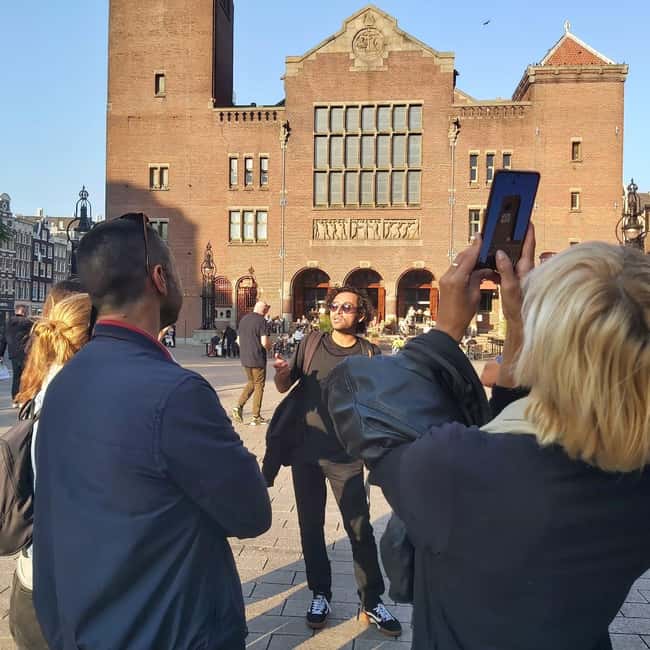
Meet outside the Barbizon Palace Hotel on Prins Hendrikkade. The starting area is opposite Amsterdam Central Station, so it is easy to reach if you are arriving by train or beginning your sightseeing near the waterfront.
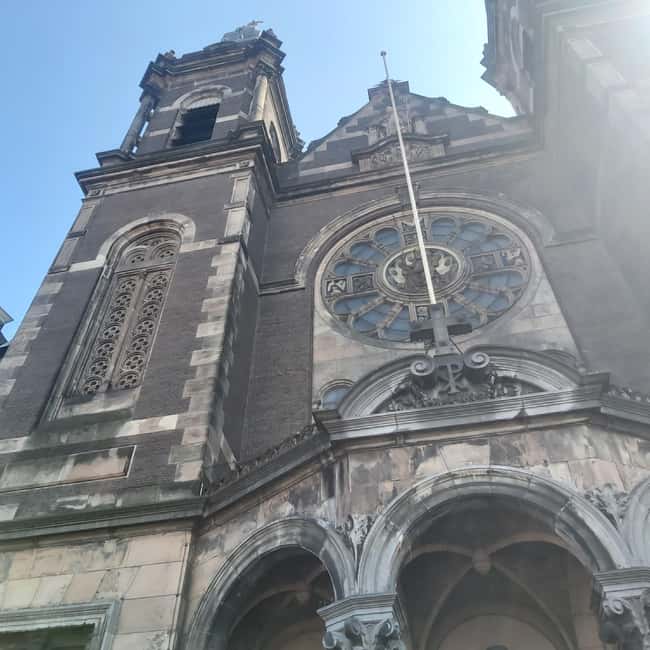
The opening point is the St. Nicholas Basilica. Its location gives the guide a natural way to introduce Amsterdam’s maritime past and early growth. You are not simply dropped into the Red Light District without context. Instead, you start by considering how the port helped Amsterdam become an international city.
The basilica also gives you a useful orientation point. Central Station, the water, and the old city streets are all close together here. Arrive ready to walk, because the tour moves into narrow streets soon after the introduction.
Zeedijk and Amsterdam’s port character
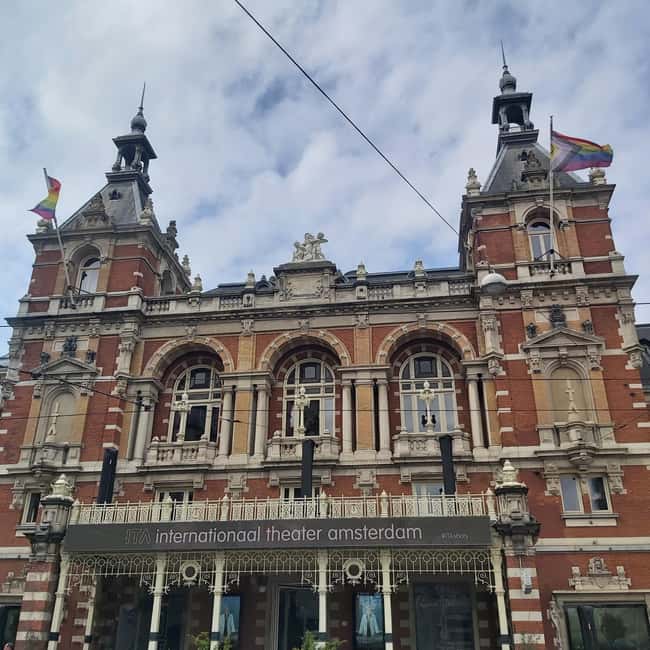
The walk continues toward Zeedijk, a street with a long connection to sailors, drinking houses, trade, and Amsterdam’s multicultural past. This is one of the most useful parts of the tour because it shows how the district’s social life grew from its position near the harbor.
Zeedijk is not presented only as a party street. Its older buildings and traditional bars help explain who passed through the area and why entertainment took root here. The guide’s stories about sailors and people from different parts of the world give the street a human scale.
I like this early section because it links the Red Light District to ordinary city forces. Ports create demand for lodging, food, drink, worship, work, and companionship. Those needs shaped Amsterdam long before modern tourism arrived.
The route includes a short photo stop at a less clearly identified location. Since the precise spot is not specified, think of it as a pause for orientation and pictures rather than a major attraction. The guide will tell you when photography is appropriate.
The He Hua Temple and a multicultural street plan
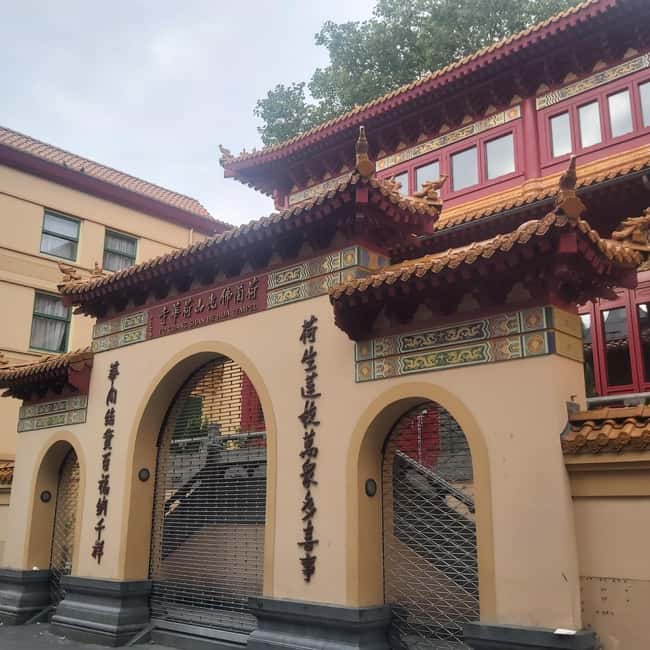
The He Hua Temple provides another change of tone. This Chinese Buddhist temple sits within the old city area and points to the many communities that have contributed to Amsterdam’s identity.
The stop is listed as a photo stop, not a full interior visit. You should not expect an extended tour inside the temple. Still, it adds an important visual and cultural layer to the walk. The Red Light District is often described in narrow terms, while the surrounding streets show a much wider range of religious and cultural life.
Photography is allowed in general, but photography inside is not permitted where the rules apply. Bring a camera if you like, but wait for the guide’s instructions. That is especially sensible around religious sites and private businesses.
Same canals, a completely different sort of afternoon:
- Amsterdam: Heineken Experience Ticket
★ 4.6 · 30,055 reviews - Amsterdam: Rijksmuseum Entry Ticket
★ 4.7 · 25,535 reviews - Amsterdam: Classic Boat Cruise with Optional Cheese & Wine
★ 4.6 · 22,925 reviews - Amsterdam: Evening Cruise with Optional Wine and Snacks
★ 4.4 · 19,696 reviews
Nieuwmarkt and De Waag’s city gate
The route then reaches Nieuwmarkt Square, home to De Waag. This imposing building began as a city gate and later served as a weighing house, reflecting Amsterdam’s close ties to commerce and civic control.
This stop gives you a look at how the city managed goods and movement. Amsterdam’s wealth did not appear by accident. Trade required gates, scales, taxes, markets, storage, and rules. De Waag helps turn that economic story into something you can see.
The square also offers a break from the narrow lanes. You can look around, take photographs, and listen without having to squeeze past as many people. The stop is scheduled for about ten minutes, so the guide will focus on selected details rather than cover every chapter of the building’s past.
From here, the story turns more directly toward the district’s development. Greater prosperity brought more residents, more visitors, and more demand for nightlife and sexual services. The guide explains how those pressures helped create the neighborhood’s long-running reputation.
Entering the Red Light District canals
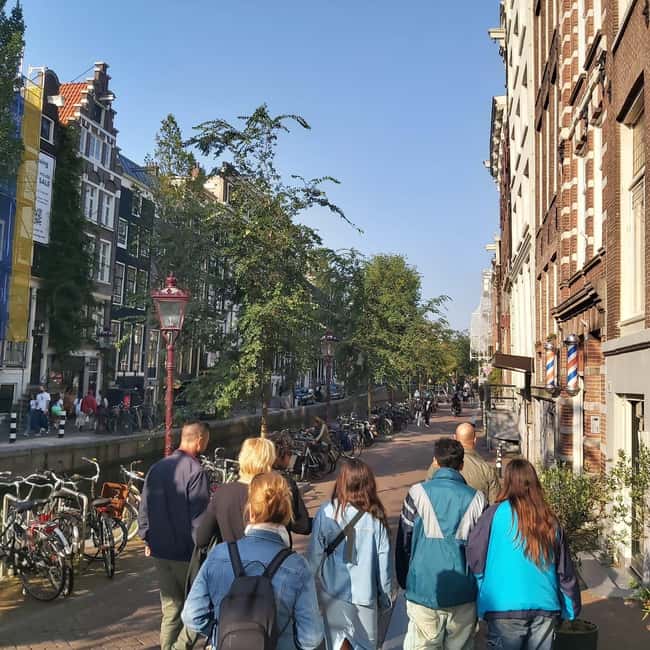
The main walking section through the Red Light District takes about twenty minutes. You follow streets and canals around Oudezijds Voorburgwal, one of the central waterways in the area.
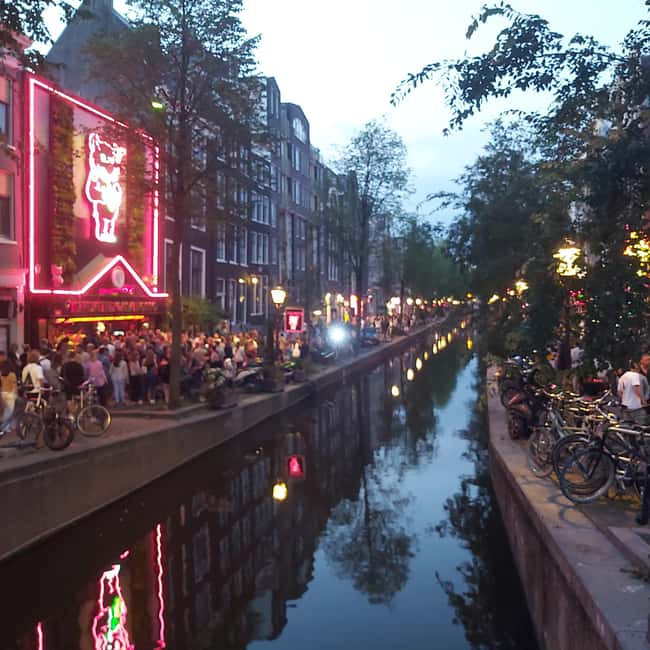
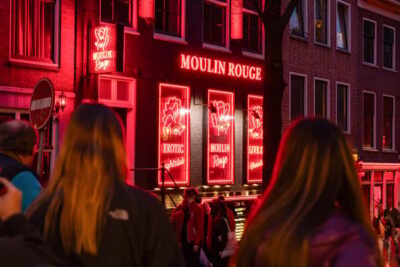
This is where the tour’s subject becomes most immediate. You see the narrow lanes, canal houses, businesses, and famous red-lit windows that made the district internationally known. The guide’s role is to explain what you are seeing without reducing the neighborhood to spectacle.
The stories cover the district’s medieval beginnings, its expansion during the Dutch Golden Age, and its later connection with prostitution and nightlife. Just as important, the guide discusses how Amsterdam became associated with tolerance and progressive thought. That does not mean every practice has been simple or free from conflict. It means the city developed a reputation for handling certain activities through regulation and open discussion rather than only through prohibition.
Keep your voice down and follow local rules. This remains a working neighborhood, not an open-air stage. Do not photograph sex workers or private interiors. The tour information specifically says the guide will advise when you may use your camera.
The area can be crowded and visually intense. If you prefer quiet sightseeing, this section may feel uncomfortable. If you want context for one of Amsterdam’s most debated neighborhoods, it is the core reason to book.
Oude Kerk, Amsterdam’s oldest building
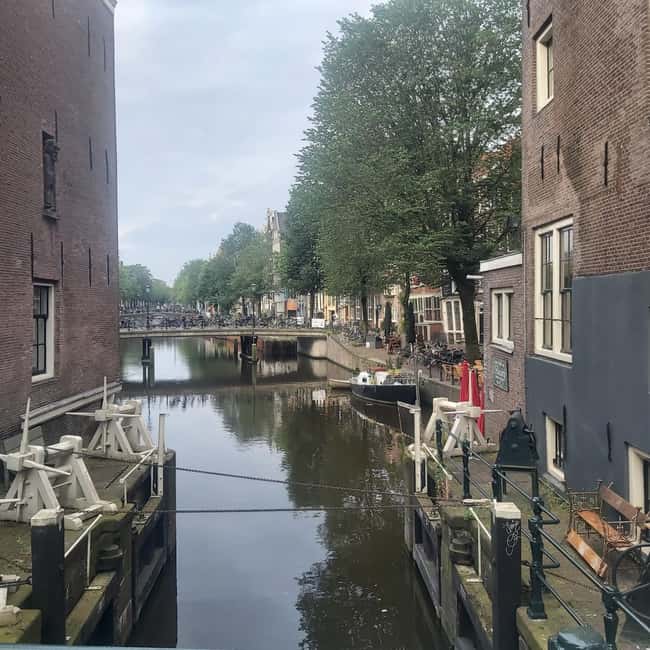
The tour includes a visit to Oude Kerk, described as Amsterdam’s oldest building. Its presence in the middle of the district creates one of the route’s most striking contrasts: a major religious building surrounded by nightlife and commercial entertainment.
The church helps explain how old and layered this part of Amsterdam is. Religious life, trade, housing, prostitution, and public life did not exist in separate modern zones. They developed side by side over centuries.
The scheduled stop lasts about fifteen minutes. Since no admission is included, the word visit should not be read as a guaranteed extended interior tour. The guide will explain the building and its place in the district, while any ticket or entry cost would be your responsibility.
This is one of my favorite parts of the route because it gives the neighborhood architectural weight. The district is not only about present-day signs and windows. Its oldest building reminds you that Amsterdam’s central streets have been used, argued over, and reshaped for a very long time.
Warmoesstraat and a closer look at old nightlife
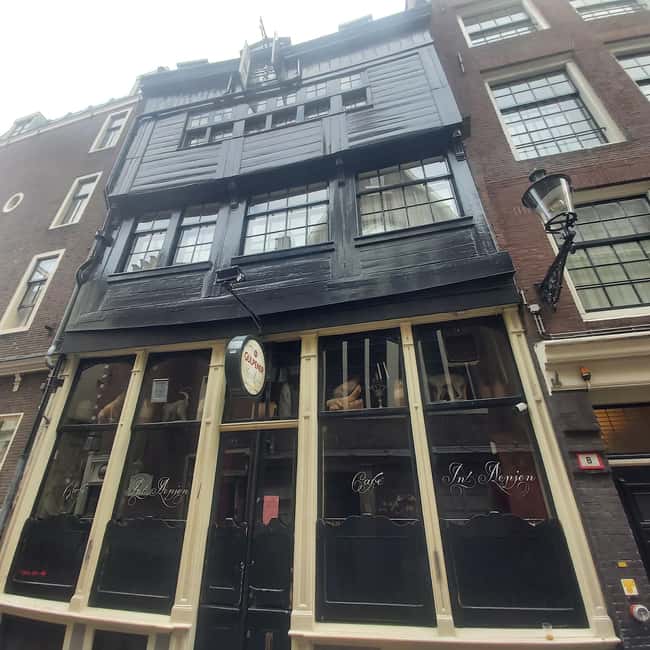
Warmoesstraat brings you along another historic street associated with hospitality, nightlife, and the movement of people through the old center. The walk here lasts about ten minutes.
You might find this section especially helpful if you are trying to understand the difference between the district’s main tourist image and its wider street network. The Red Light District is not one single road. It includes lanes, canals, squares, historic buildings, chapels, businesses, and residential spaces.
A guide can point out the connection between commerce and pleasure in a way a self-guided stroll may miss. Without context, a street can look like a collection of old facades and modern signs. With the historical explanation, you begin to see why businesses gathered here and how the neighborhood changed as Amsterdam grew.
The route also includes a stop at a less specifically named site described as a tucked-away place to visit. The exact location is not provided, so I would treat this as a bonus discovery rather than the reason to book. Its value lies in the guide knowing what to point out along the way.
Finishing near Beursplein and Dam Square
The listed route finishes at Beursplein, after the walk through Warmoesstraat and the Red Light District. The wider description also connects the end of the tour with the Royal Palace in Dam Square and its relationship to the district.
This ending brings the story back to power and prosperity. The Royal Palace represents the political and commercial center of Amsterdam, while the Red Light District reflects the everyday businesses and social demands that grew around that center. The guide uses the connection to show that the district was never completely separate from the city’s official life.
There is a small logistical point to check before setting out. The route information names Beursplein as the finish, while the meeting details say the activity ends back at the meeting point. Because those details do not match perfectly, confirm the final location when you book or ask the guide at the start.
Beursplein and Dam Square are useful areas for continuing your day. The tour does not include onward transport, meals, or drinks, so plan your next stop separately.
What the $31 price gets you
At $31 per person, this is reasonably priced for a two-hour guided walk in central Amsterdam, especially if you value Spanish-language explanations. You are paying for the guide, the route, and the local storytelling. You are not paying for food, drinks, or entry to attractions.
The value depends on how you like to visit cities. If you would happily read a short guide and walk these streets alone, you may prefer to save the money. But the district’s meaning is not always obvious from its buildings. A guide can connect Zeedijk, De Waag, Oude Kerk, the canals, and Dam Square into one historical story.
The price also makes sense as a first-day orientation. After two hours, you know the layout and can decide which parts deserve a second look. You may also avoid wandering into streets without understanding local rules about photography and respectful behavior.
The walk is offered with free cancellation up to 24 hours before the start, and you can reserve now while paying later. Those options are useful if your Amsterdam schedule depends on weather or changing plans.
Who should book this walk
I would recommend it most strongly to Spanish-speaking adults who want history, city context, and a direct look at Amsterdam’s most famous adult district. It also suits first-time visitors who want to understand the area before returning on their own.
It is less suitable if you want museum interiors, food tasting, or a private tour. No food or drinks are included, and no venue admissions are part of the price. The outdoor format also means you need weather-appropriate clothing and comfortable shoes.
The tour is not suitable for children under 14, wheelchair users, or people over 95. The narrow streets and walking pace are practical concerns, not minor footnotes. If you have limited mobility, check carefully before booking.
Wear comfortable clothes and prepare for Amsterdam weather. Non-alcoholic drinks are allowed, but alcohol and drugs are not. Keep your camera ready, but use it only when the guide says it is appropriate.
Should you book the Spanish Red Light District tour?
Book it if you want the Red Light District explained in Spanish rather than viewed as a quick photo stop. The route gives you old streets, a temple, a medieval city gate, Amsterdam’s oldest building, historic canals, and a final connection to the Royal Palace.
I especially like the balance between famous sights and the less obvious story of how a port city developed its nightlife and reputation for tolerance. The strongest guide feedback points to clear, agile explanations, so this should suit you if you prefer an engaging walking pace over a formal lecture.
Skip it if you dislike crowded adult-oriented areas, need step-free access, or want guaranteed interior visits. For everyone else, $31 is a fair price for two hours of Spanish-language history in one of Amsterdam’s most layered neighborhoods.
FAQ
How long does the walking tour last?
The tour lasts two hours. Check availability for the current starting times.
What language is the tour conducted in?
The tour is conducted in Spanish by a live Spanish-speaking guide.
Where does the tour start?
Meet your guide outside the entrance to the Barbizon Palace Hotel on Prins Hendrikkade in Amsterdam.
Where does the tour finish?
The listed route finishes at Beursplein. The meeting information also says the activity ends back at the meeting point, so confirm the final location with the guide or provider.
Does the tour include entry to Oude Kerk?
No entry fees are included. The tour includes the walking experience and guide, but venue admissions are not part of the price.
Is food or drink included?
No. Food and drinks are not included. Non-alcoholic drinks may be brought along.
Can I take photographs?
You may bring a camera, but photography inside is not allowed where that rule applies. The guide will tell you when photography is permitted.
What should I wear?
Wear comfortable shoes, comfortable clothes, and clothing suited to the weather. The entire experience takes place outdoors.
Is the tour suitable for children?
No. The activity is not suitable for children under 14 years old.
Is the route suitable for wheelchair users?
No. The activity is listed as unsuitable for wheelchair users.
Just added around Amsterdam
- From Amsterdam: The Hague Private Trip and Mauritshuis Entry★ 4.3 · 4 reviews
- VIP Private Full Day Tour of the Netherlands★ 4.8 · 6 reviews
- Amsterdam Old-West Vegan Food Tour with Local Guide★ 4.7 · 3 reviews
- Amsterdam: Van Gogh Museum Guided Tour★ 4.8 · 262 reviews
- Van Gogh Museum Private Guided Tour★ 4.2 · 10 reviews
- Vecht River: Full-day Cruise with Lunch★ 4.8 · 9 reviews
- Van Gogh and Rijksmusuem Tour: Small Group Tour with Entry★ 4.7 · 3 reviews
- Amsterdam: Van Gogh Museum Ticket & Guided Tour★ 4.4 · 187 reviews
Tours, compared.
Zaanse Schans, Edam, Volendam & Marken Bus Tour
Read our review →
Anne Frank’s Story – Guided Walking Tour through Amsterdam
Read our review →
Life of Anne Frank and World War II Walking Tour
Read our review →
Red Light District Tour in German/English/Italian
Read our review →
Guided Zaanse Schans, Windmills & Cheese Tour
Read our review →
Windmill Tour from Amsterdam, Including Volendam & Marken
Read our review →