Reviewed · TOURS
Amsterdam in World War II Tour
Amsterdam’s World War II story is written into ordinary streets, bridges, churches, and squares. This three to three-and-a-half-hour walk begins outside Anne Frank House, then follows the German occupation through central Amsterdam, ending at the National Holocaust Names Monument. It is not a museum visit. It is a street-level history lesson.
I like the very small group, limited to eight people, and the steady walking pace. I also like the use of period photos, maps, logbooks, and printed material, which helps you compare present-day Amsterdam with the city under German control. The main drawback is that the tour covers serious subjects, including deportation, execution, and Holocaust victims, so it is not light sightseeing.
Key points at a glance
- Starts outside Anne Frank House: Hear about the German attack, Jewish refugees, and Anne Frank’s setting without entering the museum.
- Led by retired historians: Peter and Ben are among the guides, bringing academic experience and personal enthusiasm to the subject.
- Small groups matter: The maximum is eight people, and the guide can keep the pace slow and answer questions.
- Dam Square gets a long look: Occupation events, the May 7, 1945 shooting, Dutch recruitment for the Eastern Front, and Remembrance Day all connect here.
- Amsterdam’s ordinary buildings gain meaning: Magna Plaza, Nieuwe Kerk, and the former city hall each carry a wartime story.
- Ends near the Holocaust Names Monument: The final location is close to the Portuguese Synagogue and not far from city hall.
Why this Amsterdam WWII walk is different
Many city walks give you a quick Anne Frank reference, point toward the Jewish Quarter, and move on. This experience takes a broader view. You learn how the German invasion affected Amsterdam, how civil servants responded, how Jewish residents and refugees were treated, and how the city remembered the war after liberation.
That wider frame is the tour’s real value. Anne Frank’s story remains central, but it is placed within the larger Dutch experience of occupation, resistance, collaboration, fear, and grief.
The guides are three retired historians with a particular interest in the German occupation of the Netherlands from 1940 to 1945. Peter and Ben are named in the available details, and both are praised for their preparation and clear explanations. You might walk with either of them, or with the third historian.
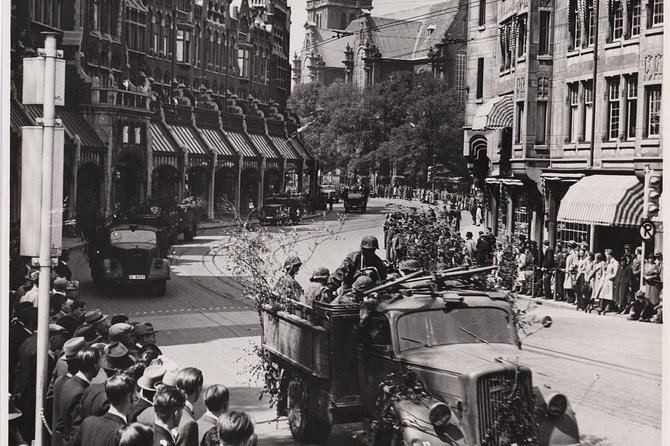
I especially like that the guide does not rely only on spoken narration. Peter and Ben have used photographs, maps, logbooks, and copies of documents during the walk. A photograph shown at the exact street where an event took place can make the past easier to grasp than a long museum label.
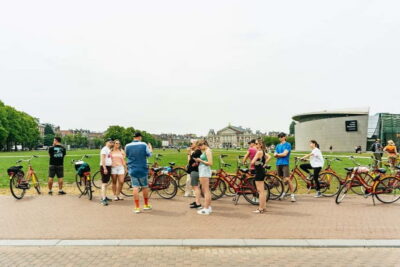
The group limit of eight also has practical value. You can hear the guide without standing in a large crowd, ask questions without interrupting a lecture, and keep the group together on Amsterdam’s busy streets. The walking pace is intentionally slow, which helps if you want time to look around rather than rush from stop to stop.
A few more days out around Amsterdam worth weighing up
- Amsterdam: Van Gogh Museum Ticket
★ 4.7 · 52,054 reviews - Amsterdam Classic Saloon Boat Cruise with Drinks and Cheese
★ 5.0 · 31,825 reviews - Amsterdam Luxury Canal Cruise + Unlimited Drinks & Bites option
★ 5.0 · 30,518 reviews
Starting outside Anne Frank House
The meeting point is Prinsengracht 263, outside Anne Frank House, with a 9:30 a.m. start. Arrive ready to begin outdoors. You do not enter the Anne Frank House, and admission to the museum is not included.
That distinction matters. If you want to visit the Anne Frank House museum, you need a separate ticket and a separate plan. This tour uses the building and its surroundings as the opening point for a story about the German attack, Jewish refugees, and the experience of Jews in occupied Amsterdam.
Beginning here is effective because the location is familiar, but the guide takes you beyond the narrow focus of the annex. You hear how the war reached the Netherlands and how the Jewish population was affected. From there, the walk expands into the city.
The opening section lasts about 10 minutes at the house itself. Do not expect a long stop inside a museum. Instead, expect context, explanation, and a link between Anne Frank’s personal story and the wider history of Amsterdam.
Walking through occupied Amsterdam
The main Amsterdam portion lasts about two and a half hours. The route connects important sites and monuments tied to the Nazi occupation, rather than treating each place as an isolated photo stop.
This is where a local guide is useful. Amsterdam’s canals and compact streets can look simple on a map, but the meaning of a street corner is not always obvious. The guide keeps you moving in the right direction while explaining how the city changed during and after the war.
The walk is slow, but three hours on foot still requires comfortable shoes. The tour information says most people can participate, and the guide sets the pace so the slowest person can keep up. You should still plan for changing weather and bring a coat or rain layer if the forecast looks uncertain.
The walk may feel emotionally heavy at times. The subject includes Holocaust victims, Nazi crimes, Dutch resistance, and the difficult choices made during occupation. One useful feature is the guide’s ability to add broader details about Amsterdam between the difficult stories, giving you a fuller sense of the city without making the subject feel casual.
Multatuli and the changing city
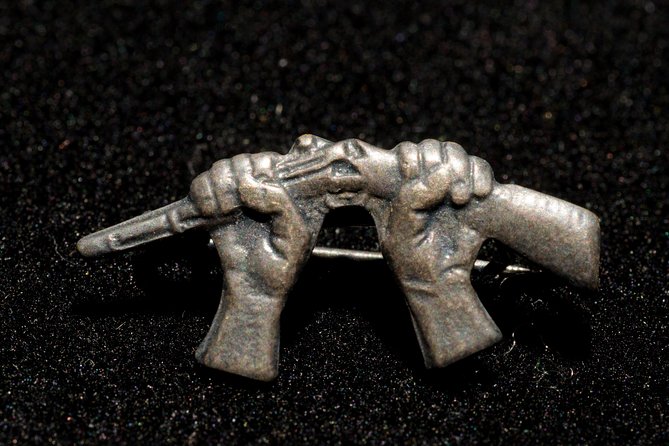
A brief stop at the Statue of Multatuli takes place around the Raadhuisstraat and the bridge over the Singel. The stop lasts about 10 minutes and focuses on how Amsterdam changed after World War II.
This is a small but worthwhile part of the route. War history is not only about what happened between 1940 and 1945. It is also about what a city chose to preserve, rebuild, forget, or reinterpret afterward.
The Multatuli stop gives the guide room to connect the wartime city with the modern streets you see today. The statue and bridge also help break up the more concentrated occupation stories with a look at Amsterdam’s later development.
Do not expect a major monument visit here. Its value is in the explanation, not in a long sightseeing stop.
Same canals, a completely different sort of afternoon:
- Amsterdam: Heineken Experience Ticket
★ 4.6 · 30,055 reviews - Amsterdam: Rijksmuseum Entry Ticket
★ 4.7 · 25,535 reviews - Amsterdam: Classic Boat Cruise with Optional Cheese & Wine
★ 4.6 · 22,925 reviews - Amsterdam: Evening Cruise with Optional Wine and Snacks
★ 4.4 · 19,696 reviews
Magna Plaza and the wartime post office
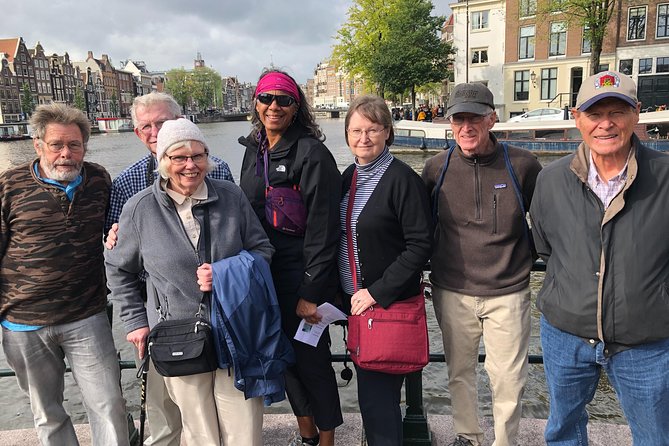
Magna Plaza is now a shopping mall operated by a Swedish entrepreneur, but during World War II the building served as Amsterdam’s post office. The stop lasts about five minutes.
That change of use is a good reminder that the buildings around you often have more than one identity. The guide explains the wartime role of Dutch postal workers and the fact that Dutch postmen were executed by the Germans.
Because the stop is short, the building itself is not the main event. You are there to understand what happened in and around it. I find this kind of stop useful because it moves the story away from famous names and into the daily systems of an occupied city, such as mail, administration, and public service.
It is also a good example of why this walk works better with a historian than with a route map alone. Without the explanation, Magna Plaza is simply an attractive old building with shops inside.
Nieuwe Kerk and the Mozes en Aäronstraat story
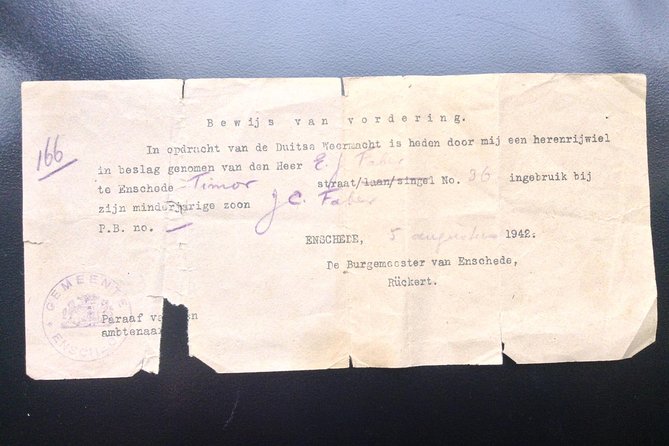
The Nieuwe Kerk stop lasts about five minutes. The guide discusses a World War II story connected with the street between the Royal Palace and the church, called the Mozes en Aäronstraat.
The stop is brief, but its location places wartime history in one of Amsterdam’s most recognizable central areas. The Royal Palace, Nieuwe Kerk, and surrounding streets usually bring visitors to think about Dutch monarchy and architecture. Here, the focus shifts to the occupation and the events remembered in this part of town.
This is another stop where you should listen closely rather than expect a large display. There is no admission charge, and the point is the guide’s account of the wartime connection.
Dam Square, the tour’s central history lesson
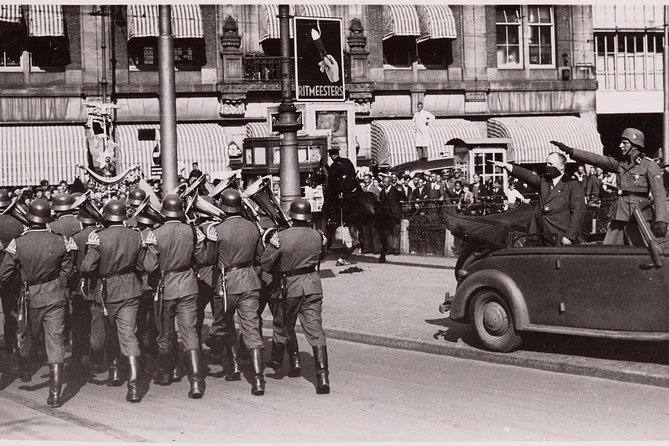
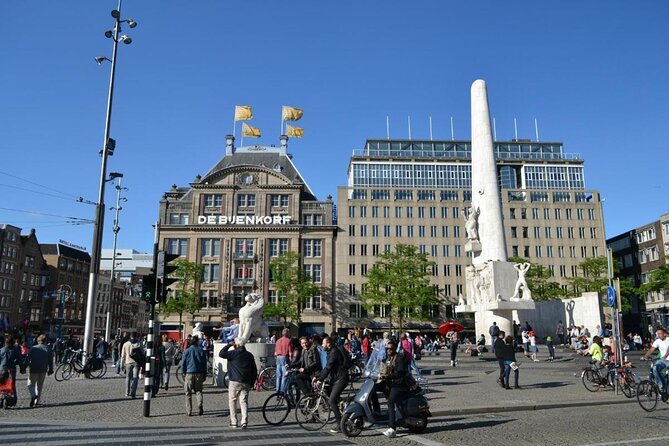
Dam Square receives the longest individual stop, about 25 minutes, and for good reason. It is the heart of Amsterdam, both in daily life and in the story of the occupation.
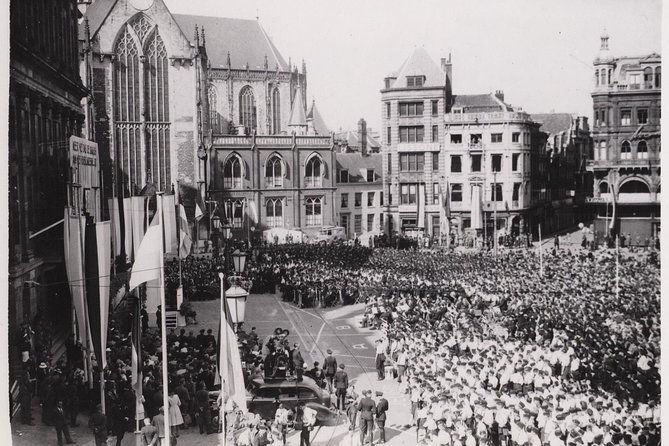
The guide covers several different moments here. You hear about what happened during the German occupation, Dutch volunteers recruited for the crusade against Bolshevism, the shooting incident on May 7, 1945, and the fact that this violence happened two days after the German surrender.
That last detail is especially important. Liberation did not mean that every danger ended at once. The May 7 incident shows how tense and unstable the first days after surrender could be.
The square also connects the tour to modern remembrance. The guide discusses May 4, the Dutch day of remembrance, and the World War II monument. This gives you a sense of how public memory works in Amsterdam, not just what happened during the war itself.
Expect a serious, detailed explanation here. Dam Square can be crowded and noisy, so the small group helps the guide gather everyone close enough to hear. The setting may not be quiet, but the stop has enough time for questions and for the guide to show images or documents.
The former city hall at The Grand
The stop at Sofitel Legend The Grand Amsterdam lasts about five minutes. The building served as Amsterdam’s city hall during World War II.
The guide explains that German troops were welcomed by Dutch civil servants on May 15, 1940. That detail opens a difficult question about public administration under occupation. It shows that the story was not simply Germans on one side and every Dutch citizen on the other. Officials, institutions, and ordinary people faced choices under a new and threatening authority.
You do not need to enter the hotel for this part of the tour. The building’s wartime role is explained from the route, and admission is free.
I like this stop because it complicates the usual wartime story. It asks you to think about what happens when a government and its civil service continue functioning under foreign control. The short time here is enough to establish the point before the group moves toward the final location.
Ending at the National Holocaust Names Monument
The walk ends at the National Holocaust Names Monument, at 1018 DP Amsterdam. It is close to the Portuguese Synagogue and not far from city hall.
Ending here gives the tour a clear emotional and historical direction. The walk begins with Anne Frank House, a single address known around the world, and ends with a monument dedicated to the names of Holocaust victims. The movement from one place to the other helps place individual stories within the scale of the wider crime.
The end point also gives you a chance to continue exploring nearby sites on your own. The Portuguese Synagogue is close, and city hall is not far away. The tour does not include private transportation, so you finish in the city rather than being returned to the starting point.
Plan your next activity with that in mind. You may want a quiet break after the tour rather than an immediate museum visit. Coffee and tea are not included, though one person described enjoying a coffee break on a cold, windy day, so you might want to budget for a drink along the way.
What the $46.44 price gets you
At $46.44 per person, this is priced above a basic free walking tour but below a private guide for one or two people. The key difference is the subject focus and the guide’s preparation.
You are paying for roughly three to three-and-a-half hours with a retired historian, a maximum group of eight, and a route built around World War II sites. Photos, maps, logbooks, and copies to take away add useful material beyond a standard spoken walk.
The value is strongest if you want a serious history lesson and would otherwise spend time trying to connect these sites yourself. You can see many of the same buildings for free, of course. What you cannot easily recreate is the sequence of stories, the period images, and the chance to ask a historian why a particular building or square matters.
The price is less compelling if you only want a general introduction to Amsterdam or a quick look at Jewish Quarter highlights. This walk gives most of its time to wartime history, so book it for the subject, not simply for sightseeing.
The experience is commonly booked well ahead, with an average booking time of 44 days. Since the group is small and departures can depend on a minimum number of participants, early planning makes sense if the date matters to you.
Who should book this experience
I would choose this tour if you have a strong interest in World War II, the Holocaust, Dutch resistance, or the moral choices made under occupation. It also suits anyone who wants a more serious follow-up to visiting Anne Frank House.
The tour can work well for families with older children, provided they are ready for difficult material. The guide’s use of photographs and maps can help make the subject understandable, but the content includes executions, persecution, and mass murder.
It is also a good fit if you prefer conversation over a large audio-guided group. The group limit creates room for questions, and the guides adjust the walking pace. If you have mobility concerns, note that the tour is a three-hour walking activity, even though the pace is slow.
You should skip it if you want a light morning of canals, architecture, and local food. There are pleasant Amsterdam details along the route, but World War II remains the focus from start to finish.
Practical details before you go
The meeting point is outside Anne Frank House at Prinsengracht 263, and the start time is 9:30 a.m. Confirmation is provided when you book. The route is near public transportation, and service animals are allowed.
The tour is held outdoors and requires good weather. If poor weather forces cancellation, you are offered another date or a full refund. You can also cancel for a full refund up to 24 hours before the start time. Changes or cancellations inside that 24-hour window are not accepted and are not refunded.
Wear comfortable shoes and allow enough time to reach the starting point. The guide walks slowly, but the total duration can stretch to three and a half hours when questions and extra explanations are included.
The advertised maximum is eight people. Some departures may be smaller, which is useful when you want to hear the guide’s stories and examine the photographs without being pushed to the back of a crowd.
Should you book the Amsterdam in World War II Tour?
Book it if you want Amsterdam’s wartime story explained by a retired historian rather than reduced to a few famous names. The small group, slow pace, photographs, and carefully chosen stops give the walk real substance for the price.
I would be especially keen to take it after visiting Anne Frank House, since this tour does not include museum entry but adds the wider city context that a single building cannot provide. Peter and Ben both bring strong subject knowledge, and the format allows them to answer questions rather than recite a fixed script.
Just go in prepared for a sober morning. This is not a casual city stroll. It is a thoughtful walk through occupation, resistance, persecution, liberation, and remembrance, ending at a monument that keeps the victims’ names at the center.
FAQ
How long does the Amsterdam in World War II Tour last?
The tour lasts approximately three to three-and-a-half hours. The walking pace is slow.
Where does the tour begin?
It begins at Prinsengracht 263, 1016 GV Amsterdam, outside the Anne Frank House.
What time does the tour start?
The scheduled start time is 9:30 a.m.
Does the tour enter Anne Frank House?
No. The tour begins outside Anne Frank House and discusses the German attack and Jewish refugees. Museum admission is not included.
Where does the tour end?
It ends at the National Holocaust Names Monument, close to the Portuguese Synagogue and not far from city hall.
How many people can join the tour?
The maximum group size is eight people.
Is transportation included?
No. Private transportation is not included. The experience takes place as a walking tour near public transportation.
Is coffee or tea included?
No. Coffee and tea are not included in the tour price.
Can I cancel for a refund?
Yes. You can cancel at least 24 hours before the local start time for a full refund. Cancellations or changes made less than 24 hours before the start time are not accepted or refunded.
Just added around Amsterdam
- From Amsterdam: The Hague Private Trip and Mauritshuis Entry★ 4.3 · 4 reviews
- VIP Private Full Day Tour of the Netherlands★ 4.8 · 6 reviews
- Amsterdam Old-West Vegan Food Tour with Local Guide★ 4.7 · 3 reviews
- Amsterdam: Van Gogh Museum Guided Tour★ 4.8 · 262 reviews
- Van Gogh Museum Private Guided Tour★ 4.2 · 10 reviews
- Vecht River: Full-day Cruise with Lunch★ 4.8 · 9 reviews
- Amsterdam: Van Gogh Museum Ticket & Guided Tour★ 4.4 · 187 reviews
- Van Gogh and Rijksmusuem Tour: Small Group Tour with Entry★ 4.7 · 3 reviews
Tours, compared.
Zaanse Schans, Edam, Volendam & Marken Bus Tour
Read our review →
Anne Frank’s Story – Guided Walking Tour through Amsterdam
Read our review →
Life of Anne Frank and World War II Walking Tour
Read our review →
Red Light District Tour in German/English/Italian
Read our review →
Guided Zaanse Schans, Windmills & Cheese Tour
Read our review →
Windmill Tour from Amsterdam, Including Volendam & Marken
Read our review →