
Reviewed · CANAL CRUISES
Amsterdam Cheese and Wine Canal Cruise
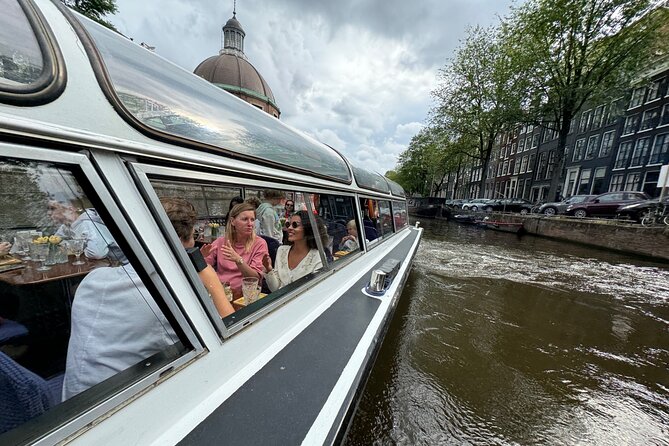
Amsterdam’s canals are best appreciated from water level, with a glass in hand and the city sliding past at walking speed. This cruise pairs Dutch cheese with wine, beer, or nonalcoholic drinks as your guide points out the Seven Bridges, Jordaan, Anne Frank House, Westerkerk, and the Skinny Bridge. The setting is relaxed, and the one-hour route covers plenty without taking half your day.
I especially like the small-boat atmosphere and the mix of food, drinks, and local stories. Guides including Ronald, Lex, Pippin, Floris, Robbie, Tom, Berent, and Michel have made the ride warm and personal, sometimes for only a handful of people. The main caution is that the boat shown in promotional images may not be the boat you board. Some departures use an open boat or a smaller covered vessel, and seating may be bench-style.
Key points to know before booking
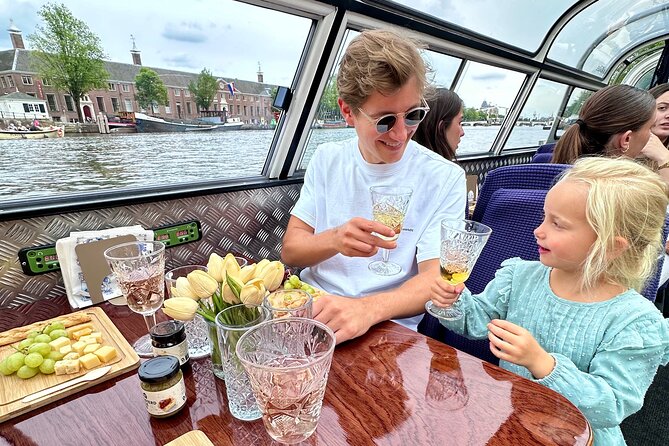
- Seven Bridges in one view: Reguliersgracht offers Amsterdam’s classic line of seven bridges.
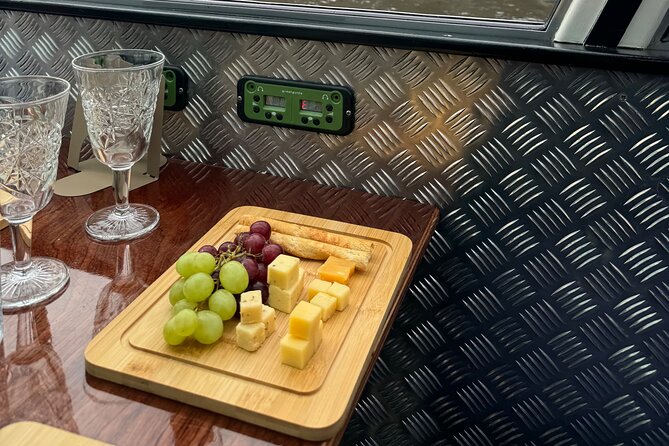
- Dutch cheese and drinks included: Expect cheese, grapes, breadsticks or crackers, plus wine, Heineken, soda, coffee, or tea.
- A history-filled route: The cruise passes the Jordaan, Anne Frank House, Westerkerk, Hermitage Museum, and Skinny Bridge.
- Boat style can vary: Some departures use a covered saloon boat, while others may be open-air or enclosed with plastic flaps.
- Personal guiding is a strength: English and Dutch commentary comes from an in-person guide, with several guides praised for humor and local detail.
- Easy, compact outing: The cruise lasts about one hour, begins and ends at Amstel 51F, and allows groups of up to 36 people.
A one-hour introduction to Amsterdam from the canals
At about $45.01 per person, this is not the cheapest way to see Amsterdam’s waterways. But the price includes the cruise, a selection of Dutch cheeses, and several drinks, so it can be fair value if you want sightseeing with a light food experience rather than a plain boat ride.
You meet at Amstel 51F, 1018 EJ Amsterdam, and return to the same place. No transportation is included, so you need to make your own way there. The meeting point is near public transportation, which keeps the outing fairly simple to fit into a day of sightseeing.
The group limit is 36 people, though the actual feel may be much smaller. Some departures have been intimate enough for a couple or even one person to receive nearly private attention. Other boats may be fuller, so you should not book solely on the assumption that every departure will feel private.
The route is designed as a moving introduction to the canal belt. You will not go inside the Anne Frank House, Westerkerk, or any museum. Instead, you see their exteriors from the water while the guide explains how they fit into Amsterdam’s story.
That distinction matters. If you want detailed architectural commentary at every building, one hour may feel brief. If you want a pleasant first look at the city, this is a useful way to get oriented without committing to a long sightseeing program.
More Boat Tours in Amsterdam
- Amsterdam Classic Saloon Boat Cruise with Drinks and Cheese
★ 5.0 · 31,825 reviews - Amsterdam Luxury Canal Cruise + Unlimited Drinks & Bites option
★ 5.0 · 30,518 reviews - Amsterdam: Classic Boat Cruise with Optional Cheese & Wine
★ 4.6 · 22,925 reviews
Herengracht and the city’s grand canal belt
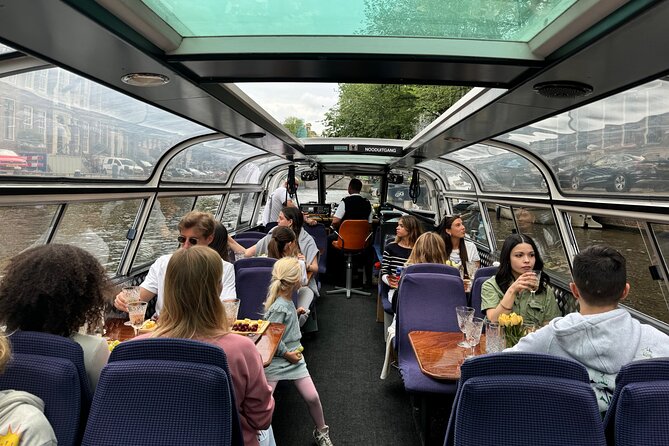
The cruise begins among the canals of the central belt, including the Herengracht. This is one of the city’s most impressive waterways, lined with tall canal houses built for Amsterdam’s wealthy merchant class.
From the boat, the canal houses make more sense than they do from a crowded pavement. You can see their narrow fronts, stepped or decorative gables, and the way they rise directly from the water. The view also helps explain Amsterdam’s unusual shape: the canals were not simply pretty waterways added later. They formed the structure of the expanding city.
Amsterdam has 165 canals with a combined length of about 100 kilometers. The canal belt has been protected as a UNESCO World Heritage site since 2008. You will not see all of it in an hour, of course, but the cruise gives you a concentrated sample of the most historic section.
I like this early part of the ride because it gives the cheese and wine a purpose. You are not just sitting in a floating restaurant. You are watching the city’s old wealth, trade, housing, and engineering pass by in a very compact setting.
Reguliersgracht and the famous Seven Bridges view
The most memorable visual moment comes at Reguliersgracht. At one point, seven bridges line up in succession, creating one of Amsterdam’s signature canal views.
This is the kind of sight that is easy to miss on foot. From street level, each bridge appears separately. From the water, they stack neatly into the distance, with repeated arches and lamps drawing your eye forward.
Have your camera ready, but do not spend the whole passage looking through it. The view is brief, and the pattern of bridges is best understood in person. Your guide may also use this point to explain how Amsterdam’s canals and bridges connect different parts of the historic center.
The Seven Bridges sight is a good example of the cruise’s value. You could walk to many of the same places, but the water gives you a cleaner angle and lets you see several bridges in one composed view.
The Jordaan and Leliegracht’s working-class roots
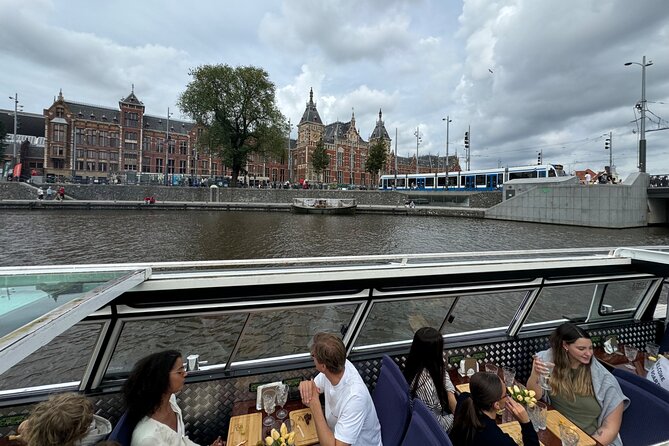
The route continues toward Leliegracht and the Jordaan area. This neighborhood began as housing for Amsterdam’s growing working class, and it still feels different from the grander canal belt.
The name Jordaan is linked to the French word jardin, meaning garden. That connection appears in the neighborhood’s plant and tree-themed street names. The streets also follow the pattern of older ditches rather than the precise geometry of the main canal belt.
That irregular layout reflects cost-cutting as much as charm. The neighborhood used waterways and drainage patterns that were already there, instead of laying out an entirely new plan. The result is a smaller-scale district with narrower streets and more modest houses.
From the canal, you get a good sense of the contrast. Herengracht was built for wealthy residents, while the Jordaan was more practical and crowded. The view is not only about handsome façades. It shows how social class shaped Amsterdam’s urban design.
If you enjoy architecture and city planning, listen closely here. Some guides give only a quick overview, while others, including guides such as Tom and Berent, have been praised for explaining the city’s buildings and origins in detail. The depth of commentary depends on your guide and the group.
More canal cruises around Amsterdam:
- Amsterdam: 75 Minute City Canal Cruise with Audio Guide
★ 4.4 · 17,501 reviews - Amsterdam: City Centre Canal Cruise
★ 4.2 · 12,827 reviews - Amsterdam Canal Cruise in Open Boat with Unlimited Drinks Option
★ 5.0 · 4,976 reviews - Amsterdam: Van Gogh Museum Ticket and City Canal Cruise
★ 4.6 · 3,899 reviews
Anne Frank House and the Westerkerk tower
On Prinsengracht, the boat passes number 263, the former hiding place of Anne Frank and her family during the Second World War. This is the building associated with her diary, Het Achterhuis, known in English as The Diary of a Young Girl.
Seeing the house from the canal is not a substitute for visiting the Anne Frank House. You do not enter, and the view is relatively short. Still, approaching it from the water gives useful context. You can see how the building sits within the long row of canal houses and how ordinary the exterior appears.
Nearby, the Westerkerk tower rises 87 meters above the city. It is Amsterdam’s highest church tower and a familiar landmark in the central canal district. Anne Frank wrote about the tower in her diary, which gives it an especially direct connection to the nearby hiding place.
The tower’s imperial crown dates from 1637. The crown also links the church to Amsterdam’s civic identity and to the city’s coat of arms. Your guide may explain that Emperor Maximilian I granted Amsterdam the right to use the crown in 1489 after receiving the city’s support during wartime.
This section of the route carries more emotional weight than the cheese-and-wine theme might suggest. The guide normally keeps the tone suitable for a sightseeing cruise, but you should be prepared for a quick passage by a place tied to wartime persecution and Anne Frank’s life.
Why Prinsengracht feels more modest
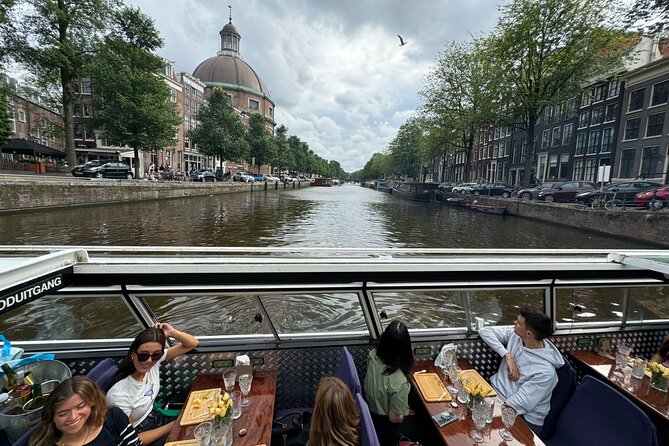
Prinsengracht was designed as a transition between the wealthy canal belt and the working-class neighborhoods around it. Its houses tend to be narrower and less decorated than those along Herengracht.
That difference is easy to miss if you only look at individual buildings. From the boat, however, the long perspective makes the contrast clearer. You see how the canal system created separate zones for different parts of Amsterdam’s population.
I find this one of the most useful ideas on the tour because it turns a pretty view into a readable city plan. The canal houses are not all from the same social world, and the guide’s comments can help you notice the practical details: frontage, ornament, width, and the relationship between the canal and the street behind it.
The canal belt contains about 1,680 bridges, compared with roughly 400 in Venice. The numbers are a reminder that Amsterdam’s water system is not a small decorative district. It is a large working structure that still shapes daily movement through the city.
Amstel Church and the Skinny Bridge
The cruise then reaches the Amstel and Amstel Church, dating from 1668. It was first built as a temporary wooden church for residents of the newly developed canal belt. Plans for a permanent stone replacement were never completed, so the temporary building survived for centuries.
Today, the church is used for cultural events. From the boat, it is another reminder that Amsterdam’s old buildings often began with practical compromises. Not every structure was intended to last for hundreds of years, yet some became part of the city’s permanent character.
The Magere Brug, or Skinny Bridge, is one of the best-known sights on the route. The original bridge was narrow and partly wooden, built when the city council wanted to save money. It was so tight that people had difficulty passing each other, which gave it the nickname Skinny Bridge.
The current bridge dates from 1934, and car traffic has been barred since 2003. It remains partly wooden, still operates as a drawbridge, and is a national monument. It has also appeared in films, including James Bond productions.
The bridge is photogenic, but the guide’s explanation makes it more interesting. You see how a simple budget decision became a defining Amsterdam landmark. If your cruise takes place in the evening, the bridge can be especially attractive, though exact lighting and views depend on the time and weather.
Hermitage Museum and the Blue Bridge
Along the Amstel, the boat passes the former Amstelhof, home to the Hermitage Museum. The building dates from 1681 and originally served as a nursing home for about 300 years. It was converted into a museum in 2007, with some rooms preserved and restored.
The Amsterdam Hermitage was an annex of the Hermitage in Saint Petersburg and shared part of its art collection with the Russian museum. The museum’s presence adds another layer to the route: Amsterdam’s waterways were tied not only to homes and churches, but also to charitable institutions, culture, and international exchange.
The final major landmark is the Blauwbrug, or Blue Bridge. Its name comes from an earlier drawbridge with blue railings. The current bridge was built in 1883 and was influenced by Paris’s Pont Neuf.
The bridge received a grand design because Amsterdam was hosting the World Exhibition that year. Imperial crowns decorate the top, echoing the crown on Westerkerk and the crown in Amsterdam’s city arms. The crown refers to the Holy Roman Emperor Maximilian I, whose connection with the city helped support Amsterdam’s status and trade.
The Blue Bridge is a fine closing sight because it looks more monumental than the narrow canal bridges earlier in the ride. You see a shift from small local crossings to a formal city gateway over the Amstel.
Cheese, wine, beer, and the practical food experience
The included food is a selection of Dutch cheeses, served with items such as grapes, breadsticks, or crackers. The portions have been described as generous by some riders and simply sufficient by others, so I would treat this as a tasting plate, not dinner.
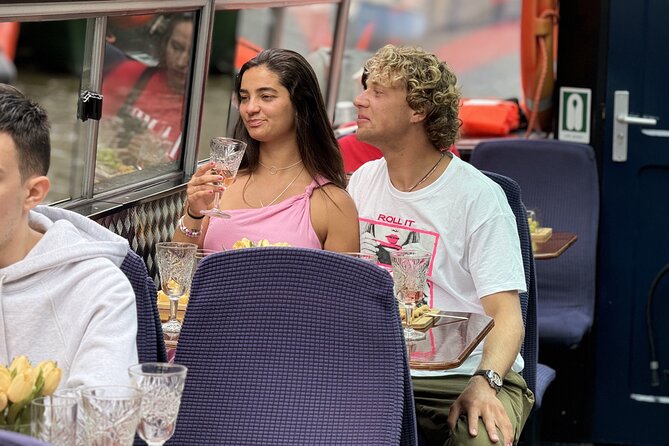
The drinks include wine, Heineken beer, soda, coffee, and tea. Some departures also offer mulled wine. The range is useful for mixed groups, since not everyone wants alcohol and a canal ride in cool weather can make coffee or tea welcome.
This arrangement works best when you see it as a social snack alongside sightseeing. You get enough to nibble while listening, but the exact serving setup depends on the boat. One boat may have a table or an easy-to-reach cheese board. Another may use a small shelf or bench seating, which is less convenient if you need one hand for your glass.
A guide such as Berent may explain cheese and wine pairings, while another guide may focus more heavily on Amsterdam’s buildings and local customs. The experience is strongest when the guide balances both. The food gives the tour a clear theme, but the city remains the main attraction.
Boat style, seating, and weather concerns
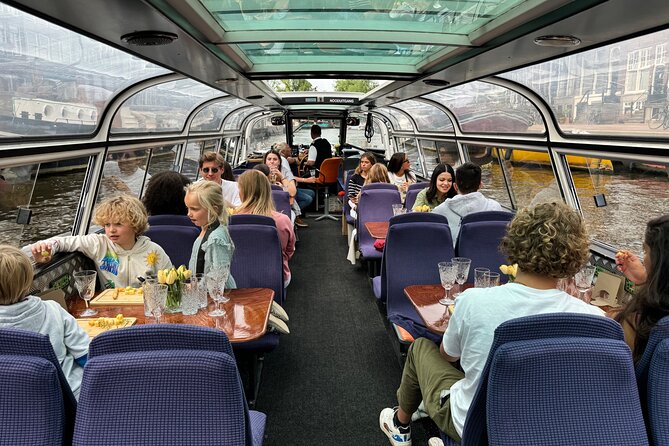
This is the point I would take most seriously before booking. The supplied images and the boat used on a particular departure do not always match. Some departures use a covered saloon boat with glass or enclosed sides, while others may use an open-air boat or a smaller vessel with plastic flaps.
That affects comfort, views, and seating. A covered boat can help in cold or wet weather and may offer clearer protection from direct sun. An open boat can give you a more direct view, but it may expose you to wind and sunlight. Bench seating may also make it harder to balance a cheese board and wine glass than a boat with individual seats and a table.
One account described a small older boat with limited space and poor visibility through plastic flaps. Another described a quiet electric boat with a private saloon feel. These are not minor differences, so contact the operator if boat design, sun protection, or table seating is important to you.
The group maximum is 36, but the mood can range from intimate to more communal. Guides such as Floris and Robbie have created a lively experience for very small groups, while Ronald has also led solo departures when only one person booked. You may receive plenty of personal attention, but it depends on the date and departure time.
Who will get the most from this cruise
I would choose this outing for a first evening in Amsterdam, a couple looking for a calm shared activity, or anyone who wants sightseeing without a long walking route. The one-hour length makes it easy to place between museum visits, dinner, or an evening stroll.
It also suits people who like local history in manageable portions. You will hear about canal planning, working-class housing, churches, bridges, wartime Amsterdam, and civic symbols without sitting through a long lecture.
Families and mixed-age groups may appreciate the short duration and included soft drinks, coffee, and tea. The boat is also suitable for most participants, and service animals are allowed. Still, seating and boat design can vary, so anyone with specific mobility, sun, or comfort needs should confirm the setup before paying.
I would not choose it as your only Amsterdam history experience. The commentary may be detailed with one guide and lighter with another. You also do not get interior visits, extended time at any landmark, or a full meal.
Price, timing, and cancellation
At $45.01 per person, the experience makes the most sense if you would otherwise pay for both a canal cruise and drinks. Dutch cheese, wine, beer, soda, coffee, and tea are included, which removes the need to order separately during the ride.
The average booking lead time is about 63 days, suggesting that popular dates may fill early. You can cancel for a full refund up to 24 hours before the start time. Changes or cancellations made inside that 24-hour window are not accepted for a refund, using local Amsterdam time.
The cruise is offered in English, with in-person guides also able to provide Dutch commentary. Confirmation arrives at booking, and the activity returns to the starting point, so you do not need to arrange a second pickup after the ride.
Should you book the Amsterdam Cheese and Wine Canal Cruise?
I would book it if you want a short, social canal ride with real Dutch cheese and drinks included. The Seven Bridges, Anne Frank House, Westerkerk, Skinny Bridge, and Blue Bridge give the hour a solid sightseeing route, while guides such as Ronald, Lex, Pippin, and Tom can add the personal touch that makes a small boat memorable.
I would hesitate if the boat shown in the photographs is essential to your decision. Ask about the vessel, seating, roof, and weather protection before booking. If you are comfortable with some variation, this is a pleasant and fairly efficient way to see central Amsterdam from the water, especially at the start of your visit.
FAQ
How long does the Amsterdam Cheese and Wine Canal Cruise last?
The cruise lasts approximately one hour.
What food and drinks are included?
The experience includes a selection of Dutch cheeses, along with drinks such as Heineken beer, wine, soda, coffee, and tea. Grapes, breadsticks, or crackers may accompany the cheese.
Where does the cruise start and finish?
The cruise starts at Amstel 51F, 1018 EJ Amsterdam, Netherlands, and ends back at the same meeting point.
Is transportation included?
No. Transportation to and from the meeting point is not included, though the location is near public transportation.
What language is the tour offered in?
The experience is offered in English. In-person guides can also provide commentary in Dutch.
Can I cancel for a full refund?
Yes. You can cancel at least 24 hours before the experience start time for a full refund. Cancellations or changes made less than 24 hours before the start time are not accepted for a refund.
More Cheese Tastings around Amsterdam
- Amsterdam: Guided Zaanse Schans, Windmills & Cheese Tour
★ 4.4 · 4,826 reviews - Zaanse Schans Windmills, Clogs and Dutch Cheese Small-Group Tour from Amsterdam
★ 4.5 · 2,369 reviews - Countryside Bike Tour from Amsterdam: Cheese, Clogs & a Windmill
★ 5.0 · 1,485 reviews - Amsterdam: Giethoorn Tour Scenic Cruise, Cheese & Free Time
★ 4.7 · 1,461 reviews
Just added around Amsterdam
- From Amsterdam: The Hague Private Trip and Mauritshuis Entry★ 4.3 · 4 reviews
- VIP Private Full Day Tour of the Netherlands★ 4.8 · 6 reviews
- Amsterdam Old-West Vegan Food Tour with Local Guide★ 4.7 · 3 reviews
- Amsterdam: Van Gogh Museum Guided Tour★ 4.8 · 262 reviews
- Van Gogh Museum Private Guided Tour★ 4.2 · 10 reviews
- Vecht River: Full-day Cruise with Lunch★ 4.8 · 9 reviews
- Van Gogh and Rijksmusuem Tour: Small Group Tour with Entry★ 4.7 · 3 reviews
- Amsterdam: Van Gogh Museum Ticket & Guided Tour★ 4.4 · 187 reviews
Canal Cruises, compared.
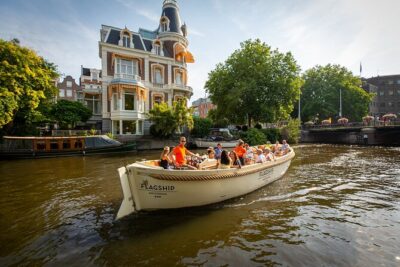
Amsterdam Luxury Canal Cruise + Unlimited Drinks & Bites option
Read our review →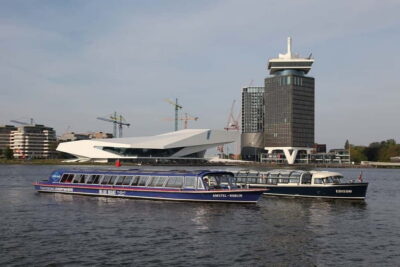
75 Minute City Canal Cruise with Audio Guide
Read our review →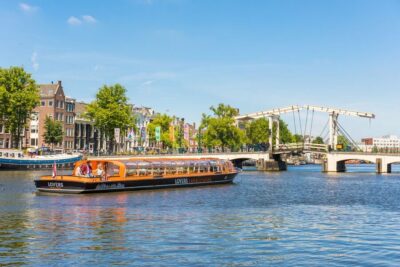
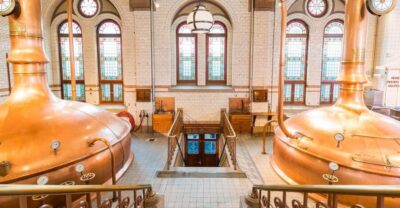
City Canal Cruise and Heineken Experience Ticket
Read our review →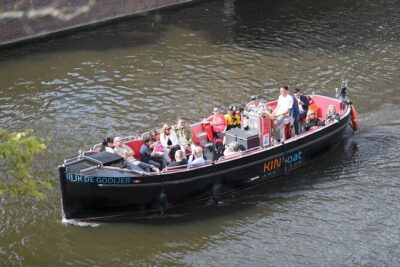
Amsterdam Canal Cruise in Open Boat with Unlimited Drinks Option
Read our review →

Amsterdam Evening Canal Cruise with Live Guide and Onboard Bar
Read our review →
Browse the lists this tour appears in