Reviewed · AMSTERDAM TOURS
Amsterdam: Architektur Er-fahren
Amsterdam’s architecture makes the most sense from a bicycle. On this German-language tour, you ride from Beursplein toward the IJ and Amsterdam Central, seeing how canals, warehouses, houseboats, and new buildings answer the same old problems: too little land, too much water, and a growing population. The focus is architecture in use, not just pretty façades.
I like the small group of no more than 10 people, which should make it easier to hear the guide and pause at good viewpoints. I also like the mix of industrial and picturesque Amsterdam, plus the practical stories about social housing, luxury housing, and the city’s struggle with its wet ground. The main drawback is simple: you must provide your own bicycle, and the tour runs rain or shine.
Key points at a glance
- A 2.5-hour ride through changing Amsterdam: Begin at Beursplein, cycle along the IJ, and return to the starting point.
- Architecture with a practical purpose: Learn how Amsterdam responds to water, weak ground, limited space, and population growth.
- A strong contrast of old and new: See canal houses and historic warehouses beside modern buildings and new housing projects.
- The Western Islands add a different side of the city: Industrial buildings, water views, houseboats, and quieter streets shape this part of the route.
- German-language guidance in a small group: The tour is limited to 10 participants and includes historical background, local life, and amusing stories.
- Bring your own functioning bicycle: Bike rental is not included, and a suitable rental may cost about €5 to €25.
Why Amsterdam’s architecture works best by bike
From street level, Amsterdam can sometimes look like a collection of handsome canal houses. The bicycle gives you a wider view. You can move from a canal lined with narrow historic buildings to a waterfront of warehouses, houseboats, and modern construction without spending your time underground or inside a vehicle.
That movement is important because the tour is built around contrast. You are not looking only at old Amsterdam, and you are not being shown modern buildings as isolated design objects. You are asked to consider why each type of building appeared where it did and what problem it was meant to solve.
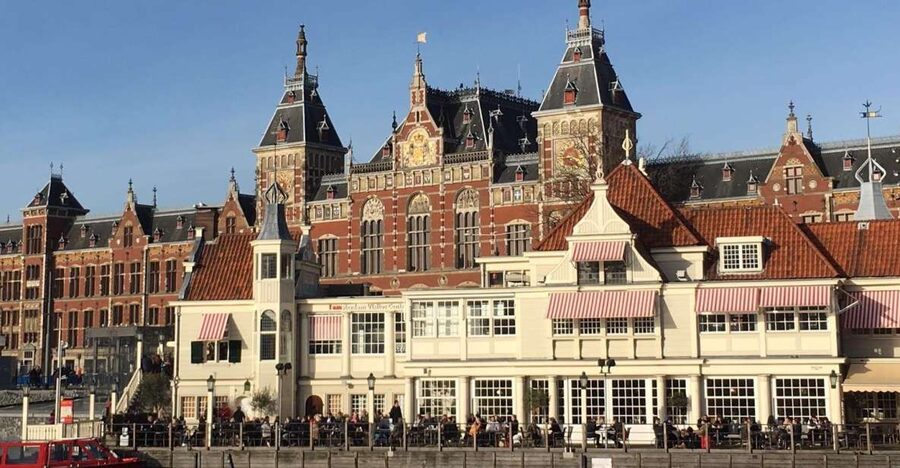
The route begins at Beursplein on the Damrak, close to the center and Amsterdam Central. From there, you cycle toward the IJ and follow the water to selected viewpoints. You then return to the starting point after about two and a half hours.
I like this format for a first or second day in Amsterdam. You get an overview of several parts of the city, and the guide’s explanations can help you read other buildings later in your stay. One person who took the tour found that the architectural ideas transferred easily to buildings seen elsewhere in Amsterdam. That is a useful sign: the tour aims to teach you how to look, not just point out a few famous addresses.
A few more days out around Amsterdam worth weighing up
- Amsterdam: Van Gogh Museum Ticket
★ 4.7 · 52,054 reviews - Amsterdam Classic Saloon Boat Cruise with Drinks and Cheese
★ 5.0 · 31,825 reviews - Amsterdam Luxury Canal Cruise + Unlimited Drinks & Bites option
★ 5.0 · 30,518 reviews
Beursplein and the first look at the Damrak
Beursplein is a practical meeting point because it sits in the central area near the Damrak. You identify the guide by the black and white striped band around their neck. Since the experience is in German, make sure this is the language you want before booking.
The opening stretch leads toward the IJ and Amsterdam Central. This gives the tour a clear starting argument: Amsterdam has always been shaped by movement, water, trade, and the need to build on difficult ground. The guide puts the city’s buildings into that setting rather than treating them as decoration.
You will hear about historic canals and warehouses, but the point is not to tick off postcard views. The guide connects the old structures to the city’s basic challenges. Water affects where people build. Limited land affects how much space homes can offer. Population growth creates pressure for both affordable housing and more expensive homes.
That combination is one of the tour’s strongest subjects. Amsterdam’s architecture is not only a story of wealthy canal merchants or photogenic gables. It is also a story of housing needs and practical compromises. The discussion of social housing alongside luxury housing should give you a more balanced view of the city’s growth.
Along the IJ, where warehouses meet new ideas
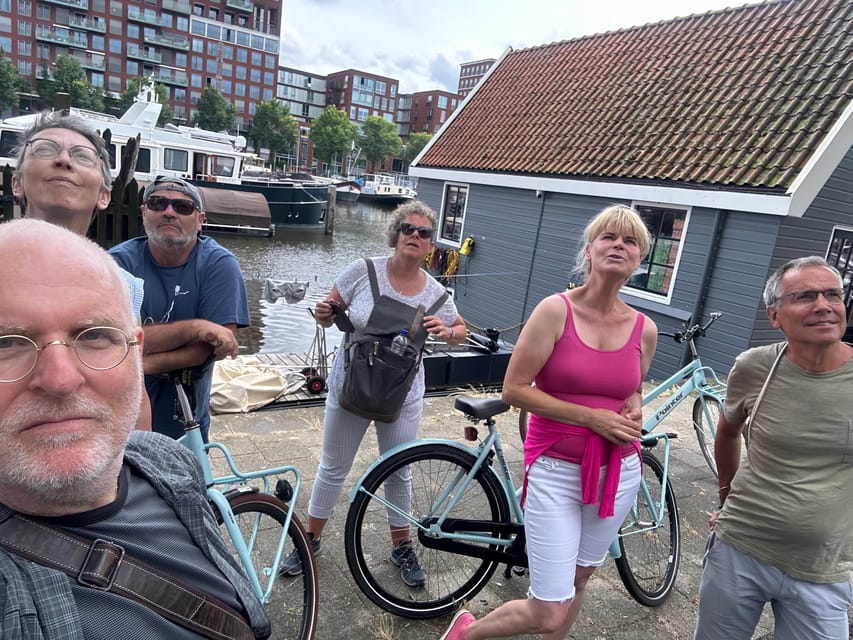
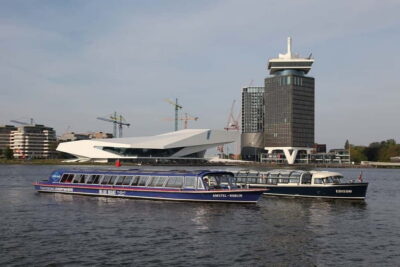
Cycling along the water changes the mood. The IJ opens up the views, while the buildings reveal Amsterdam’s working side. Industrial architecture can look plain compared with the canal center, but it tells you what the city needed from the waterfront: storage, access, trade, and room for activity.
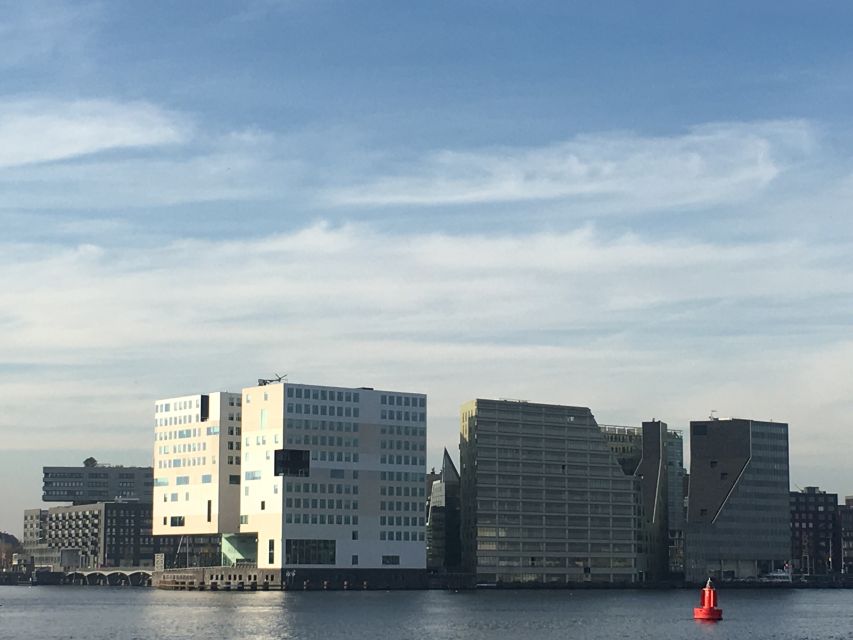
The guide also points out modern architecture and new solutions in function and design. You might find yourself comparing a sturdy warehouse with a newer building that uses its site in a very different way. The value is in the comparison. You can ask why one building turns toward the water, why another uses a certain shape, or how new construction deals with a crowded city.
The tour’s focus on land conditions is especially useful. Amsterdam was not built on easy ground, and water remains part of daily urban planning. That helps explain why construction here often requires careful engineering and why the relationship between streets, canals, and buildings feels so deliberate.
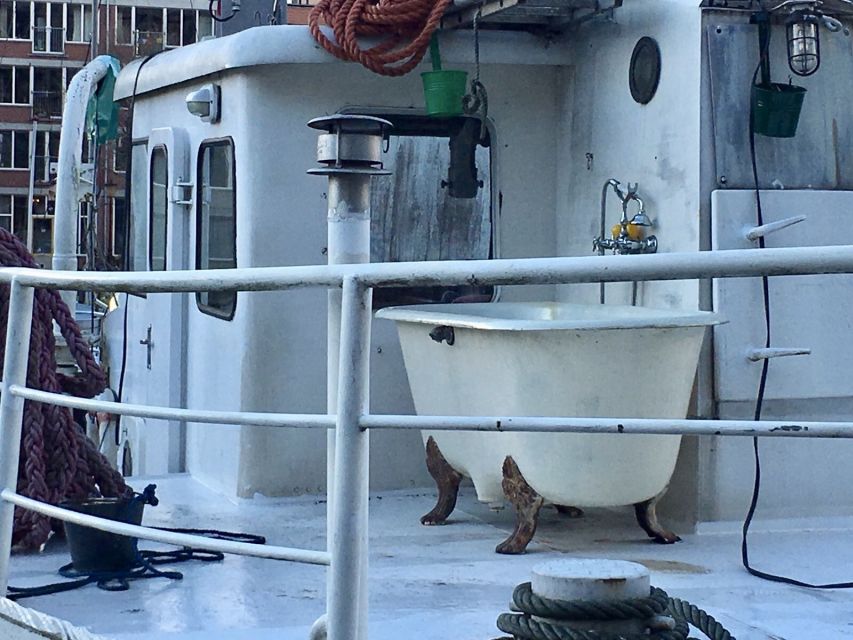
You will also see houseboats. They are not simply colorful additions to the view. They raise questions about how people live on the water and how a city uses every available part of its limited space. From a bicycle, you can take in the boats, the water, the façades, and the working waterfront as one connected scene.
The ride itself should also help you understand scale. A building can look modest from one angle and much larger when you pass it beside the water. A row of warehouses may seem uniform at first, then reveal different dates, materials, and functions as you move along.
The Western Islands and Amsterdam’s industrial character
The Western Islands are a key part of the route. This area gives the tour room to move away from the familiar canal-center image and into a setting where industrial and picturesque architecture sit close together.
That contrast is a good reason to choose this tour over a standard old-town ride. You may see quieter waters, warehouses, houseboats, and newer projects in the same general outing. The architecture can feel less polished than the center, but that is exactly why it is useful. You get a view of Amsterdam as a working city, not just a historic display.
The picturesque side is still present. Water, narrow streets, and older structures can create the familiar Amsterdam atmosphere. But the tour does not pretend that the city developed in one neat style. Industrial buildings, housing, and modern designs reflect different needs at different times.
I would pay close attention to the guide’s explanations here. The buildings may not all be famous, and you might not remember every name. What matters is learning to notice how a building meets the street, uses the water, handles limited space, or serves a particular group of residents.
The small group helps in this part of the tour. With no more than 10 participants, the guide can explain a detail without having to shout over a large crowd. You should still expect a moving bicycle group, so staying alert around other cyclists and traffic remains part of the experience.
Same canals, a completely different sort of afternoon:
- Amsterdam: Heineken Experience Ticket
★ 4.6 · 30,055 reviews - Amsterdam: Rijksmuseum Entry Ticket
★ 4.7 · 25,535 reviews - Amsterdam: Classic Boat Cruise with Optional Cheese & Wine
★ 4.6 · 22,925 reviews - Amsterdam: Evening Cruise with Optional Wine and Snacks
★ 4.4 · 19,696 reviews
Historic canals, social housing, and luxury homes
A useful feature of the tour is its attention to the tension between social housing and luxury housing. Amsterdam’s growth creates demand at both ends, and the buildings around you show how planners and architects respond.
Historic canal houses often make the city look settled and complete. In reality, the housing question is ongoing. New projects must fit into a city with established streets, water channels, protected views, and limited room. The tour presents modern construction as part of that continuing story.
This is where the experience can give you a better understanding of buildings you pass later on your own. Instead of seeing a new apartment block as an interruption, you can consider its function. Is it adding homes? Making use of a difficult site? Offering a different way to live near the water? The guide’s examples help you ask those questions.
The tour also includes a historical overview of Amsterdam. That background matters because architecture changes when the city’s population, economy, and needs change. The historical section is not separate from the design discussion. It gives you a timeline for understanding why older buildings and new projects look and work so differently.
You should expect a mix of serious information and amusing stories about Dutch life and Amsterdam’s past. That balance is valuable during a two-and-a-half-hour ride. A nonstop lecture would make the cycling feel heavy, while sightseeing without context would leave you with attractive views but little understanding.
What the cycling pace means for you
This is not a walking tour with a bicycle parked at the side. You cycle throughout the experience, including the return to Beursplein. You need to be comfortable riding in Amsterdam and able to manage your bicycle for the full 2.5 hours.
The tour requires your own vehicle, meaning your own bicycle. Bike hire is not included in the €46 price. You can usually rent a bike from your hotel or from one of Amsterdam’s many rental shops, with typical costs given as about €5 to €25.
That changes the value calculation. If you already have a bicycle, €46 buys a guided small-group experience with a clear subject and a good amount of instruction. If you need to rent one, add that cost before comparing this tour with other options.
Make sure the bicycle is functional and roadworthy. This is not the place for a bike with unreliable brakes, a loose chain, or a saddle you cannot adjust. Comfortable shoes and clothes matter too, since you will be riding and making stops rather than sitting for most of the time.
Water is also on the suggested packing list. Dress for the weather, and remember that the tour runs rain or shine. Amsterdam weather can change quickly, so a waterproof layer is more useful than wishful thinking. Alcohol and drugs are not allowed, and intoxicated participants are not suitable for the activity.
People who cannot ride a bicycle should not book this tour. The route’s central activity is cycling, and there is no indication that a non-cycling alternative is offered.
Why the German-language format may suit you
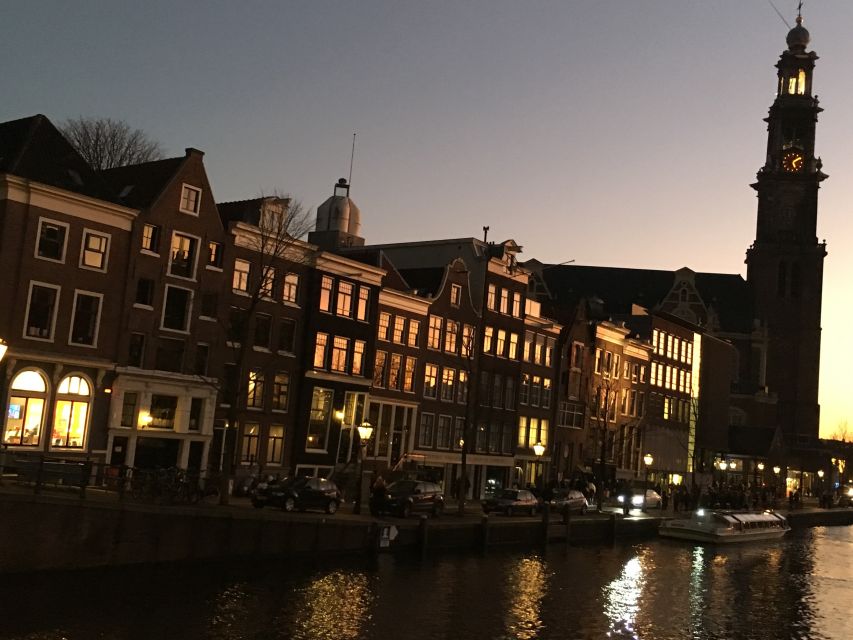
This experience is conducted in German with a live guide. If German is your strongest language, that can make the architectural explanations, historical details, and humor easier to follow than an English tour.
The subject also benefits from clear explanation. Terms about water management, housing, urban growth, and design can become dry if you are working hard to translate them in your head. A German-speaking guide lets you focus on the buildings and the ride.
The group size is limited to 10. That is small enough to feel more personal than a large city tour, while still giving you the energy of a group outing. The available information does not identify the guide by name, so you should look for the black and white striped band at Beursplein rather than expect a particular guide.
One detailed account described the guide as enthusiastic and praised the way the tour connected Dutch life and water with plenty of laughter. Another highlighted the useful tips for the rest of an Amsterdam stay. Those details point to a tour that goes beyond formal architecture talk. You should expect local context and practical orientation along with the buildings.
A fair look at the €46 price
At $46 per person, the price is reasonable if you want an organized architectural tour and already have access to a bicycle. You are paying for two and a half hours with a live German-speaking guide, a small group, a planned route, and explanations that connect old and new Amsterdam.
The strongest value comes from the subject. A general bicycle tour may show you more familiar sights, but this experience has a clear lens: how Amsterdam builds and lives beside water. If you care about urban design, housing, industrial buildings, or modern architecture, that focus gives the price a real purpose.
The value is weaker if you mainly want a relaxed ride through postcard streets. You may prefer to rent a bike and explore independently if you do not want scheduled commentary or if architecture is not a main interest.
Remember to budget for bike hire, which may add roughly €5 to €25. Food and drinks are not included, though the tour lasts only 2.5 hours. Free cancellation is available up to 24 hours before the activity for a full refund, and you can reserve now and pay later, which helps if your Amsterdam plans are still shifting.
Who should book this ride
I would recommend it to anyone who wants to understand Amsterdam beyond the canal center. It suits architecture fans, urban-planning enthusiasts, repeat visitors, and German-speaking visitors who want context for the buildings they see during the rest of their stay.
It is also a good choice for couples or friends who enjoy a focused activity rather than a broad sightseeing circuit. The combination of water views, industrial structures, houseboats, historic canals, and new projects keeps the route varied.
Families and casual cyclists need to judge their own comfort. The tour is not suitable for anyone who cannot ride, and the supplied information does not describe a child-specific format or an adapted bicycle option. The weather rule also matters if you are looking for a guaranteed indoor activity.
Should you book Amsterdam: Architektur Er-fahren?
Book this tour if you have a roadworthy bicycle, speak German, and want to see how Amsterdam handles water, limited land, housing pressure, and modern design. The small group, Western Islands route, and mix of old industrial and new architecture make it more thoughtful than a simple sightseeing ride.
Skip it if you want a short, dry, self-guided outing or if renting a bicycle would make the total cost feel too high. For the right rider, though, €46 is a fair price for a focused look at the city’s buildings and the practical problems behind them. Bring water, dress for rain or shine, and arrive ready to look past the postcard façades.
FAQ
Where does the Amsterdam architecture bike tour begin?
The tour begins at Beursplein near the Damrak in central Amsterdam.
How long does the tour last?
The guided bicycle tour lasts 2.5 hours, including the ride back to the starting point.
What language is the tour conducted in?
The live tour guide speaks German.
Is bicycle hire included in the price?
No. You must bring your own bicycle or rent one separately. Bike rental commonly costs about €5 to €25.
How many people are in the group?
The group is limited to 10 participants.
What should I bring?
Bring a roadworthy bicycle, comfortable shoes, comfortable clothing, water, and clothing suitable for the weather.
Does the tour run in bad weather?
Yes. The tour takes place rain or shine, so dress according to the forecast.
Just added around Amsterdam
- From Amsterdam: The Hague Private Trip and Mauritshuis Entry★ 4.3 · 4 reviews
- VIP Private Full Day Tour of the Netherlands★ 4.8 · 6 reviews
- Amsterdam Old-West Vegan Food Tour with Local Guide★ 4.7 · 3 reviews
- Amsterdam: Van Gogh Museum Guided Tour★ 4.8 · 262 reviews
- Van Gogh Museum Private Guided Tour★ 4.2 · 10 reviews
- Vecht River: Full-day Cruise with Lunch★ 4.8 · 9 reviews
- Van Gogh and Rijksmusuem Tour: Small Group Tour with Entry★ 4.7 · 3 reviews
- Amsterdam: Van Gogh Museum Ticket & Guided Tour★ 4.4 · 187 reviews
Amsterdam Tours, compared.

Amsterdam Classic Saloon Boat Cruise with Drinks and Cheese
Read our review →
Amsterdam Luxury Canal Cruise + Unlimited Drinks & Bites option
Read our review →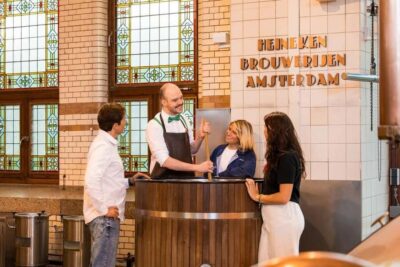

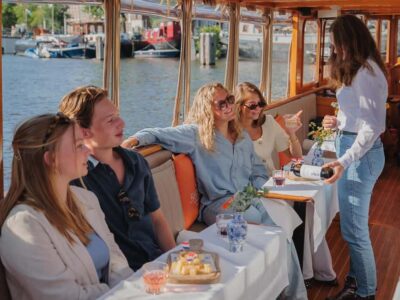
Classic Boat Cruise with Optional Cheese & Wine
Read our review →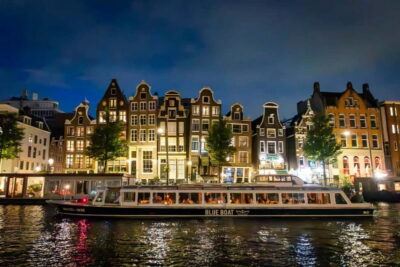
Evening Cruise with Optional Wine and Snacks
Read our review →