
Reviewed · VAN GOGH MUSEUM TICKETS
Van Gogh and Rijksmusuem Tour: Small Group Tour with Entry
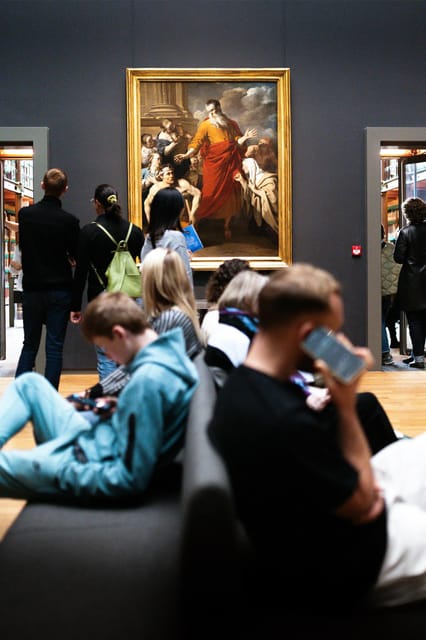
Amsterdam’s best art day pairs two very different museums: the grand sweep of Dutch painting at the Rijksmuseum, followed by the intimate, troubled story of Vincent van Gogh at his own museum. With no more than five people, this tour gives your guide room to answer questions and keep the pace comfortable.
I like the smart two-museum plan and the fact that entry to both museums is included. I also like the 90-minute break between the guided visits, since two major art museums back to back can turn your brain into porridge. The main consideration is the $181 price, which is a serious outlay if you prefer to explore museums on your own.
Key points at a glance
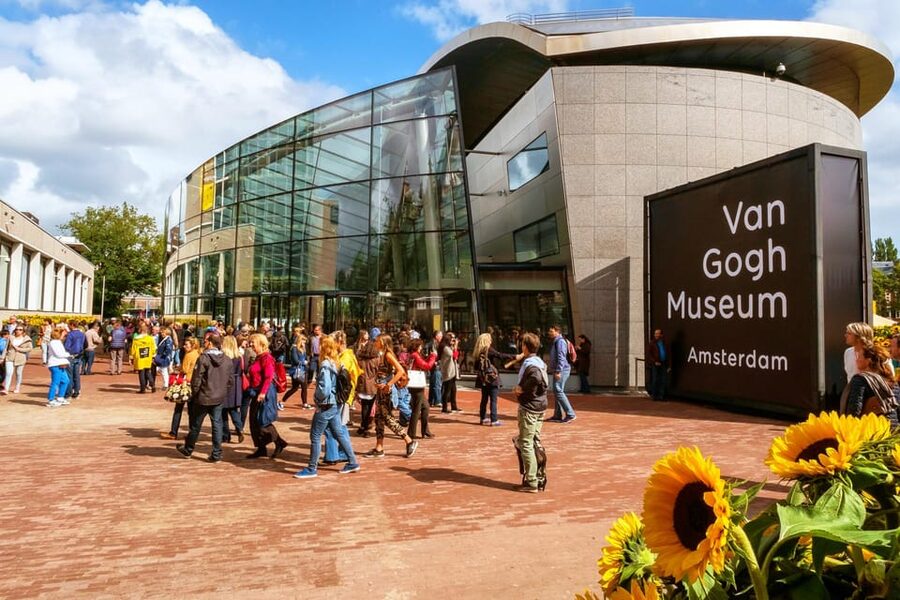
- Two major museums in one day: Visit the Rijksmuseum and Van Gogh Museum during one 5.5-hour experience.
- A maximum of five people: The small group allows for a more personal tour and easier questions.
- Two hours at each museum: Expect a guided visit focused on major works and useful background.
- A 90-minute break: You’ll have time to eat and rest between the museums.
- English-speaking historian guide: Tristan is specifically named as a guide, and the tour keeps explanations clear and well paced.
- Famous works included: Look for Rembrandt’s The Night Watch, Vermeer’s The Milkmaid, Van Gogh’s Sunflowers, The Bedroom, and Almond Blossom.
Why these two Amsterdam museums work well together
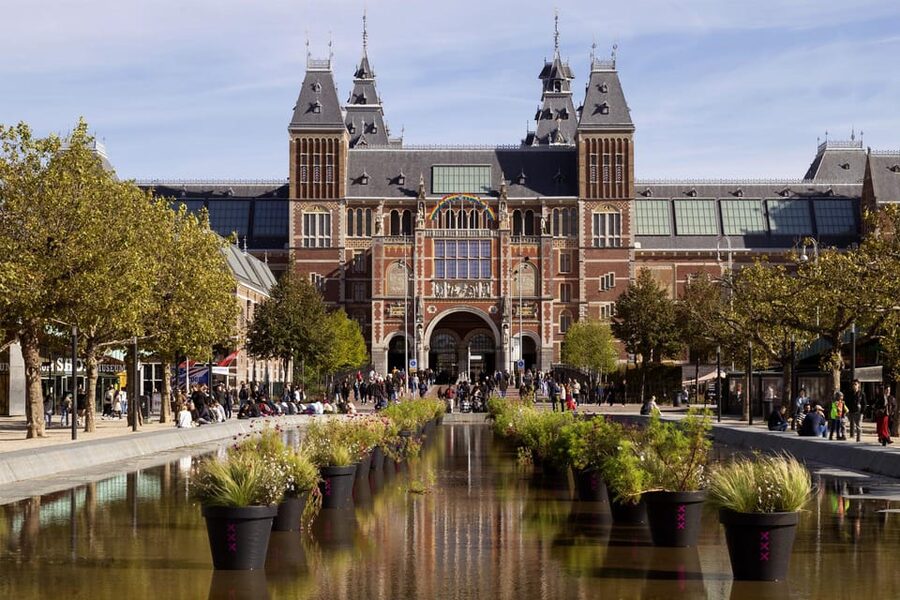
The Rijksmuseum gives you the broad view. It covers Dutch art and culture across centuries, with more than 8,000 objects on display. You are not limited to paintings: Delftware, sculpture, furniture, and finely made historical objects help show how art fitted into daily life and national identity.
The Van Gogh Museum then narrows the focus to one artist and his changing style. You move from early work to later paintings, while following the personal story behind them. The contrast is useful. At the Rijksmuseum, you are looking at a large chapter of Dutch culture. At the Van Gogh Museum, you are following one restless, highly individual life.
I like this pairing because it prevents the day from becoming a single long parade of similar-looking old paintings. Rembrandt and Vermeer require a different kind of attention from Van Gogh. One museum asks you to compare artists and periods. The other asks you to watch one painter develop.
Still, you should know what kind of day this is. You will spend about four hours inside museums, plus walking and a break. If you are happiest outdoors or dislike guided art visits, this may feel heavy. If you want a serious introduction to Amsterdam’s art, the plan makes good use of half a day.
More Van Gogh Museum tickets:
- Amsterdam: Van Gogh Museum Ticket
★ 4.7 · 52,054 reviews - Amsterdam: Van Gogh Museum Ticket and City Canal Cruise
★ 4.6 · 3,899 reviews - Amsterdam: Van Gogh Museum Ticket & Canal Cruise
★ 4.5 · 3,304 reviews
Starting at the Museumshop
The tour begins at the Museumshop, which is also the return point at the end. Your guide will lead the group into the first museum, so you do not need to arrange separate museum visits or figure out how to connect the two bookings yourself.
The exact starting time depends on availability. Check it carefully before booking, since the order is fixed: Rijksmuseum first, then Van Gogh Museum. Plan to arrive with comfortable shoes. The tour involves standing and walking through large museum spaces, and the practical advice about footwear is worth taking seriously.
The group limit is five participants. That is small enough for a guide to notice if you are confused, tired, or eager to ask about one particular painting. It also makes conversation easier than on a large coach-style tour. You will not be wandering alone, but you should get more personal attention than you would in a crowded group.
The guide speaks English. Tristan is named as one of the guides, and the strongest feedback about his work points to a clear pace, useful detail, and help with practical matters such as a locker on a high shelf. That last point may sound minor, but museum lockers can be surprisingly awkward if you are short or carrying a small bag.
The Rijksmuseum in a focused two-hour visit
The first guided stop lasts about two hours. That is enough time to see the key rooms and develop a sense of the collection, but not enough to cover every corner of a museum holding thousands of displayed objects. A good guide is especially valuable here because the collection can easily overwhelm you.
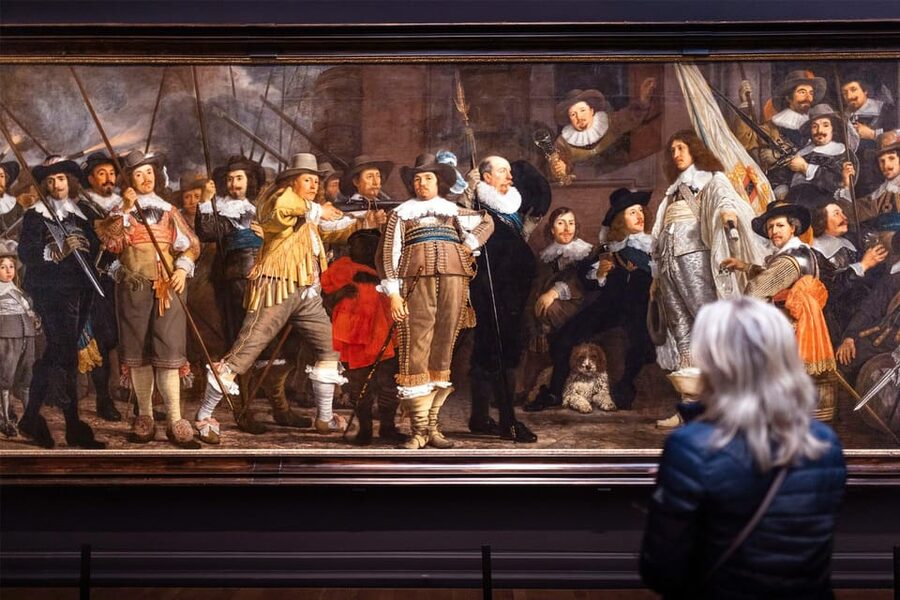
Rembrandt’s The Night Watch is the major appointment. Its scale, movement, and strong contrasts make it more than a famous name on a checklist. Your guide can help you notice how the figures are arranged and why the painting has such force when seen in person.
Vermeer’s The Milkmaid offers a quieter experience. The picture’s restrained setting and careful handling of light reward close attention. After the drama of Rembrandt, this change of mood helps show how varied Dutch Golden Age painting can be.
The visit is not limited to those two works. You will also see other paintings, sculptures, Delftware, and crafted objects. Those non-painting displays matter because they widen the story. A museum of Dutch art is not only about portraits and domestic scenes. Objects and decorative work add clues about trade, taste, religion, household life, and craftsmanship.
The guide’s job here is to give you a framework rather than recite every label. The most useful approach is to focus on a manageable number of works and explain why they matter. Tristan’s reported pace is a good sign for this kind of visit: enough information to make the art clearer, without burying you in small facts.
Two hours can pass quickly. If you have a long personal list of paintings you must see, tell the guide early if there is something you particularly want to find. The tour is designed around important works, but a small group offers a better chance to shape the conversation than a large public tour.
The five-minute walk and the 90-minute pause
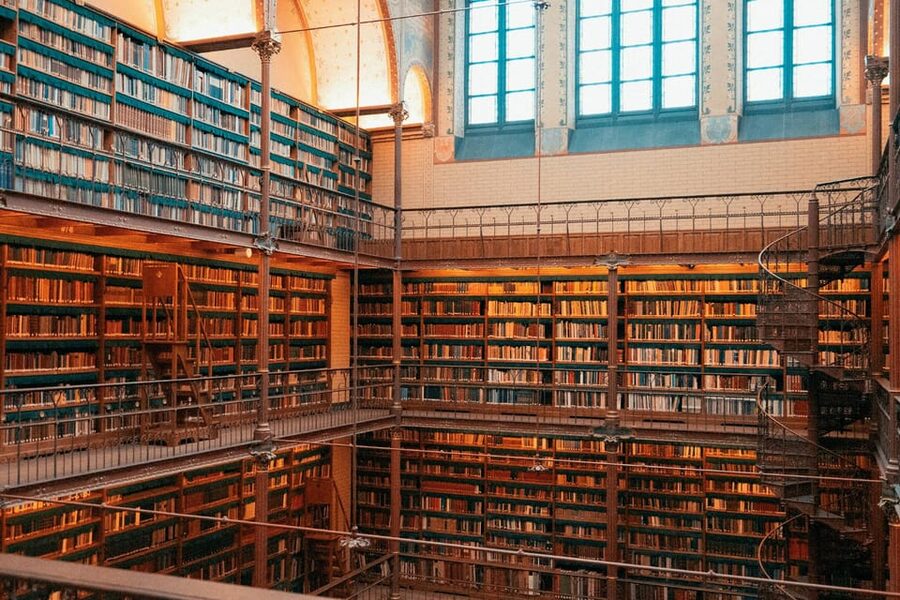
After the Rijksmuseum, the route continues on foot toward the Van Gogh Museum. The walking sections are listed as about five minutes each, so this is not a complicated transfer involving public transport. You remain in the Museumplein area, where the two museums are close together.
The scheduled break lasts one hour and 30 minutes. Use it well. You can find something to eat, sit down, and let your attention recover before the next two-hour museum visit. The tour provider sends information about nearby food options before the experience, which saves you from spending the entire break searching for somewhere suitable.
This pause is one of the tour’s best design choices. Art museums demand concentration, especially when a guide is explaining technique and context. A short gap gives you time to refresh rather than stumble straight from one collection into the next.
The downside is that the break is long enough to create a little uncertainty if you prefer a tightly packed schedule. You are responsible for using the time and meeting up again. Keep an eye on the meeting instructions so the second half starts smoothly.
A few more days out around Amsterdam worth weighing up
- Amsterdam Classic Saloon Boat Cruise with Drinks and Cheese
★ 5.0 · 31,825 reviews - Amsterdam Luxury Canal Cruise + Unlimited Drinks & Bites option
★ 5.0 · 30,518 reviews - Amsterdam: Heineken Experience Ticket
★ 4.6 · 30,055 reviews - Amsterdam: Rijksmuseum Entry Ticket
★ 4.7 · 25,535 reviews
Van Gogh’s story in another two-hour visit
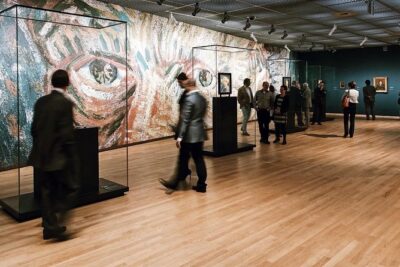
The Van Gogh Museum is the second guided stop, also planned for about two hours. It holds the largest collection of Van Gogh’s work, making it the natural place to trace his development through paintings, drawings, and related material.
You can expect attention on well-known works such as Sunflowers, The Bedroom, and Almond Blossom. These paintings are famous, but seeing them in a guided setting can add useful context. The point is not simply to stand in front of a familiar image and take a photograph. You want to understand how color, brushwork, subject matter, and personal circumstances changed across Van Gogh’s career.
His self-portraits are another important part of the visit. They show how often he turned the paintbrush toward himself, and how his handling of color and line shifted over time. Your guide can connect those changes to the broader story of his working life, struggles, and artistic ambitions.
The Van Gogh Museum can be emotionally intense. The paintings are bright and immediate, yet the story behind them is not simple or cheerful. A good explanation should avoid reducing Van Gogh to a few dramatic facts and instead give you a fuller view of his practice and persistence.
Two hours is a useful amount of time for an introduction. It gives you more than a quick pass through the famous rooms, but it will not cover every work at length. If Van Gogh is your main reason for booking, you may want extra time at the museum before or after the guided portion, if the admission arrangements allow it. The supplied details confirm entry and a guided tour, but they do not promise additional independent visiting time, so check the booking terms before assuming you can stay longer.
What the five-person format changes
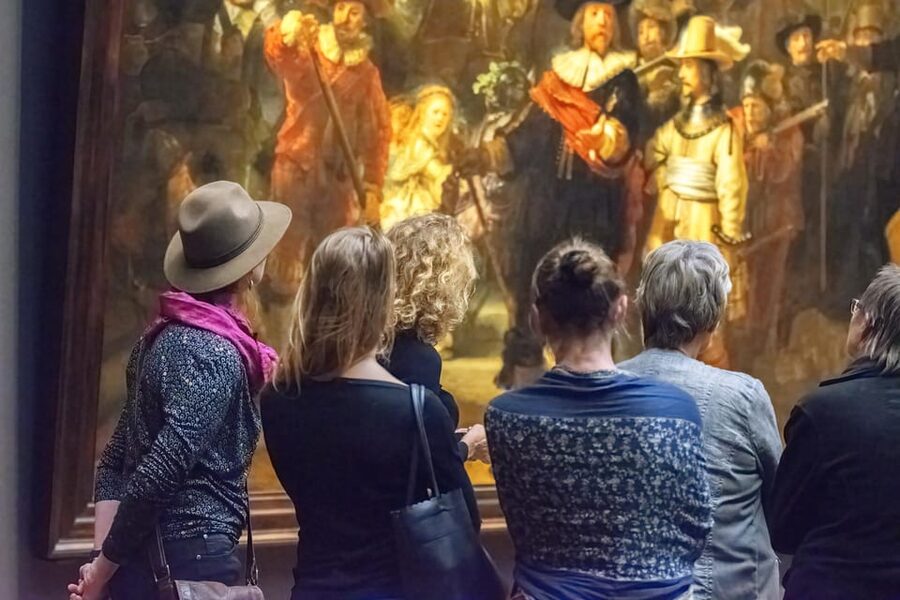
A group capped at five is a meaningful feature, not just a label. In a major museum, the guide can speak at a normal volume without addressing a crowd. You can usually stay closer to the discussion, ask a quick question, or admit that a particular painting is not making sense to you.
A small group also helps with pace. The guide can move on when everyone is ready instead of waiting for a long line of people to catch up. At the same time, a very small group can feel more direct and conversational, so book this format if you like interaction.
The quality of the guide matters more in a small tour because you spend much of the day listening to one person. Tristan receives especially strong praise for explaining important works without turning the tour into a lecture. The useful balance is clear: he covers the major pieces, adds historical detail, and avoids getting lost in minor facts.
The guide can also help with practical details. Assistance with a locker on an upper shelf was specifically appreciated, a small but useful example of the personal service a five-person group can provide.
Is $181 good value?
At $181 per person, this is not a budget museum visit. You are paying for entry to both museums, a guide for roughly four hours of touring, and the convenience of having the day organized around two major cultural stops.
The value is strongest if you would otherwise buy two separate tickets and struggle to decide what to see. The historian’s explanations can also save time. Instead of reading every wall panel or wandering through rooms without a plan, you get a selected route through each museum.
The price is harder to justify if you already know Dutch art well, prefer audio guides, or want to spend long stretches alone with a single painting. Independent visitors may find more freedom by buying museum entry separately. This tour is about interpretation and structure, not maximum flexibility.
The included wardrobe access and free WiFi are practical extras, but they should not be the reason you book. The real value lies in the small group, the guide, the two admissions, and the clear plan. The tour also offers free cancellation up to 24 hours before the start and a reserve-now, pay-later option, which can help if your schedule is still shifting.
Comfort, storage, and practical limits
Wear shoes that you can walk and stand in comfortably. You will move through two large museums, and even a well-paced visit can be tiring.
Both museums provide wardrobe facilities for small bags and luggage, along with free WiFi. Storage can make the day easier, especially if you are carrying a day bag, but do not assume every type or size of luggage will fit. The available information specifically mentions small bags and luggage storage, not oversized suitcases.
The tour is in English only. That is important if you want detailed explanations in another language. The experience is also listed as unsuitable for people over 95, so check that restriction before booking for an older family member.
The itinerary returns to the Museumshop after the Van Gogh Museum. The stated walking sections are short, and no other transportation is included or needed between the two museums.
Who should book this museum day?
I would recommend it to a first-time Amsterdam visitor who wants a strong introduction to Dutch art without planning two museum visits alone. It also suits couples, families, and small parties who value questions and conversation more than a private tour.
Art beginners may get the most from it. The Rijksmuseum can seem enormous, and Van Gogh’s story is often reduced to a few familiar images. A guide can connect the pieces and help you look beyond the names.
It is also a good fit if you want the main masterpieces but do not want to spend your entire day reading labels. The two-hour format at each museum gives you a solid overview.
I would hesitate if your main goal is independent browsing. The fixed schedule, guided focus, and 90-minute break leave less room for spontaneous detours. The price also means you should care about explanation, not just admission.
Should you book it?
Book this tour if you want two famous Amsterdam museums explained in one organized day, with a group no larger than five and an English-speaking historian at your side. The strongest reasons are the sensible museum pairing, the manageable pace, and the chance to ask questions without shouting across a crowd.
Skip it if you already know exactly what you want to see, need a different language, or prefer to set your own rhythm. At $181, this is a premium guided outing. For the right visitor, though, it buys clarity, time saved, and a more human way to meet Rembrandt, Vermeer, and Van Gogh.
FAQ
How long does the tour last?
The experience lasts 5.5 hours. It includes guided visits to the Rijksmuseum and Van Gogh Museum, plus a 90-minute break between them.
How many people are in the group?
The group is limited to five participants.
Which museums are included?
Entry to both the Rijksmuseum and the Van Gogh Museum is included.
Which works will I see?
The tour highlights Rembrandt’s The Night Watch, Vermeer’s The Milkmaid, and Van Gogh’s Sunflowers, The Bedroom, and Almond Blossom.
What language is the tour in?
The live tour guide speaks English, and English is the listed tour language.
Is food included?
No. The 90-minute break gives you time to find food independently. Information about nearby food options is sent before the tour.
Can I cancel the booking?
You can cancel up to 24 hours in advance for a full refund.
Do I need to pay when I book?
The reserve-now, pay-later option allows you to book your place without paying immediately.
Just added around Amsterdam
- From Amsterdam: The Hague Private Trip and Mauritshuis Entry★ 4.3 · 4 reviews
- VIP Private Full Day Tour of the Netherlands★ 4.8 · 6 reviews
- Amsterdam Old-West Vegan Food Tour with Local Guide★ 4.7 · 3 reviews
- Amsterdam: Van Gogh Museum Guided Tour★ 4.8 · 262 reviews
- Van Gogh Museum Private Guided Tour★ 4.2 · 10 reviews
- Vecht River: Full-day Cruise with Lunch★ 4.8 · 9 reviews
- Amsterdam: Van Gogh Museum Ticket & Guided Tour★ 4.4 · 187 reviews
- True Crime Tour Amsterdam: Explore the Dark Side of the City★ 4.9 · 13 reviews
Van Gogh Museum Tickets, compared.



Van Gogh Museum Amsterdam Exclusive Tour w/ Reserved Entry
Read our review →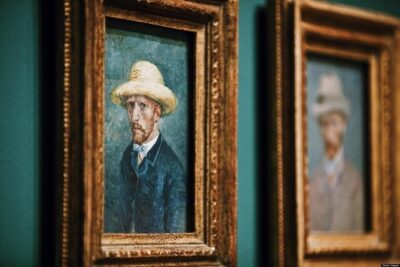
Van Gogh Museum Tour Reserved Entry Semi Private
Read our review →
Combo Ticket: Van Gogh Museum Ticket and 1-Hour Canal Cruise
Read our review →
Browse the lists this tour appears in