
Reviewed · CITY TOURS
Your Own Hague. Behind The Scenes of The Royal City
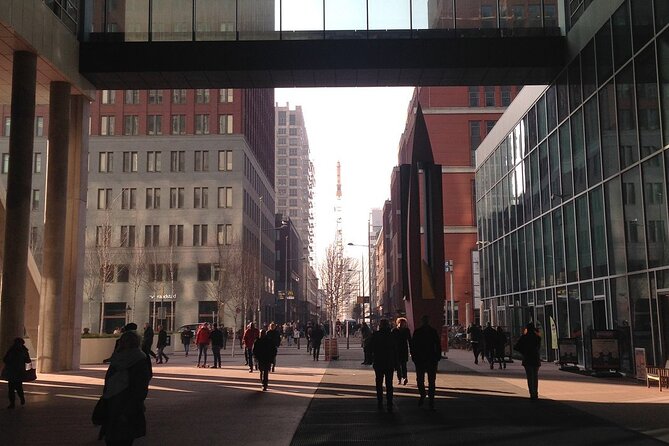
The Hague reveals its character in sharp contrasts. On this private walking tour, you move from the medieval Binnenhof and royal streets to the prime minister’s office, a 19th-century shopping arcade, futuristic city buildings, and a house only 183 centimeters wide. It is a compact look at how a small aristocratic village became the Netherlands’ political capital.
I like the way the tour mixes royal and political history with ordinary city life. I also like the unusual stops, especially the tiny house at Lange Voorhout 32A and the old Goude Hooft inn, which give you more than the usual palace-and-parliament view. The main drawback is the price: at $254.50 per person, this is a costly walk unless you are sharing it with a group and value a private guide.
Key points before you book
- Six central stops in about three and a half hours: The route covers the Binnenhof, Torentje, Goude Hooft, De Passage, Lange Voorhout, and Hotel Des Indes.
- A private experience: Only your group takes part, so you can ask questions and set the pace more easily than on a large group walk.
- The prime minister’s office is part of the story: The tour includes a chance to see the Torentje, though meeting the prime minister or entering the office is not guaranteed.
- Free sights keep the route moving: Admission is listed as free at each stop, with the fee paying for the guide rather than entry tickets.
- A useful city-center finish: The tour ends at Noordeinde Palace, near one of The Hague’s most important royal addresses.
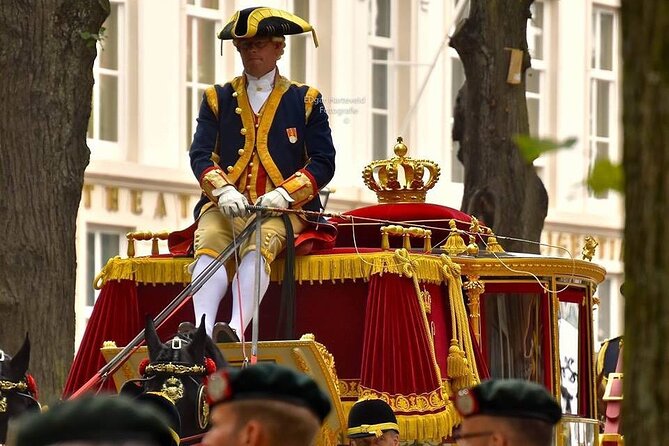
- Expect history with a modern focus: The introduction covers knights, royalty, and medieval beginnings, while the wider tour also looks at architecture, street art, innovation, and present-day city life.
From village origins to political capital
The Hague began as a small settlement, but it developed into one of Europe’s great centers of government and royal life. The appeal of this walk is that you do not study that change from one viewpoint. You see it in stone courtyards, office buildings, elegant hotels, shopping arcades, and narrow lanes.
The opening historical section sets up the city’s older identity. Knights, minstrels, noble families, and court life are part of the tale, but the tour does not remain in the medieval past. Its focus shifts toward the way The Hague functions now, including modern architecture and street art.
That balance matters. If you want a tour devoted only to Dutch royalty, you may find the modern material less expected. If you want a city walk that connects old institutions with daily life, the mix is useful. The guide is also expected to answer questions, so you can ask for more detail on the subjects that interest you most.
The route is private, which changes the feel of the experience. You are not trying to hear a guide over a crowd, and your group can ask about a building or story as it comes up. The supplied details do not name the guide, so you should not book this expecting a particular person.
More City Tours in The Hague
- The Hague: City Canal Cruise
★ 4.6 · 2,024 reviews - The Hague: City Walking Tour
★ 4.5 · 156 reviews - The Hague: Old City Private Walking Tour
★ 4.4 · 81 reviews
Het Binnenhof, where The Hague begins
The first stop is Het Binnenhof, described as the literal birthplace of The Hague. This historic complex is important not just because it is old, but because it brings the city’s political and royal identity together in one place.
You can expect the guide to explain how the buildings function as monuments and works of art. The stop lasts about 30 minutes and has no admission charge. That is enough time for an introduction and a close look at the setting, but not enough for a museum-style treatment of every building.
The Binnenhof is a strong starting point because it gives you a visual key for the rest of the walk. Later, when you see the Torentje or the palace streets, you understand that The Hague’s political life is not separated from its historic center. Government offices, old residences, and public streets sit close together.
One practical point: this is a walking tour built around exterior city sights and stories. The provided details do not promise entry into the Binnenhof buildings, so ask your guide what access is possible on your date.
The Torentje and the chance to spot the prime minister
The Torentje is the tour’s most playful political stop. It is the working office of the Dutch prime minister, and the experience invites you to test your luck and see if you can spot him.
That wording is important. You should treat this as a chance to view the office and perhaps see political activity, not as a scheduled meeting or guaranteed visit inside. The stop is listed as about 30 minutes with no admission fee. The real value comes from the guide’s explanation of the office and its place in Dutch public life.
For many people, this will be more memorable than a formal government museum. You are looking at a functioning workplace, not just a preserved room. It also gives the tour a direct link to the present day, which fits the stated focus on modern life in The Hague.
The light tone may appeal to you if you enjoy a guide who tells stories rather than recites dates. At the same time, anyone wanting detailed political analysis should keep expectations measured. The supplied information promises an opportunity and context, not a formal parliament tour.
Goude Hooft, an inn with seven centuries of city life
Hotel Restaurant ’t Goude Hooft claims a history reaching back to 1423, making it one of the oldest cafés or inns in the Netherlands. Its original customers were knights and other people passing through the city. Today, it serves ordinary citizens, which gives the stop a pleasing connection between past and present.
This is one of the tour’s most accessible historical moments. You do not need to know much about Dutch history to understand the basic idea: a place once linked with medieval journeys now remains part of everyday city life. The building’s long use also helps you picture The Hague before it became a major political center.
The stop lasts around 30 minutes, but food and drinks are not included. Coffee, tea, snacks, and alcohol are specifically excluded, so do not assume this portion includes a café break. You may be able to look around and hear the story, but the tour price does not cover an order.
I like this stop because it avoids making history feel distant. You are not simply looking at a ruin or a display case. You are seeing a long-running urban meeting place that has changed its customers without losing its connection to the city.
A few more days out around The Hague worth weighing up
- The Hague: Madurodam Miniature Park Entry Ticket
★ 4.6 · 1,559 reviews - The Hague: Hop-on Hop-off Old-Fashioned Heritage Tram Tour
★ 4.4 · 1,083 reviews - The Hague: Escher in The Palace Museum Ticket
★ 4.6 · 896 reviews - The Hague: Scheveningen Beach RIB Speedboat Tour
★ 4.7 · 330 reviews
De Passage and the arrival of modern shopping
De Passage shows a different side of The Hague. It is described as the first place in the Netherlands where shopping took the form we recognize today. Its design was inspired by Parisian architecture, and its 19th-century appearance remains part of its appeal.
This stop helps explain how city life changed after the medieval and royal eras. Shopping became an experience, not just a practical exchange in an open street or market. The covered arcade offered a more polished setting for browsing and socializing.
You get about 30 minutes here, with no admission fee. The guide can point out the architectural details and explain why the arcade mattered. Since De Passage is still connected with shopping, you can also see how the old idea continues to work in a modern city.
Do not expect a dedicated shopping excursion. The walk is about the place and its design, not about giving you time to browse every store. If you want to buy something, you may need to do that before or after the tour.
The 183-centimeter-wide house
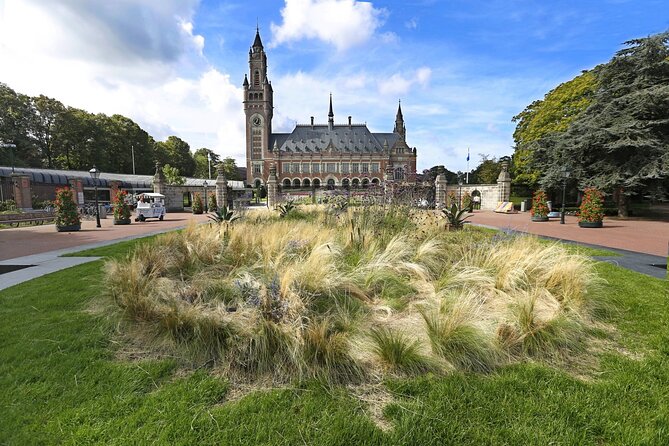
Lange Voorhout 32A is easy to miss. It is identified as the smallest house in The Hague, measuring only 183 centimeters wide. The tour specifically warns you to be careful, which tells you something about the stop: this is a quick visual discovery rather than a grand landmark.
Tiny buildings often make a city walk more personal. A palace can explain power, but a house this narrow raises immediate questions about how people used limited space and why such an odd building survived. The stop also rewards you for looking up and down instead of simply following the main sights.
The tour allows about 30 minutes at each listed location, though the exact time at this house may depend on the guide’s explanation and the pace of your group. The information does not promise entry, so expect to see the exterior and hear the story.
This is a good example of the tour’s approach. It asks you to notice the small details that are easy to pass while moving between major attractions. If you prefer famous landmarks with a clear entrance and a long visit, this may feel minor. If you enjoy unusual city details, it is likely to be one of the stops you remember.
Hotel Des Indes and The Hague’s polished side
Hotel Des Indes provides a sharp change in mood. The tour uses it to show that The Hague is not simply a modest Dutch city. This elegant hotel represents the wealth and social confidence associated with the royal and diplomatic side of town.
The building helps broaden your picture of The Hague. The city is often linked with government and international institutions, but luxury hotels and grand addresses are part of its identity too. Here, the guide can explain how the city’s elite image fits beside its medieval streets and working political offices.
Again, admission is free, and the stop is planned for about 30 minutes. The details do not say that you will enter the hotel or receive a service there. Coffee and tea are not included, so any refreshment would be at your own expense.
I would pay attention to the contrast between Hotel Des Indes and the narrow house earlier in the walk. Together, they show the wide range of scale and wealth in central The Hague. One is almost comically small; the other projects comfort and status.
Royal Noordeinde and the walk’s final address
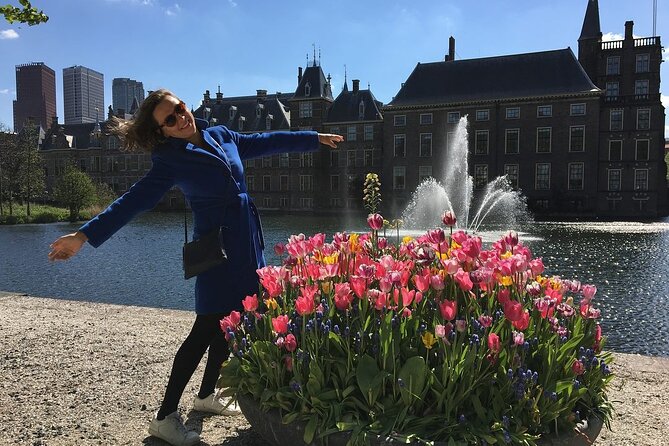
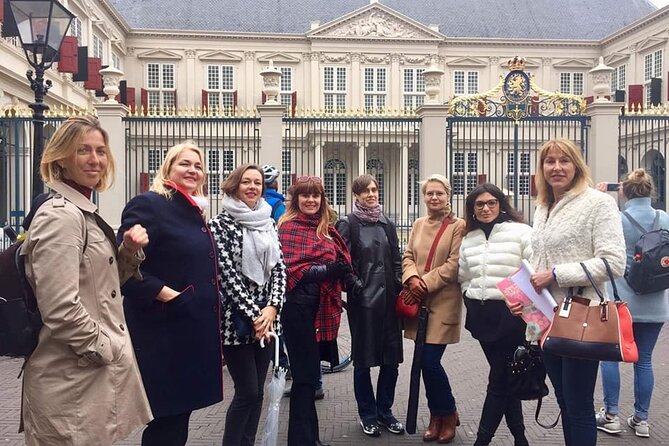
The tour begins near Starbucks at Koningin Julianalaan 10 to 15 and ends at Noordeinde Palace, at Noordeinde 68. The finish is well chosen. Noordeinde Palace is a major royal address, so the final stop leaves you with the city’s royal identity fresh in mind.
The starting point is near public transportation, which should make arrival fairly simple, though you should allow time to find the exact Starbucks location. The route then continues on foot through the center. Since the experience lasts about three hours and 30 minutes, wear comfortable shoes and plan for a steady city walk.
The route details also refer to innovation and street art. They do not list separate named stops for those subjects, so treat them as themes the guide may point out along the way rather than guaranteed attractions with set visit times. The same caution applies to mentions of hidden gardens, unusual museums, and narrow streets. Those details may form part of the guide’s wider route, but the six principal stops are the clearest structure provided.
Ending at Noordeinde Palace gives you a useful place to continue exploring independently. The tour itself does not include entry tickets, meals, or drinks, so you can decide what to do next without having to follow a fixed group schedule.
Is $254.50 a fair price?
At $254.50 per person, this is not a budget walking tour. The price needs to make sense because the listed attractions do not charge admission. You are paying for a private guide, the route, interpretation, and the ability to explore with only your own group.
That can be good value for a family or group of friends that wants a tailored introduction to The Hague. Group discounts are available, so check the final price carefully if several people are booking together. The more people who share the private experience, the easier it is to justify the cost per person.
For a solo visitor or couple on a tight budget, the price is harder to defend. You could see many of these public places without paying an entry fee, but you would lose the connecting stories, the political context, and the small details that are easy to miss. The value depends on how much you want interpretation rather than simple sightseeing.
The mobile ticket is convenient, and confirmation is provided at booking. Most people can participate, and the tour is near public transportation. No special accessibility details are supplied, so ask the operator directly if your group has mobility needs.
What the tour does especially well
The strongest part of this experience is its storytelling range. You begin with medieval origins, move into royal and government life, see a historic inn still connected with ordinary people, and finish among elegant architecture. That is a useful way to understand The Hague as a living city rather than a collection of isolated monuments.
The guide’s style also seems important. The experience is built around intriguing stories about residents, buildings, and unusual places, with time for questions. One review praised the guide for keeping the talk interesting rather than dull, even in poor weather. That is a meaningful point for a walking tour, since a flat presentation can make any city feel tiring.
Another strong feature is the attention to overlooked details. The 183-centimeter house and the old shopping arcade are not the first things many people seek in The Hague, yet they help you notice how the city is built and how its people have lived.
The tour also has a clear modern angle. The provider explains that the walk is focused on modern life, with history used as an introduction. If you book expecting only royal anecdotes, you may want to ask about the present-day architecture, street art, and innovation themes at the start.
One sensitive subject has appeared in the tour’s public discussion: the war in Ukraine and its place in current Dutch conversation. The guide or company may touch on present-day political concerns, especially when discussing modern life. If you prefer a strictly historical walk, ask about the current balance before booking. If you want some connection between the city and today’s news, that may add useful context.
Who should book this private Hague walk?
I would recommend it most strongly to first-time visitors who want an organized introduction to central The Hague without spending the day inside museums. It also suits families and friend groups that like asking questions and moving at a more personal pace.
You will get the most from it if you enjoy architecture, royal stories, political settings, city legends, and small urban surprises. It is also a good choice if you want more than the standard palace photograph but do not want a specialized food, museum, cycling, or countryside tour.
I would hesitate if your priority is a low-cost outing, extended time inside historic buildings, or a guaranteed meeting with a political figure. The tour includes a chance to see the prime minister’s office, not a promise that the prime minister will appear. Likewise, free admission at the stops does not mean the experience itself is inexpensive.
Book at least 24 hours before the start time if you want the option of a full refund. Cancellations made less than 24 hours ahead are not refundable, and changes inside that period are not accepted.
Should you book Your Own Hague?
Book this tour if you want a private, story-led walk that links royal power, Dutch politics, old city traditions, luxury, and modern design. The best moments are likely to be the contrasts: the Binnenhof beside active government, a 1423 inn beside present-day city life, and a house barely wide enough to notice beside grand royal streets.
Skip it if $254.50 per person feels too steep for a walk among free public sights. You can still visit the central landmarks independently, but you will need to supply the connections yourself. For a group that values a personal guide and an unusual route through The Hague, the cost may be reasonable. For a budget-minded couple, it is a luxury rather than an essential purchase.
FAQ
How long does the tour last?
The experience lasts approximately 3 hours and 30 minutes.
Is this a private tour?
Yes. Only your group participates in the activity.
Where does the tour start?
It starts at Starbucks at Koningin Julianalaan 10 to 15, 2595 AA Den Haag, Netherlands.
Where does the tour end?
It ends at Noordeinde Palace, Noordeinde 68, 2514 GL Den Haag, Netherlands.
Are admission tickets included?
The listed stops show free admission, and the tour includes a guide. No separate attraction admission is listed as an included benefit.
Are food and drinks included?
No. Coffee, tea, snacks, and alcoholic beverages are not included.
Can most people participate?
Yes. The additional information says most travelers can participate, and the meeting point is near public transportation. Specific accessibility details are not provided.
Just added around The Hague
- e-Scavenger hunt The Hague: Explore the city at your own pace★ 3.5 · 10 reviews
- 3 Course Walking Dinner in Delft with Guided Tours in Between★ 5.0 · 3 reviews
- Delft: City Walk with Audio Guide in 7 Languages on your Phone★ 5.0 · 4 reviews
- Surfing at The Shore in The Hague★ 4.5 · 3 reviews
- The Hague Must-See attractions Private Walking Tour With A Guide★ 5.0 · 5 reviews
- The Hague: City Walk Audio Guide in 7 Languages on your Phone★ 3.5 · 5 reviews
- Surprise Walk of The Hague with a Local★ 4.5 · 3 reviews
- Royal The Hague Private Guided Walking Tour★ 4.5 · 21 reviews
City Tours, compared.
75 Minute City Canal Cruise with Audio Guide
Read our review →

City Canal Cruise and Heineken Experience Ticket
Read our review →

Browse the lists this tour appears in