
Reviewed · CITY TOURS
Dutch Winetasting – Amsterdam City Centre
Amsterdam’s best wine surprise may be waiting below a bakery. In a tucked-away cellar near Haarlemmerdijk, a sommelier pours five Dutch wines and explains how a country better known for beer and cheese makes convincing whites, reds, sparkling wines, orange wine, and fortified styles. The setting feels personal rather than polished for mass tourism.
I like the way the tasting adjusts to your experience, so you can ask basic questions without feeling out of place or take the conversation further if you already know your grapes. I also like the local touch: bread from Amsterdam artisan baker Gebroeders Niemeijer, with an optional charcuterie board if you want more than a palate cleanser. The main drawback is timing: allow closer to two hours, especially if the host is guiding more than one table.
Key points before you book
- Five Dutch wines: The tasting covers five hand-selected pours from local winemakers, with the selection designed to show different Dutch styles.
- A true speakeasy setting: You meet at Haarlemmerdijk 129 and enter a wine cellar connected with a sleek shop and bakery setting.
- Personal guidance: Diederik, Jeroen, Rose, and other hosts have led sessions, adjusting explanations for beginners and experienced wine drinkers.
- Bread is included: Fresh Niemeijer bread, water, a tasting form, and a postcard come with the standard experience.
- Charcuterie is optional: Upgrade to the Dutch Wine Tasting Royale or order extra food on site for cheese, meat, and local pairings.
- Small groups work well: The maximum is 18 people, but sessions can feel much smaller, including private tastings when few people book.
Finding the cellar on Haarlemmerdijk
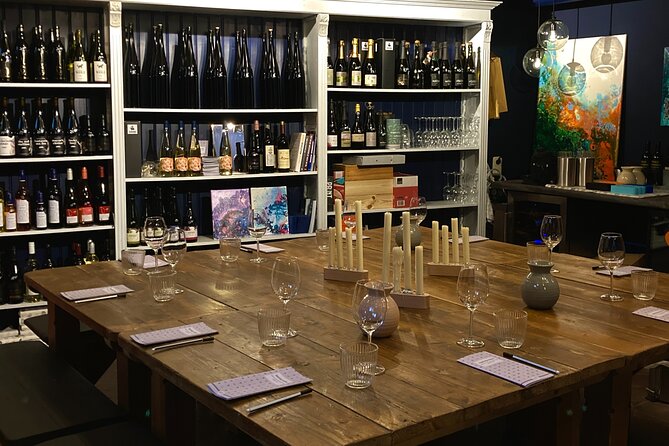
The meeting point is Haarlemmerdijk 129, 1013 KE Amsterdam. This puts you in central Amsterdam, near public transport and within an area that is more enjoyable to explore than a generic shopping street.
The unusual part is the entrance. The tasting room is tucked beneath or behind a bakery and wine-shop setting, giving the visit a playful speakeasy feel. You are not simply seated in a bright room with bottles lined up on a shelf. The cellar atmosphere gives the tasting a sense of occasion without requiring formal dress or advanced wine knowledge.
I would arrive with enough time to locate the address and settle in. The experience ends back at the meeting point, so it is easy to pair with an afternoon walk along Haarlemmerdijk or a later dinner nearby. Since the tasting can last from roughly 90 minutes to two hours, avoid booking a restaurant reservation too close to the advertised end time.
More City Tours in Amsterdam
- Amsterdam: 75 Minute City Canal Cruise with Audio Guide
★ 4.4 · 17,501 reviews - Amsterdam: City Centre Canal Cruise
★ 4.2 · 12,827 reviews - Amsterdam: Smoke and Lounge City Boat Cruise
★ 4.7 · 8,572 reviews
Five pours that introduce Dutch wine
The core of the experience is a flight of five Dutch wines. The exact bottles can change, but the aim is to show the range of wine made in the Netherlands rather than repeat five similar glasses.
You might begin with a sparkling or still white wine, then move into a more unusual style such as orange wine, followed by red or fortified wine. One tasting described a line-up that included sparkling white, still white, orange, red, and fortified red. That sort of progression makes the session useful for people who arrive thinking Dutch wine is a novelty and leave with a better sense of its real variety.
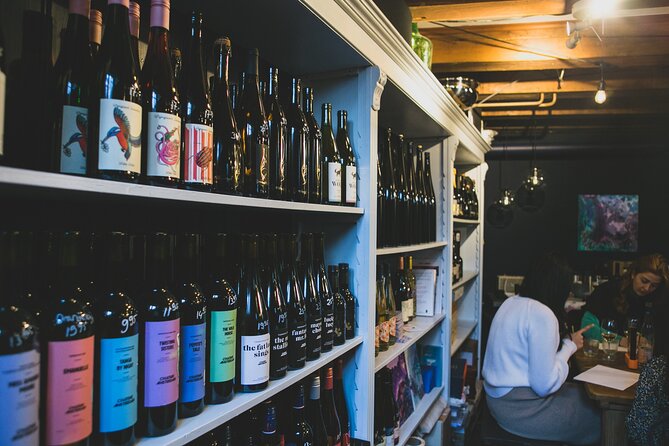
The wines come from local winemakers. That matters because this is not simply a Dutch-themed tasting filled with famous international labels. You are being introduced to regional production and to the practical choices Dutch producers make in a cool climate.
The host explains the wines as you taste them, including where they come from, how they are made, and what separates one style from another. You may hear about the use of steel tanks and the contrast with wines blended with more traditional barrel-aged wine. For a beginner, this gives you a clear way to compare texture and flavor. For an experienced drinker, it offers a look at a less familiar national wine scene.
Do not expect every bottle to be available to buy on the spot. The shop has been moving toward making the tasted wines available for purchase, but stock can be limited. If taking bottles home is important to you, ask about current availability during your visit instead of assuming that every pour can be purchased.
A lesson shaped around your level
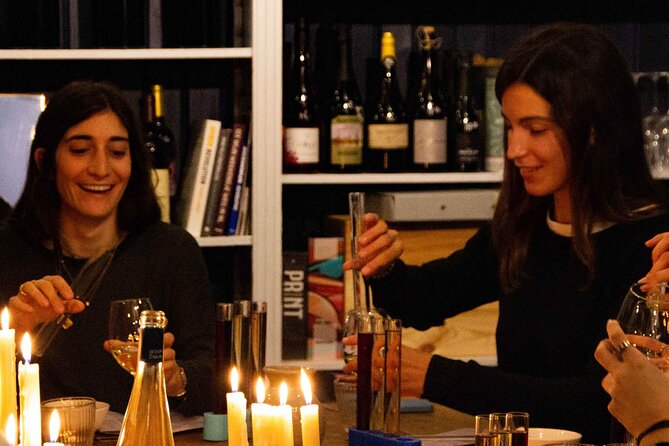
The sommelier is not working from a rigid lecture that treats every table the same. You can tell the host that you are new to wine, already comfortable with tasting language, or interested in production methods and Dutch regions.
This flexibility is one of the strongest reasons to book. A beginner can learn how to look at, smell, and taste a wine without being buried under technical terms. An experienced wine drinker can ask about steel fermentation, barrel use, orange wine, regional differences, or how Dutch producers work with local conditions.
Diederik has hosted many of the sessions, and Jeroen and Rose have also guided tastings. The individual host shapes the tone. Diederik is described as warm, patient, and good at explaining both Dutch wines and wine more broadly. Jeroen has been praised for being conversational as well as well versed in the subject, while Rose has introduced first-time visitors to orange wine and Dutch wine culture.
The teaching is not limited to the liquid in the glass. You also get the story of Dutch production and an explanation of which parts of the Netherlands produce wine. That broader context helps the tasting feel like a small cultural lesson rather than five disconnected samples.
Bread first, charcuterie if you want it
The standard tasting includes fresh bread from Gebroeders Niemeijer, a local artisan baker. Bread serves as a simple snack and a palate-cleansing aid between pours. Water and a tasting form are also provided, so you can note what you liked instead of relying on memory after five wines.
The standard food offering is modest. If you are hungry, bread alone may not be enough for a full meal, and one person specifically wished there had been more bread and crackers. You can ask for more, but I would not book this as a substitute for lunch or dinner.
The optional charcuterie board changes the experience. It adds local cheese, meat, and other products that can be matched with individual wines. The pairings are part of the pleasure, since a wine can taste quite different beside cheese, sausage, or cured meat than it does on its own.
The Royale upgrade is the sensible choice for an evening tasting or for anyone who enjoys food as much as wine. It costs more than the base option, so compare the final price before booking. One account of the upgraded tasting praised the board’s size and variety but felt the pours could have been slightly larger for the higher price. That is a fair point: you are paying for the setting, instruction, food, and selection, not for full glasses.
A few more days out around Amsterdam worth weighing up
- Amsterdam: Van Gogh Museum Ticket
★ 4.7 · 52,054 reviews - Amsterdam Classic Saloon Boat Cruise with Drinks and Cheese
★ 5.0 · 31,825 reviews - Amsterdam Luxury Canal Cruise + Unlimited Drinks & Bites option
★ 5.0 · 30,518 reviews - Amsterdam: Heineken Experience Ticket
★ 4.6 · 30,055 reviews
Why the cellar setting matters
Amsterdam has no shortage of tasting rooms, bars, and food stops. This one earns its place in a day because it feels removed from the city rush while remaining central.
The low-key cellar gives the sommelier room to talk with you. A group of four can receive a very personal session, and a solo visitor may find the format more social than drinking alone at a bar. On quieter dates, the tasting may even feel private if few people book.
The maximum group size is 18. That is not a tiny private class, but the room can be divided among smaller tables. If the host is serving two groups at once, the pauses between pours may become longer. Some people will find that slow pace relaxing, especially late in the day. If you want a tightly timed lesson, it is worth keeping this possibility in mind.
The setting also makes this a good rainy-day plan. You get out of the weather, sit down, and spend a leisurely stretch of time with a local product that many visitors never think to seek out.
What the 90 minutes actually feels like
Plan for at least an hour and a half. The official timing is approximately 1 hour 30 minutes, while the fuller description allows 1.5 to 2 hours. In practice, the pace depends on questions, group size, food orders, and whether the host is handling more than one table.
A typical flow looks like this:
- You check in at Haarlemmerdijk 129 and settle into the cellar.
- The sommelier explains the format and gets a sense of your wine experience.
- Five Dutch wines arrive one at a time.
- You taste, ask questions, and learn about production, regions, and pairings.
- Bread is served between the wines, with water and a tasting form available.
- If you selected the Royale option or ordered food, charcuterie and cheese are matched with the pours.
- You finish at the same meeting point.
The pauses are useful. Wine tasting is better when you have time to compare, ask, and eat, rather than being rushed from one glass to the next. Still, I would not schedule a canal cruise, train, or restaurant reservation immediately afterward.
Is $57.32 a fair price?
At $57.32 per person, the base price is reasonable if you value instruction and atmosphere, not just alcohol. You receive five tasting glasses, a guided session, bread, water, a tasting form, and a postcard. The experience also gives you access to Dutch wines that may be difficult to discover on your own.
The price feels strongest for curious beginners and for people who enjoy small food-and-drink experiences. You are paying for the host’s explanations and for a hand-picked flight, not a simple bar sampler.
Value becomes more personal with the Royale upgrade. The charcuterie adds substance and makes the tasting feel like a light meal, but the higher price may not suit someone who only wants to sample wine. If you are watching your budget, take the standard tasting and eat beforehand. If you are planning an evening activity and want food with the wine, the upgrade is easier to justify.
Generous pours have been part of some sessions, but tasting glasses are still tasting glasses. Do not expect five full restaurant servings. The point is comparison, conversation, and discovery.
Who will enjoy this most?
I would recommend this for:
- First-time wine tasters who want a relaxed introduction
- Wine drinkers curious about a country outside the usual French, Italian, and Spanish circuit
- Couples seeking a quiet evening activity
- Solo visitors who like guided conversation
- Small groups who want to book together
- People interested in local food pairings and artisan bread
- Repeat Amsterdam visitors looking for something beyond the standard canal-and-museum plan
Families can attend, and the host has been patient with young children during tastings. Still, the activity centers on alcohol, so it is best for adults who are happy to spend a sustained period at the table.
This is less suitable if you want a quick stop, a large meal, or guaranteed access to every bottle afterward. It is also not the right choice if you prefer a busy bar atmosphere or a large commercial tour with a fixed script.
Practical details that can affect your visit
The experience is offered in English and uses a mobile ticket. Service animals are allowed, and the location is near public transportation. When booking, state any allergies and say if you need vegan or gluten-free arrangements.
Bread is included, but you should communicate dietary needs in advance rather than relying on last-minute adjustments. The listed snack is bread from Gebroeders Niemeijer, while cheese and charcuterie are tied to the optional upgrade or additional orders.
The activity requires a minimum number of participants. If it does not operate on your date, you will be offered another date or experience, or a full refund. You can cancel for a full refund up to 24 hours before the start time. Changes or cancellations inside that 24-hour window are not accepted for a refund.
Because the tasting is often booked well ahead, with an average booking time of about 27 days, I would reserve early if your Amsterdam dates are fixed. This matters most for weekends and for small groups hoping to sit together.
Should you book the Dutch Wine Tasting?
Book it if you want an intimate, informative introduction to Dutch wine in an unusual central setting. The strongest parts are the flexible teaching, the local focus, and the chance to compare styles that you are unlikely to encounter in a standard Amsterdam bar.
I would choose the Royale version for a relaxed evening with food, and the standard tasting for a lighter, budget-conscious introduction. Just leave two hours in your schedule, ask about bottle availability if you hope to take wine home, and remember that the cellar is built for conversation rather than speed.
If Dutch wine is new to you, this is an easy way to give it a fair hearing. If you already collect wine, the pleasure lies in seeing how Dutch makers work with a less familiar climate and in talking through the choices with a host such as Diederik, Jeroen, or Rose.
FAQ
Where does the Dutch Wine Tasting take place?
The tasting begins and ends at Haarlemmerdijk 129, 1013 KE Amsterdam, Netherlands. The room is a wine cellar connected with a bakery and wine-shop setting.
How long does the tasting last?
The approximate duration is 1 hour 30 minutes. The fuller experience can take 1.5 to 2 hours, so leave extra time after the scheduled start.
How many wines are included?
The standard tasting includes five glasses of Dutch wine from local winemakers.
Is food included?
Fresh bread from Gebroeders Niemeijer is included, along with water. A charcuterie platter with local products is available through the Dutch Wine Tasting Royale upgrade, and additional bites can be ordered on site.
Is the tasting suitable for beginners?
Yes. The sommelier adjusts the tasting to suit everyone from novice wine drinkers to experienced collectors.
What language is the tasting offered in?
The experience is offered in English.
How large is the group?
The activity has a maximum of 18 travelers. Smaller groups can book together, and the session may feel more personal when fewer people have booked.
Can I cancel for a full refund?
You can cancel at least 24 hours before the experience start time for a full refund. Cancellations or changes made less than 24 hours in advance are not accepted for a refund.
Just added around Amsterdam
- From Amsterdam: The Hague Private Trip and Mauritshuis Entry★ 4.3 · 4 reviews
- VIP Private Full Day Tour of the Netherlands★ 4.8 · 6 reviews
- Amsterdam Old-West Vegan Food Tour with Local Guide★ 4.7 · 3 reviews
- Amsterdam: Van Gogh Museum Guided Tour★ 4.8 · 262 reviews
- Van Gogh Museum Private Guided Tour★ 4.2 · 10 reviews
- Vecht River: Full-day Cruise with Lunch★ 4.8 · 9 reviews
- Van Gogh and Rijksmusuem Tour: Small Group Tour with Entry★ 4.7 · 3 reviews
- Amsterdam: Van Gogh Museum Ticket & Guided Tour★ 4.4 · 187 reviews
City Tours, compared.
75 Minute City Canal Cruise with Audio Guide
Read our review →
City Canal Cruise and Heineken Experience Ticket
Read our review →

Browse the lists this tour appears in