Reviewed · TOURS
Small Group Hidden Gems Tour in Amsterdam
Amsterdam’s most revealing stories often sit beside the sights you might otherwise pass without a second glance. This small-group walk connects gay rights, Jewish heritage, Black history, labor, colonial history, art, and resistance across the eastern canal district, giving you a wider view of the city than the usual canal-and-masterpieces route.
I like the way the tour uses real places as doorways into personal stories, and I like the small maximum of 12 people, which gives the guide room to answer questions. The main tradeoff is its brisk pace: nine stops in about two hours means you get a series of carefully chosen stories, not long visits inside each site. It also requires good weather, so keep an eye on the forecast.
Key points to know before you book
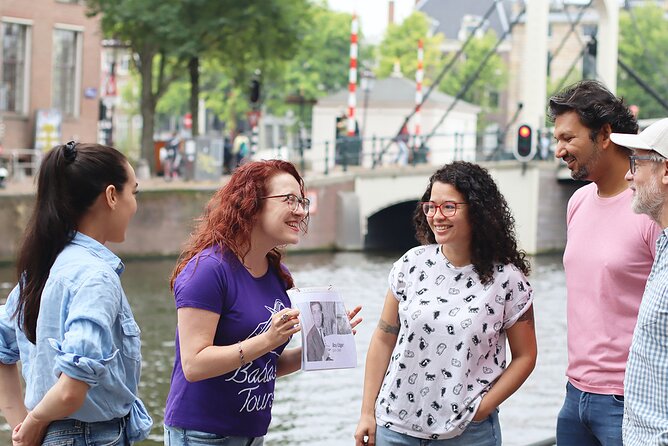
- Nine stops in two hours: The route moves from the Dutch National Opera & Ballet to H’ART Museum, with roughly 5 to 30 minutes at each location.
- A people-first view of Amsterdam: You hear about marriage equality, Spinoza, Jewish communities, Indonesian rebels, diamond workers, artists, suffragists, diplomats, and resistance heroes.
- Small group size: A maximum of 12 people makes this more personal than a large city walk.
- English-speaking local guides: Guides including Elyzabeth, Elizabeth, Astrid, and Tanja are praised for strong storytelling and thoughtful answers.
- No admission fees are included or needed: The tour visits sites from the outside or passes through public areas, so the price pays for the guide rather than entry tickets.
- A useful eastern Amsterdam finish: The walk ends at H’ART Museum, where you can continue sightseeing on your own.
Why this walk feels different from a standard Amsterdam tour
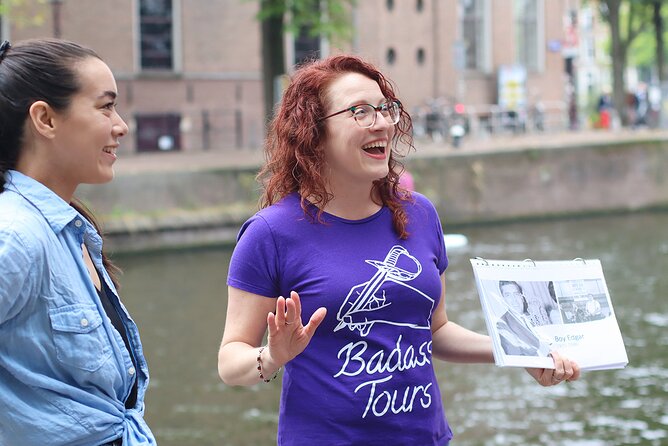
Many first walks through Amsterdam focus on canals, grand merchant houses, and famous art. This experience takes a different route through the city’s eastern center, using monuments and public buildings to tell stories that are easy to miss.
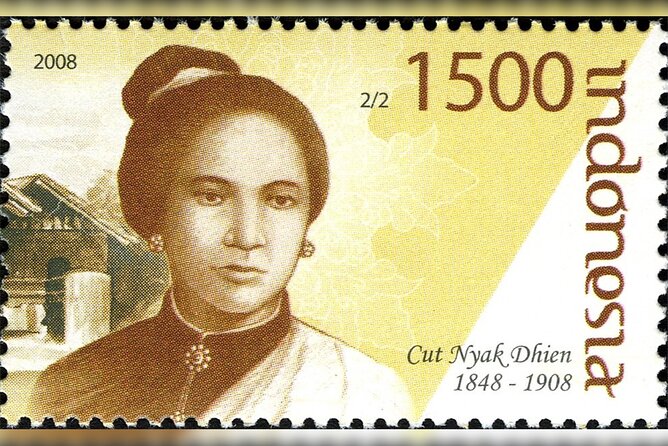
The subject range is the real attraction. At the first stop, you learn about the world’s first same-sex marriage and the modest building connected with it. Later, you hear about a philosopher rejected by his own community, Black life in 17th-century Amsterdam, a Jewish heiress who helped people escape religious persecution, and Indonesian revolutionaries whose lives took sharply different paths.
That variety keeps the walk from feeling like a single-subject history lesson. You are not simply moving from one landmark to another. You are seeing how Amsterdam was shaped by people whose contributions, suffering, or struggles were not always given equal space in the old tourist story.
I would choose this walk early in your stay if you want a framework for the city. It can help you notice the human stories behind buildings you later pass on your own.
A few more days out around Amsterdam worth weighing up
- Amsterdam: Van Gogh Museum Ticket
★ 4.7 · 52,054 reviews - Amsterdam Classic Saloon Boat Cruise with Drinks and Cheese
★ 5.0 · 31,825 reviews - Amsterdam Luxury Canal Cruise + Unlimited Drinks & Bites option
★ 5.0 · 30,518 reviews
Starting at the Dutch National Opera & Ballet
The meeting point is Monument Megadlé Jethomiem at Amstel 23, 1011 PT Amsterdam. The walk begins near the Dutch National Opera & Ballet, giving the guide a practical place to orient you before the stories begin.
The opening section is about getting grounded in Amsterdam and then turning your attention to the building linked with the first gay marriage in the world. The subject is significant, but the setting is deliberately unassuming. That contrast makes the point well: major social change does not always happen in a grand hall with a famous façade.
Expect about 10 minutes here. You will not be settling into an auditorium or taking a formal tour of the opera house. This is a street-level introduction, so listen closely and save questions for the guide as the group gets moving.
Spinoza Monument and the cost of independent thought
The next stop is the Spinoza Monument, with about five minutes devoted to the philosopher Baruch Spinoza. The story centers on his ideas, his importance to modern philosophy, and his rejection by members of his own community.
Five minutes sounds short, but it works as a compact introduction rather than a philosophy lecture. The value lies in connecting a well-known name with the city that shaped and expelled him. You get a glimpse of the tension between Amsterdam’s reputation for freedom and the limits that people still faced when their beliefs challenged accepted rules.
If philosophy interests you, this may leave you wanting more. That is one of the walk’s recurring features. Each stop opens a door, but the schedule rarely allows a long discussion.
Mozes en Aaronkerk and Black life in 17th-century Amsterdam
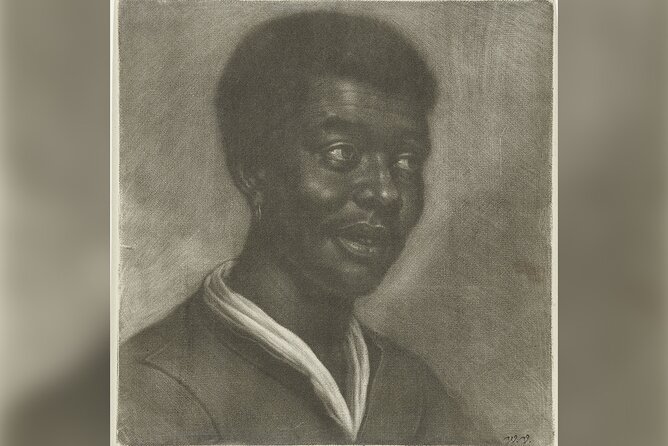
At Mozes en Aaronkerk, the guide shifts the focus to a couple who lived in Amsterdam’s free Black community during the 17th century. This is one of the more useful stops because it moves beyond broad statements about diversity and places two individual lives at the center.
The church itself gives the story a strong setting, but the stop is brief, at roughly five minutes. You should expect a concise account rather than a full treatment of Black life in early modern Amsterdam. Still, this short pause adds an important correction to the familiar image of the city as a place defined only by wealthy merchants and painters.
I especially like this kind of storytelling because it makes a large historical subject easier to remember. Two people can give you a more human point of entry than a list of dates and population figures.
Same canals, a completely different sort of afternoon:
- Amsterdam: Heineken Experience Ticket
★ 4.6 · 30,055 reviews - Amsterdam: Rijksmuseum Entry Ticket
★ 4.7 · 25,535 reviews - Amsterdam: Classic Boat Cruise with Optional Cheese & Wine
★ 4.6 · 22,925 reviews - Amsterdam: Evening Cruise with Optional Wine and Snacks
★ 4.4 · 19,696 reviews
The Portuguese Synagogue and a dangerous escape route
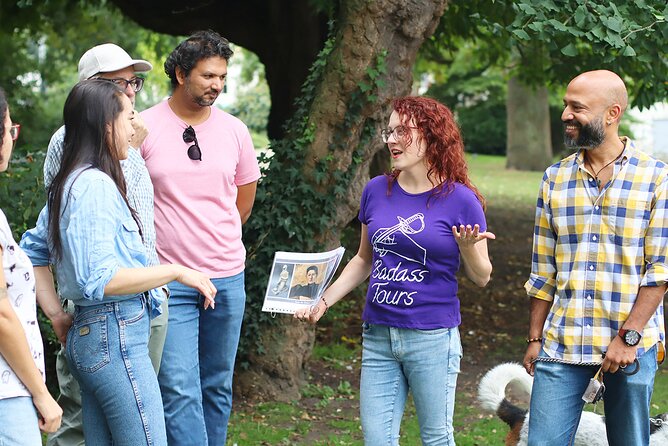
The route then reaches the Portuguese Synagogue of Amsterdam, where you hear about the heiress who created an underground railroad during the Spanish and Portuguese Inquisitions. The story links wealth, family connections, religious persecution, and organized escape.
You spend about 10 minutes here, standing among Amsterdam’s historic synagogues. That setting matters. You are not only hearing about distant events. You are hearing the story in a part of the city shaped by Jewish communities and migration.
The description of an underground railroad may sound like a phrase from a later period, but the key idea is a network that helped people flee persecution. The guide’s task is to make that story understandable without turning the stop into a dry timeline.
This is also a good place to ask questions. The walk’s guides are praised for answering questions carefully, and the subject invites them. If you want an extended visit inside the Portuguese Synagogue, plan that separately. The tour gives context from outside and nearby public space, not a full interior visit.
Hortus Botanicus and two Indonesian revolutionaries
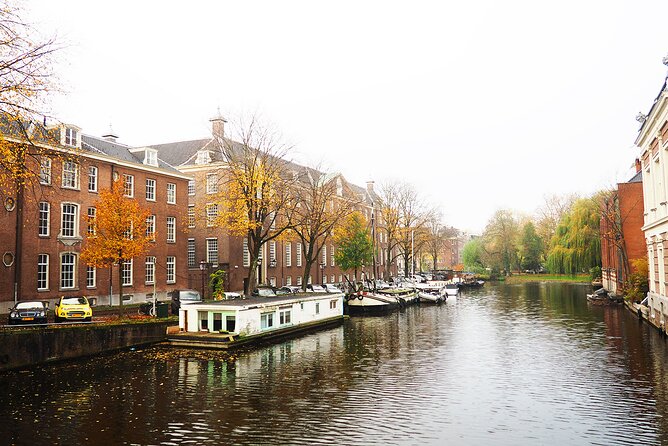
At Hortus Botanicus, the theme shifts again. The guide tells the stories of two Indonesian rebels and revolutionaries who led very different lives. You spend around 10 minutes here, and the stop adds colonial and Indonesian perspectives to the city’s story.
This is an important choice of subject. Amsterdam’s global wealth was tied to overseas trade and colonial power, yet many walking tours barely address the people affected by those systems. Here, the focus is personal. Two lives show that political change is rarely a simple tale of heroes and villains moving in the same direction.
The botanical garden is a fitting location for a discussion of Indonesia, though the tour does not list an admission visit. You should think of this stop as an outdoor history talk near the garden, not as time to explore its plant collections.
De Burcht and the workers behind modern rights
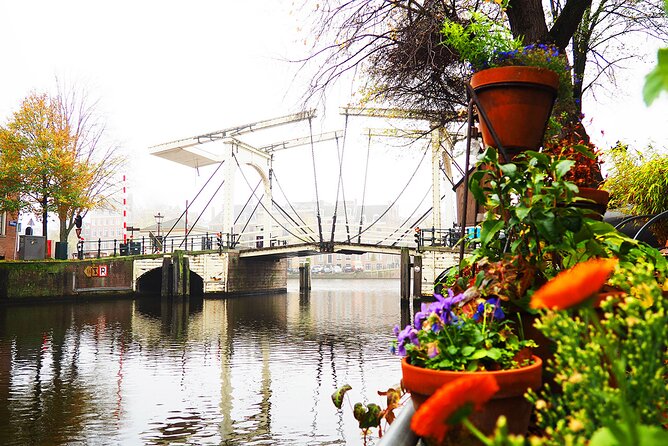
The stop at De Burcht looks at Amsterdam’s diamond industry and the labor union that built this distinctive building. The guide connects the workers’ movement with rights that people now rely on in daily life.
You spend about 10 minutes here. The story is valuable because it shifts attention from Amsterdam’s famous trade wealth to the workers whose organizing helped change working conditions and public expectations. Diamonds can bring to mind luxury, but this stop asks you to think about the people who cut and polished them, and about the power they gained by acting together.
De Burcht also gives the route an architectural marker. You get a building to look at while hearing the social story behind it, which helps keep the subject concrete.
ARTIS, flamingos, artists, and resistance heroes
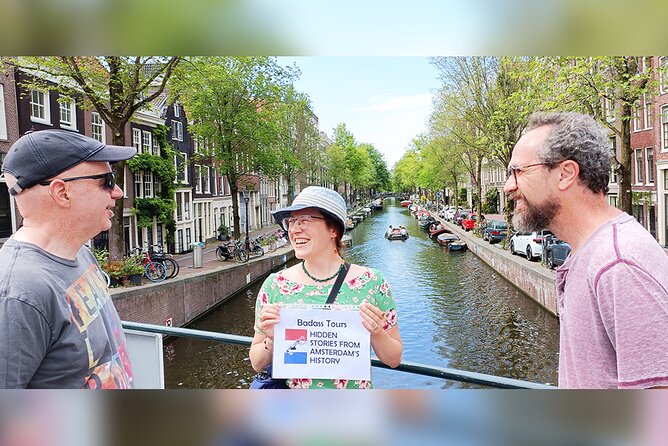
The longest stop comes at ARTIS Amsterdam Royal Zoo, where you spend about 30 minutes. You pass by the flamingos while learning about influential Amsterdammers, including artists and heroes of the World War II resistance.
This is the tour’s most relaxed section simply because it receives the most time. The flamingos provide a memorable bit of scenery, while the people discussed give the stop emotional weight. The combination is unusual, and that is part of its charm. You are not standing in a solemn museum room for every serious topic. Amsterdam’s past unfolds in an active public setting.
The stop also brings together creative and political courage. Artists changed how people saw the world. Resistance figures risked their lives under occupation. Placing them in the same part of the walk suggests that a city’s character is built by many kinds of influence.
You should not expect admission to ARTIS as part of this experience. The itinerary describes passing by the zoo, not touring its exhibits. If you want a full zoo visit, set aside separate time and budget.
The University of Amsterdam and two paths to public change
The group crosses through the University of Amsterdam campus for about 15 minutes. Here, the guide introduces an influential suffragist and a world-changing diplomat.
This stop broadens the idea of political influence. The suffragist represents the long campaign for women’s rights, while the diplomat points to international change and public service. Their stories give the walk a strong connection to civic life, showing how movements and institutions affect the rights and responsibilities you recognize today.
The university setting helps the transition from individual activists to wider systems. You are walking through a place devoted to learning while considering people who changed public thinking and political practice.
The campus crossing may also make this section feel less like a formal monument visit. You move through an everyday part of Amsterdam, which suits a tour focused on overlooked stories.
H’ART Museum and the rise of a household name
The final stop is H’ART Museum, formerly the Hermitage Amsterdam, at Amstel 51. The tour ends in front of the museum after about 15 minutes devoted to the fall and rise of a major figure in the art world.
The story concerns an artist who might never have become famous without a relative who barely knew him. That setup gives the ending a personal twist. Fame can seem inevitable after someone becomes a household name, but the guide asks you to consider the chance meetings, family ties, and acts of support that can shape an artist’s future.
Ending here is convenient. You can visit H’ART Museum afterward, continue along the Amstel, or use the central location to reach another part of the city. The tour itself does not include museum admission, so check separately if you want to go inside.
Guide quality and the small-group advantage
The experience includes a passionate English-speaking guide, and the guide makes or breaks a story-led walk. Names connected with this tour include Elyzabeth, Elizabeth, Astrid, and Tanja. Their styles may differ, but the consistently praised qualities are clear: strong preparation, engaging delivery, patience, and a willingness to answer questions.
Elyzabeth receives especially strong praise for storytelling and for making the material memorable enough to shape the rest of a visit. Elizabeth is noted for making adjustments for a participant using a wheelchair and with hearing limitations. Astrid is associated with thoughtful Jewish history tours and an especially serious treatment of World War II. Tanja is praised for clear answers and a fresh perspective on the Jewish quarter.
Those details matter more than a generic claim about guide quality. You are booking a small-group experience, but the exact guide can affect the tone. The themes include persecution, war, colonialism, discrimination, and social struggle, so a guide who can handle difficult subjects with care is essential.
The group limit of 12 is another real benefit. It should be easier to hear on city streets and easier to ask a question than on a large coach or crowded walking tour. It does not guarantee a private experience, but it keeps the group intimate enough for conversation.
Price, pace, and practical value
At $48.16 per person for about two hours, this is not the cheapest way to walk around Amsterdam. The tour includes no attraction admission, food, or transportation. You are paying mainly for the guide’s research, storytelling, route planning, and interpretation.
I think the price is reasonable if you want history told through specific people and places. It is less appealing if your priority is entering major attractions or covering a large part of Amsterdam’s famous center. A museum ticket or a longer guided visit may offer more time inside one site, but not necessarily this range of subjects.
The pace is brisk. Nine stops in two hours averages only a little over 13 minutes per location, and some stops receive five minutes. Wear comfortable shoes and expect to remain outdoors for most of the walk. Since the experience requires good weather, bring suitable clothing and keep the cancellation terms in mind.
The tour is booked an average of 16 days ahead, so I would reserve before your arrival rather than treating it as a last-minute choice. Confirmation is normally issued at booking. If you book within two days of the date, confirmation can take up to 48 hours and depends on availability.
Most people can participate, service animals are allowed, and the route is near public transportation. One useful caution is that accessibility support may depend on the guide and the day. The guide Elizabeth made a real effort to accommodate a wheelchair user and someone with hearing limitations, but you should still communicate your needs when booking.
Who should take this Amsterdam walk
I would recommend it most strongly to you if you:
- Prefer overlooked social stories to a checklist of famous sights
- Want to understand Amsterdam through individual lives
- Enjoy serious history mixed with art, philosophy, religion, labor, and politics
- Are traveling alone and want a small group with a responsive guide
- Have already seen the major canal sights and want a different angle
- Like asking questions during a walk
Families with older children may also find the changing subjects easier to follow than one long lecture. Some themes are painful, especially the World War II and persecution stories, so this is not a light sightseeing stroll from start to finish.
You may want another tour if you need a fully indoor activity, a museum-entry experience, or a slow architectural walk. The route is designed around stories, not extended time at each landmark.
Cancellation and booking details
Free cancellation is available if you cancel at least 24 hours before the local start time. Cancellations or changes made less than 24 hours ahead are not accepted for a refund.
Bad weather can also affect the walk. If the operator cancels because conditions are poor, you are offered another date or a full refund. Since the route is outdoors and the schedule is tight, this policy is worth noting before you make other fixed plans.
FAQ
How long is the Small Group Hidden Gems Tour in Amsterdam?
The experience lasts approximately two hours.
What language is the tour offered in?
The tour is offered in English.
Where does the tour begin?
It begins at Monument Megadlé Jethomiem, Amstel 23, 1011 PT Amsterdam, Netherlands.
Where does the tour end?
It ends in front of H’ART Museum, formerly the Hermitage Amsterdam, at Amstel 51, 1018 EJ Amsterdam, Netherlands.
How many people can join the tour?
The maximum group size is 12 travelers.
Are admission tickets included?
The listed stops have no admission ticket included. The tour describes outdoor visits, public-area stops, or passing by locations such as ARTIS and Hortus Botanicus.
Is the tour suitable for most people?
Most people can participate. Service animals are allowed, and the route is near public transportation. If you have mobility or hearing needs, share them when booking so the operator can prepare.
Can I cancel for a full refund?
Yes. You can cancel at least 24 hours before the experience starts for a full refund. If poor weather causes the operator to cancel, you are offered another date or a full refund.
Should you book it?
Book this walk if you want Amsterdam to feel more human and less like a list of postcard views. The strongest reason to go is the range of stories, from the first same-sex marriage and Spinoza to Jewish escape networks, Indonesian revolutionaries, labor rights, suffrage, art, and wartime resistance.
The main limitation is time. You will hear a lot, but you will not linger at every site or enter the major attractions along the route. For me, that is a fair trade at $48.16 if you value a thoughtful guide and a small group. Choose it early in your stay, wear good walking shoes, and treat the stories as a starting point for further exploration.
Just added around Amsterdam
- From Amsterdam: The Hague Private Trip and Mauritshuis Entry★ 4.3 · 4 reviews
- VIP Private Full Day Tour of the Netherlands★ 4.8 · 6 reviews
- Amsterdam Old-West Vegan Food Tour with Local Guide★ 4.7 · 3 reviews
- Amsterdam: Van Gogh Museum Guided Tour★ 4.8 · 262 reviews
- Van Gogh Museum Private Guided Tour★ 4.2 · 10 reviews
- Vecht River: Full-day Cruise with Lunch★ 4.8 · 9 reviews
- Van Gogh and Rijksmusuem Tour: Small Group Tour with Entry★ 4.7 · 3 reviews
- Amsterdam: Van Gogh Museum Ticket & Guided Tour★ 4.4 · 187 reviews
Tours, compared.
Zaanse Schans, Edam, Volendam & Marken Bus Tour
Read our review →
Anne Frank’s Story – Guided Walking Tour through Amsterdam
Read our review →
Life of Anne Frank and World War II Walking Tour
Read our review →

Red Light District Tour in German/English/Italian
Read our review →
Guided Zaanse Schans, Windmills & Cheese Tour
Read our review →
Windmill Tour from Amsterdam, Including Volendam & Marken
Read our review →