Reviewed · TICKETS
Body Worlds Amsterdam Admission Ticket
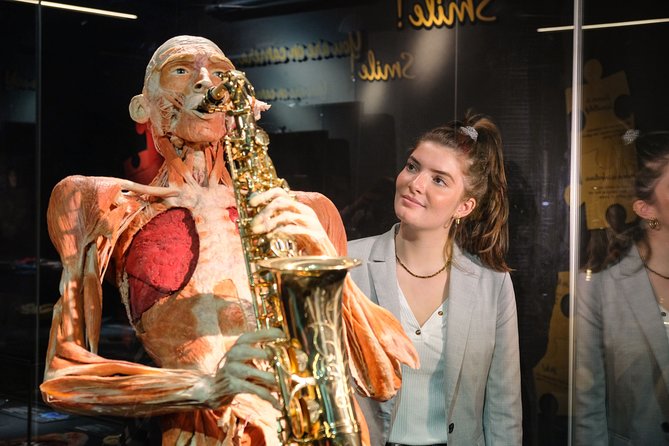
Body Worlds Amsterdam puts real human bodies at the center of the experience. Preserved through plastination, the specimens show muscles, organs, bones, blood vessels, and joints in ways that a textbook cannot match. The permanent Happiness Project adds a human angle, asking how happiness affects the body and how the mind and body work together.
I like the clear educational purpose and the chance to see anatomy in three dimensions, including unusual details such as joint replacements and carefully prepared cross-sections. I also like that the exhibition works for curious adults, biology students, health professionals, and older children, with explanations in English and Dutch.
The main drawback is size. Some people finish in under an hour, especially if they read little, while others spend two hours examining every display. If you expect a huge museum, the limited number of specimens may feel disappointing.
Key points to know before you book
- Real donated human specimens: The displays use human bodies donated to science, presented through plastination for close study.
- A permanent focus on happiness: The Happiness Project connects emotional well-being with physical health and human behavior.
- Allow 1.5 to 2 hours: That is a sensible planning window, although a fast visit may take less than an hour.
- Good for curious families: Children over six are the recommended age, and children up to and including five enter free.
- Timed mobile entry: You check in at your reserved time, and the last admission is one hour before closing.
- Not a guided tour: The ticket covers entry only. You arrange your own transport, food, and drinks.
Entering Body Worlds Amsterdam
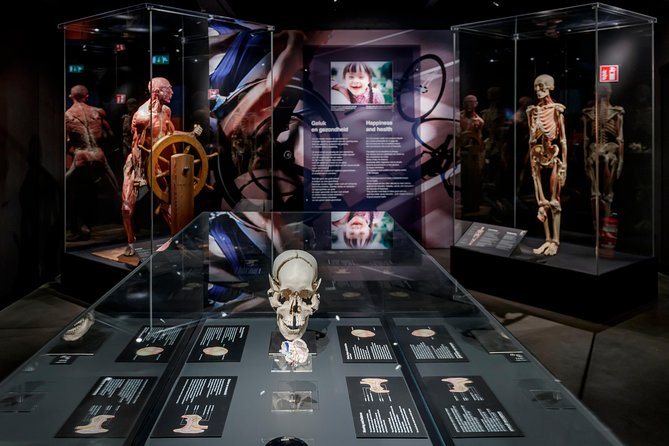
Body Worlds is not a conventional museum of paintings, canals, or Dutch history. Its subject is you. The exhibition uses real human specimens donated to science, prepared with plastination so that the body can be viewed in permanent, carefully arranged form.
That fact matters. You are not looking at plastic replicas or computer graphics. You see the structure of the human body as it really is, from full-body forms to isolated organs and body sections. The effect can be startling, but the presentation is intended to teach rather than shock.
A mobile ticket and reserved entry time make the start fairly simple. You check in at your selected time, and the ticket includes admission to the Amsterdam exhibition. There is no guide, transportation, meal, or drink included, so think of this as a self-guided museum visit rather than a tour with a host.
The exhibition is near public transportation, and most people can take part. Since the attraction is spread through a building with several levels, pay attention to the directions once you arrive. One useful practical detail is that the exhibition begins on level six, with lifts to the side. Clearer instructions at the entrance would make the first few minutes easier, but once inside, the route is simple enough to follow.
A few more days out around Amsterdam worth weighing up
- Amsterdam: Van Gogh Museum Ticket
★ 4.7 · 52,054 reviews - Amsterdam Classic Saloon Boat Cruise with Drinks and Cheese
★ 5.0 · 31,825 reviews - Amsterdam Luxury Canal Cruise + Unlimited Drinks & Bites option
★ 5.0 · 30,518 reviews
What the plastinated bodies show you
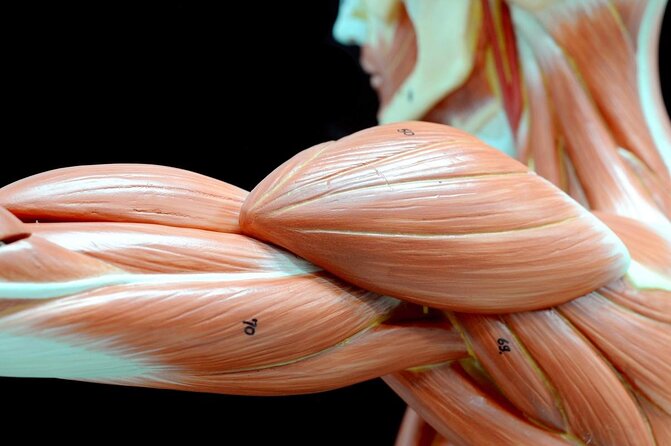
The full-body specimens are the main reason to come. They let you see how muscles, bones, organs, and blood vessels fit together in a living person. The displays turn anatomy into something physical and memorable, rather than a list of terms to forget after an exam.
Some exhibits focus on a particular body part or system. You might see how a joint is arranged, how organs sit within the torso, or how a medical procedure has changed the body. One especially striking example includes a donor with a shoulder, hip, and knee replacement. That kind of display gives you a direct look at what artificial joints mean inside the body.
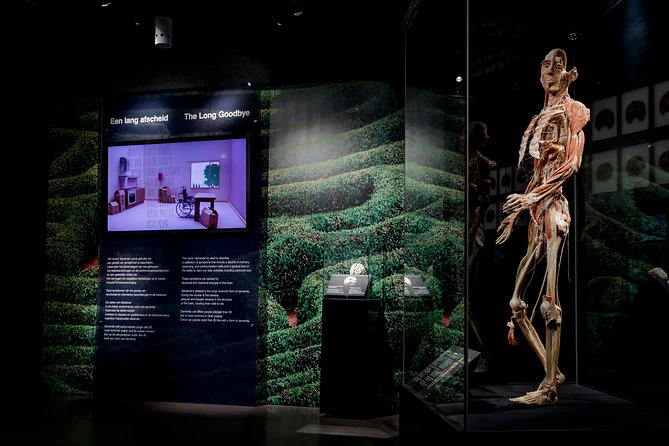
The cross-sections can be especially useful if you are studying biology or working in health care. They show the body from angles that are difficult to picture from a flat page. A student preparing for advanced biology may find the visit almost like a revision session, while a medical professional may appreciate the chance to see familiar anatomy presented in a different way.
Explanatory text accompanies the displays in English and Dutch. You can read everything closely, or move through more quickly and focus on the forms. If you want the full educational value, plan on staying longer than an hour. If you mainly want to see the major displays, you may be finished much sooner.
The presentation is imaginative as well as scientific. Bodies are positioned to show movement, structure, and interaction between systems. That approach helps you understand how the body functions as a whole, rather than treating each organ as an unrelated object.
The Happiness Project adds a psychological layer
The permanent Happiness Project gives the visit a wider purpose. Instead of stopping at muscles and organs, it asks how happiness and mental well-being influence physical health. This section brings psychology into a museum that could otherwise feel purely anatomical.
I like this connection because it gives the exhibition a more personal meaning. You are not simply studying a skeleton or examining a lung. You are considering how sleep, stress, pleasure, behavior, and emotional health can affect the body you have just seen laid open.
The theme also makes the visit suitable for groups with different interests. One person may be drawn to the biology, while another may spend more time with the questions about happiness and daily life. A group of friends can move through the displays together without needing everyone to have a medical background.
The section is not a replacement for a full psychology museum, but it adds useful context. It helps explain why the exhibition is called more than an anatomy show. The body is presented as a physical system, but also as part of a human life.
How long should you plan for?
The stated visit time is about 1.5 to 2 hours. That is the safest amount of time to reserve in your Amsterdam schedule, particularly if you plan to read the explanatory panels and spend time in The Happiness Project.
Still, your actual visit can be shorter. Someone who moves quickly and reads only selected labels may finish in just over an hour. A fast-moving visitor could even be done in less than 30 minutes, especially if the main goal is a quick look at the full-body specimens.
That range is important when judging value. Body Worlds can be a good one-hour activity between other plans, but it is not guaranteed to fill an entire afternoon. I would not book it as your only major activity for half a day.
For a thoughtful visit, give yourself at least 90 minutes. Add time if you are visiting with a biology student, a health professional, or a child who asks many questions. The exhibition rewards slow looking more than hurried checking off.
The last entrance is one hour before closing, so do not arrive at the end of the day assuming you can walk in just before closing time. Your reserved time matters, and arriving too late may leave you with too little time to see the displays properly.
Same canals, a completely different sort of afternoon:
- Amsterdam: Heineken Experience Ticket
★ 4.6 · 30,055 reviews - Amsterdam: Rijksmuseum Entry Ticket
★ 4.7 · 25,535 reviews - Amsterdam: Classic Boat Cruise with Optional Cheese & Wine
★ 4.6 · 22,925 reviews - Amsterdam: Evening Cruise with Optional Wine and Snacks
★ 4.4 · 19,696 reviews
Is the $27.21 ticket good value?

At $27.21 per person, the ticket is not a bargain-bin attraction, but it can be fair value for the right audience. You are paying for access to original human specimens, a permanent themed exhibition, and an activity that can occupy roughly 1.5 hours or more.
The value is strongest if you are genuinely curious about anatomy. Students, medical workers, science-minded adults, and families looking for an educational stop are likely to get more from the ticket than someone seeking a quick novelty.
The value is weaker if you dislike reading display panels or expect a very large museum. The number of exhibits is limited compared with some major city museums, and the physical space may feel smaller than anticipated. A person who moves quickly could feel that the visit ends too soon for the price.
I would compare it with the cost of other Amsterdam indoor attractions and ask what kind of afternoon you want. This is a focused experience, not a broad museum. It gives you something unusual and memorable, but it does not offer a long route through many galleries.
The mobile ticket removes the need for printed paperwork. Since confirmation arrives when you book, keep the ticket ready on your phone and arrive for the reserved entry time.
Who will enjoy this most?

Body Worlds suits adults who like science, medicine, anatomy, and questions about human behavior. It can also work well for people who want a different kind of Amsterdam activity, especially on an evening when you would rather visit an indoor attraction than sit in your hotel.
Families can visit too. The recommended age is over six, though younger children are welcome. If you bring a child, prepare them beforehand. Explain that they will see real human bodies donated to science, not cartoon figures or ordinary museum models.
That preparation is especially important for children who are sensitive to medical images. The displays are educational, but the bodies are unmistakably human. Some children may be fascinated, while others may find the sight uncomfortable.
The exhibition works for mixed-age groups because you can choose how much to read. A ten-year-old may enjoy the visual displays without reading every panel, while an older student can spend time studying the details. Seniors can also find the visit rewarding, particularly when the displays connect anatomy with real medical procedures.
People who are squeamish should think carefully before booking. You do not need a medical background, but you do need to be comfortable seeing preserved human specimens. If that idea immediately puts you off, Amsterdam offers plenty of other indoor activities.
What makes the experience educational?
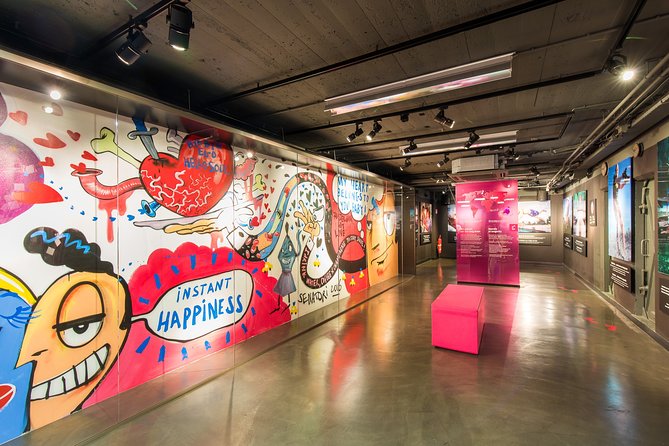
The best part of Body Worlds is the change in scale. In daily life, you experience your body from the outside. Here, you see the hidden structures that make movement, breathing, circulation, and thought possible.
That visual access can change how you understand anatomy. A diagram shows where an organ should be. A real prepared specimen shows its size, position, shape, and relationship to everything around it. Seeing the body arranged in three dimensions makes the information easier to remember.
The displays also encourage you to think about health choices. The exhibition does not simply present anatomy as a collection of objects. Through The Happiness Project, it links physical structure with the way people live, feel, and care for themselves.
I would not expect every panel to be equally compelling. Some sections may interest you far more than others, and the amount of written information can make the experience feel slower if you read every word. Still, the combination of specimens and text gives you control over the pace.
The exhibition can be particularly useful for students because it turns abstract lessons into visible examples. It may not replace classroom teaching, but it can make a difficult subject more concrete.
Staff, layout, and the self-guided pace
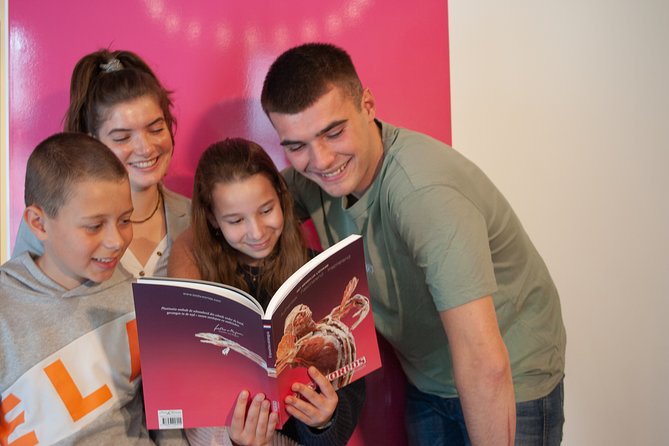
You should expect a self-guided visit. The admission ticket does not include a guide, so there is no scheduled lecture or person leading you from display to display.
Staff presence can vary. Arjen and Kostis have been noted for making visitors feel welcome and taking an interest in what people learned from the experience. At the same time, reception assistance may not always be as helpful as you would hope, and one visitor found that a body-scan feature was not working.
The layout is generally easy to follow and includes detailed explanations beside the specimens. The bilingual English and Dutch information is useful for international visitors and helps you explore at your own pace.
Crowding is possible, particularly in tighter areas. If you want time with the displays and do not enjoy standing close to other people, use your reserved entry time wisely and avoid rushing into the first room. The maximum group size for this activity is 15, which helps keep the booking side manageable, but the exhibition itself may still feel busy at certain moments.
Practical booking and cancellation advice
Confirmation is provided at booking, and the ticket is mobile. Public transportation is nearby, but transport to and from the attraction is not included.
Children up to and including age five enter free. The attraction recommends the exhibition for children over six, and the family should explain the content before arrival.
Free cancellation is available if you cancel at least 24 hours before the scheduled start time. Inside that 24-hour window, you will not receive a refund, and changes are not accepted. The cut-off follows local Amsterdam time, so check the clock before making last-minute changes.
Because the visit is timed, do not treat the ticket like an open-ended pass. Arriving at your reserved time gives you the best chance of seeing the exhibition without losing part of your planned visit.
Should you book Body Worlds Amsterdam?
Book it if you want an unusual, thoughtful museum experience and are comfortable seeing real human specimens. The exhibition is especially useful for biology students, health professionals, curious families, and anyone who wants a clearer sense of how the body works.
I would also recommend it if you have about 90 minutes free and want something different from Amsterdam’s usual canal and art stops. The Happiness Project gives the visit extra substance by connecting anatomy with emotional health.
Skip it if you are strongly squeamish, dislike reading museum labels, or expect a huge collection that will fill most of the day. At $27.21, the ticket makes the most sense when you take your time and engage with the explanations. For the right visitor, it is a memorable lesson in the remarkable machinery of ordinary human life.
FAQ
How long does a visit to Body Worlds Amsterdam take?
A visit usually takes about 1.5 to 2 hours. You may finish in just over an hour, or much faster if you move quickly and read little.
What does the admission ticket include?
The ticket includes entrance to Body Worlds Amsterdam and the permanent Happiness Project exhibition.
Is a guide included?
No. The admission is self-guided, and the ticket does not include a guide, transportation, food, or drinks.
Are children allowed at Body Worlds Amsterdam?
Yes. Children are welcome, though the recommended age is over six. Children up to and including five years old enter free. It is wise to prepare younger children for the real human specimens they will see.
Is the ticket available on a mobile phone?
Yes. The experience offers a mobile ticket, and confirmation is provided at the time of booking.
Can I cancel for a refund?
You can cancel at least 24 hours before the scheduled start time for a full refund. Cancellations and changes made less than 24 hours before the start time are not accepted, and no refund is provided.
Just added around Amsterdam
- From Amsterdam: The Hague Private Trip and Mauritshuis Entry★ 4.3 · 4 reviews
- VIP Private Full Day Tour of the Netherlands★ 4.8 · 6 reviews
- Amsterdam Old-West Vegan Food Tour with Local Guide★ 4.7 · 3 reviews
- Amsterdam: Van Gogh Museum Guided Tour★ 4.8 · 262 reviews
- Van Gogh Museum Private Guided Tour★ 4.2 · 10 reviews
- Vecht River: Full-day Cruise with Lunch★ 4.8 · 9 reviews
- Amsterdam: Van Gogh Museum Ticket & Guided Tour★ 4.4 · 187 reviews
- Van Gogh and Rijksmusuem Tour: Small Group Tour with Entry★ 4.7 · 3 reviews
Tickets, compared.





Keukenhof Ticket and Roundtrip Shuttle Transfer
Read our review →
Moco Museum Amsterdam Entrance Tickets with Banksy & More
Read our review →