
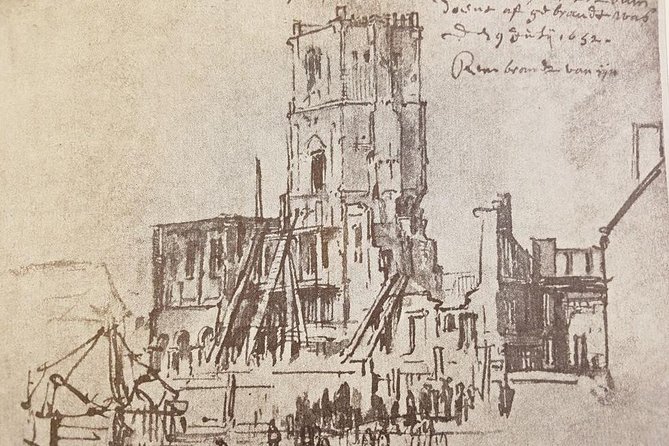
Reviewed · REMBRANDT TOURS
Rembrandt Tour
Rembrandt’s Amsterdam comes into focus when you stop treating his paintings as isolated museum pieces. This three-hour private walk begins at the house where he lived during his most successful years, then uses streets, squares, churches, and the Amstel to explain the man behind the famous faces and dramatic light.
I like the small private format, which lets you ask questions and adjust the pace. I also like the etching workshop at the Rembrandt House Museum, a hands-on start that makes his technical skill easier to understand. The main consideration is that this is primarily a walking experience, so you need moderate fitness and should be ready for old streets and several hours on foot.
Key points about the Rembrandt walk
- Start inside Rembrandt’s former home: The Rembrandt House Museum sets the scene and includes an etching workshop.
- See modern Amsterdam through his eyes: The Amstel, old streets, Rembrandtplein, and the area around the Oude Kerk connect present-day places to his life.
- Learn how he changed Amsterdam art: The walk explains his first major commission and his effect on the city’s art scene.
- Ask questions freely: Your group has a private guide rather than joining a large public party.
- Meet guides with strong art knowledge: Tijs de Boer is praised for clear storytelling and historical context, while Edgar Foley is associated with related Rijksmuseum tours.
- Finish near Dam Square: The route ends in central Amsterdam, close to where you began.
Starting at the Rembrandt House Museum
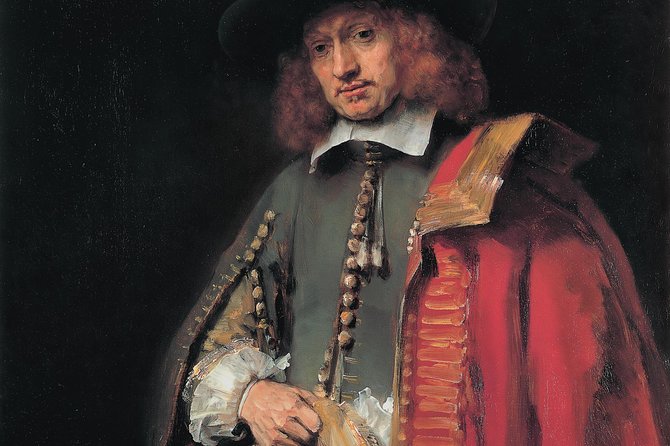
The tour begins at the Rembrandt House Museum on Jodenbreestraat, at number 4. This is more than a convenient meeting point. It is the house Rembrandt occupied at the height of his career, making it the right place to begin before walking into the wider city.
The included visit lasts about 45 minutes. That is enough time to introduce Rembrandt’s working life without turning the entire experience into a long museum visit. The focus is especially useful if you want to understand how he made his etchings, rather than only looking at the finished prints behind glass.
The etching workshop gives the opening a practical edge. You get a clearer sense of the patience and control needed to work in that medium. Rembrandt’s paintings often receive the attention, but his prints helped spread his name and ideas far beyond Amsterdam.
I like this opening because it gives the rest of the walk a firm base. You first see the place where Rembrandt lived and worked, then head outside to consider the city that supplied his clients, subjects, money, and problems.
The museum portion also matters for pacing. Forty-five minutes indoors gives you a break before the walk continues. If you want a full museum visit with every room and display, you may find this introduction too brief. The tour is designed to connect the house to the city, not replace a separate museum visit.
More Rembrandt houses and walks:
- Rembrandt House Museum Amsterdam Entrance Ticket
★ 4.5 · 355 reviews - Amsterdam: Van Gogh and Rembrandt Immersive Experience Entry
★ 4.2 · 334 reviews - Private Rijksmuseum Tour- The Dutch Masters, Rembrandt & Vermeer
★ 5.0 · 54 reviews
The Amstel and the view Rembrandt knew
One of the stops asks what Rembrandt would have seen while standing on the forerunner of a bridge over the Amstel. It is a simple question, but a useful one. Amsterdam has changed heavily since the 17th century, and the city can make it hard to picture the setting of Rembrandt’s life.
A good guide helps you separate what remains from what has vanished. You will consider the river, the street pattern, and the changing city around it. The point is not to claim that every modern view looks exactly as it did in Rembrandt’s time. The point is to use the surviving setting as a prompt for historical imagination.
This is where the private format earns its keep. You can pause over a detail, ask how the river was used, or request more explanation about the older city. In a large group, those questions can be difficult to fit in. With only your own party, the conversation can follow your interests.
The route also takes you through some of Amsterdam’s oldest winding streets. That sounds modest, but it changes the feel of the experience. You are not simply moving between famous attractions. You are walking through the kind of compact urban setting that shaped daily life, business, worship, and social connections in Rembrandt’s Amsterdam.
Rembrandtplein and the statue question
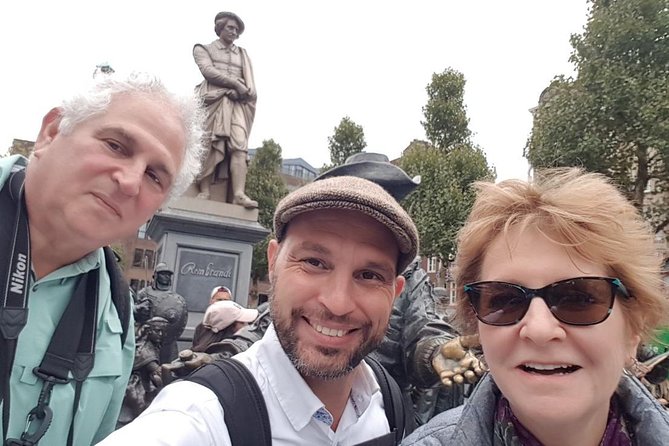
The tour stops at Rembrandtplein for about 10 minutes. Admission is free, and the stop is short, so think of it as a conversation point rather than a major visit.
The square was not always known by Rembrandt’s name. His statue now gives the place an obvious connection to the artist, and a three-dimensional version of The Night Watch adds another visual reference. The guide uses these modern reminders to ask whether Rembrandt himself ever visited this square.
That question is more interesting than a simple date or fact. It shows how cities construct public memory. A square named for an artist, a statue, and a recreated artwork can suggest a direct connection even when the historical link is less certain.
I like this part because it encourages you to look critically at the city around you. Amsterdam is full of Rembrandt references, but not every reference tells you exactly where he lived, worked, or walked. The guide helps distinguish commemoration from documented biography.
The drawback is that Rembrandtplein can feel like a quick stop compared with the museum. If you expect a long explanation or an extended photo break, the 10-minute timing may seem short. Its value comes from the question it raises and the way it fits into the wider story.
The commission that changed Rembrandt’s place in Amsterdam
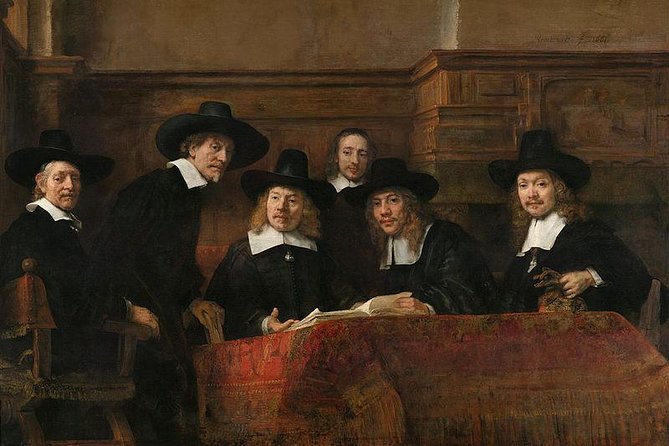
Another stop explains where and how Rembrandt shook up Amsterdam’s art scene with his first major commission. This is one of the most important parts of the walk because it shifts the focus from Rembrandt as a famous old master to Rembrandt as an ambitious working artist.
You hear how a major commission could change an artist’s standing in the city. The discussion places Dutch art in the wider progression of the period and shows how Amsterdam became an important center for painters, clients, merchants, and civic institutions.
The available information does not name the exact location or provide a full account of the commission, so you should expect the guide to supply the detail during the walk. What is clear is the emphasis: this is about Rembrandt’s rise and the moment his work began to reshape expectations in Amsterdam.
I find this kind of stop more useful than a long list of dates. It explains the stakes. Rembrandt was not simply producing attractive pictures. He was working within a competitive art world, taking on important assignments, and making choices that could either please or unsettle his clients.
The guide’s storytelling style is a major part of the experience here. Tijs de Boer is associated with the tour and is described as funny, passionate, and strong at linking Dutch history with art history. That combination suits this subject. You need enough factual grounding to follow the period, but a dry lecture would miss the drama of Rembrandt’s career.
A few more days out around Amsterdam worth weighing up
- Amsterdam: Van Gogh Museum Ticket
★ 4.7 · 52,054 reviews - Amsterdam Classic Saloon Boat Cruise with Drinks and Cheese
★ 5.0 · 31,825 reviews - Amsterdam Luxury Canal Cruise + Unlimited Drinks & Bites option
★ 5.0 · 30,518 reviews - Amsterdam: Heineken Experience Ticket
★ 4.6 · 30,055 reviews
The women in Rembrandt’s life and the Oude Kerk
The final historical thread concerns the women in Rembrandt’s life. The guide discusses why Rembrandt did not remarry after his wife’s death and explains how the Oude Kerk fits into that story.
This section adds necessary balance. It is easy to treat Rembrandt as a solitary genius and skip over the people who supported, challenged, or complicated his life. The walk instead brings relationships, family circumstances, and personal loss into the picture.
The Oude Kerk gives the subject a physical setting. You are not hearing a detached biography in a classroom. You are walking through the part of Amsterdam where religious buildings, homes, work, and family life were close together.
The tour does not present Rembrandt only as a successful painter. It addresses the good and bad parts of his life, which is one reason the experience can feel more complete than simply seeing his best-known works in a museum.
If your main interest is Rembrandt’s painting technique, this part may feel less central. If you want a fuller portrait of the person, it is essential. It also helps explain why a city walk can add something a gallery cannot. A painting shows the result. The streets help you think about the world in which it was made.
Why a private group changes the experience
The price is $390.52 per group of up to six people. That is a substantial amount for a three-hour activity if you are traveling alone or as a couple. Split among six people, however, it works out to about $65 per person, before any separate expenses outside the tour.
The private setup is the main value. You are not paying only for transport or admission. You are paying for a guide’s time, a flexible conversation, and a route built around your group rather than a fixed crowd. The museum admission is included, and the Rembrandtplein stop is free.
I would consider this good value for a family, group of friends, or small party with a real interest in art and Amsterdam’s past. It is less attractive if you prefer to explore alone, want a cheap orientation walk, or plan to spend most of your time inside the Rijksmuseum.
The tour also appears suited to people who enjoy questions. The route repeatedly uses prompts: What did Rembrandt see from the river? Did he visit Rembrandtplein? Why did he not remarry? Those questions make the walk conversational rather than a string of prepared facts.
Past feedback connected with Tijs describes 2.5 hours passing quickly, with clear explanations, fun facts, and Dutch history placed alongside art history. That is useful guidance for choosing this experience. It is not only for an art specialist. You can enjoy it with a general interest in Amsterdam, provided you like stories that connect a person to a place.
Guide style and what to expect
The strongest praise centers on the guides’ enthusiasm, storytelling, and ability to explain Dutch art in plain language. Tijs de Boer is repeatedly associated with private Amsterdam and Rembrandt walks. Edgar Foley is praised for related Rijksmuseum tours, especially for placing Dutch art of the Golden Age and earlier periods into context.
Do not assume that Edgar will lead this specific walk unless your booking confirms it. The useful point is that the guiding team is presented as art-focused, with an emphasis on history as well as paintings.
You should expect a guide who explains, points out connections, and answers questions while walking. The experience is not described as a formal lecture, and its best moments likely come when the guide links a visible street or building to a person or event from Rembrandt’s life.
The private format also gives you more control over the tone. A group interested in art can spend longer on technique. A family may prefer more biography and city stories. The activity is described as fully flexible, though the fixed stops and approximate three-hour length still provide the basic shape.
Timing, walking, and practical fit
The full experience lasts about three hours. The museum introduction takes 45 minutes, Rembrandtplein takes about 10 minutes, and the remaining time is used for walking and historical stops.
You begin at the Rembrandt House Museum and finish at Dam Square. The endpoint is central Amsterdam and close to the starting area, so the route works well as part of a day spent in the historic center.
You need moderate physical fitness. The route includes walking through old, winding streets, and the information provided does not promise a seated vehicle, short transfers, or a route designed for limited mobility. Wear comfortable shoes and plan for an active half-day.
The tour is offered in English and uses a mobile ticket. It is near public transportation, which makes reaching the start fairly straightforward. Confirmation is provided at booking.
Free cancellation is available if you cancel at least 24 hours before the start time. Cancellations or changes made less than 24 hours in advance do not qualify for a refund, and the cut-off follows local Amsterdam time.
Who should book this Rembrandt experience
I would choose this walk if you want Amsterdam to feel connected to a particular person. The tour gives you a house, a river, a square, a commission, a church, and a set of personal relationships. Each place adds another piece to Rembrandt’s life.
It is especially suitable for:
- Art lovers who want more context than a museum label provides.
- First-time Amsterdam visitors who want a historical walk through the old center.
- Families or friends who can share the private group cost.
- Anyone who prefers conversation and questions to a large scheduled group.
- Visitors interested in both Dutch art and the social world around it.
I would hesitate if you want a broad survey of all Amsterdam attractions. Rembrandt is the focus from start to finish. You also should not book it expecting a full Rijksmuseum tour. Related guide feedback praises Rijksmuseum experiences, but this walk begins at the Rembrandt House Museum and takes place mainly outdoors.
Should you book the Rembrandt Tour?
Book it if you want a focused, personal look at Amsterdam through Rembrandt’s life, especially if you can divide the $390.52 group price among several people. The etching workshop, old streets, Amstel viewpoint, Rembrandtplein discussion, major commission, and Oude Kerk story give the three hours a clear arc.
I would skip it if your priority is the lowest-cost city orientation or a long museum visit. For everyone else, this is a thoughtful way to connect art with streets, work, family, and public memory. The private format and guides such as Tijs de Boer make it particularly appealing for people who want to ask questions and set the pace.
FAQ
Where does the Rembrandt Tour start?
It starts at the Rembrandt House Museum, Jodenbreestraat 4, 1011 NK Amsterdam, Netherlands.
Where does the tour finish?
The tour finishes at Dam Square, the central square of Amsterdam, close to the starting area.
How long does the experience last?
The tour lasts approximately three hours.
Is the tour private?
Yes. Only your group participates, with a maximum of six people.
What language is offered?
The tour is offered in English.
Is admission to the Rembrandt House Museum included?
Yes. Admission is included for the museum stop, which lasts about 45 minutes.
Does the tour include an etching workshop?
Yes. The workshop introduces Rembrandt’s etching techniques at the Rembrandt House Museum.
Can I cancel for a full refund?
Yes, if you cancel at least 24 hours before the experience start time. Cancellations or changes made less than 24 hours before the start are not refunded or accepted.
Just added around Amsterdam
- From Amsterdam: The Hague Private Trip and Mauritshuis Entry★ 4.3 · 4 reviews
- VIP Private Full Day Tour of the Netherlands★ 4.8 · 6 reviews
- Amsterdam Old-West Vegan Food Tour with Local Guide★ 4.7 · 3 reviews
- Amsterdam: Van Gogh Museum Guided Tour★ 4.8 · 262 reviews
- Van Gogh Museum Private Guided Tour★ 4.2 · 10 reviews
- Vecht River: Full-day Cruise with Lunch★ 4.8 · 9 reviews
- Van Gogh and Rijksmusuem Tour: Small Group Tour with Entry★ 4.7 · 3 reviews
- Amsterdam: Van Gogh Museum Ticket & Guided Tour★ 4.4 · 187 reviews
Rembrandt Tours, compared.


Rembrandt House Museum Amsterdam Entrance Ticket
Read our review →
Van Gogh and Rembrandt Immersive Experience Entry
Read our review →
Private Rijksmuseum Tour- The Dutch Masters, Rembrandt & Vermeer
Read our review →
Leiden Tour with Live guide and Visit to Rembrandt’s First Studio
Read our review →
Rembrandt Experience VIP Admission Ticket + Photo
Read our review →
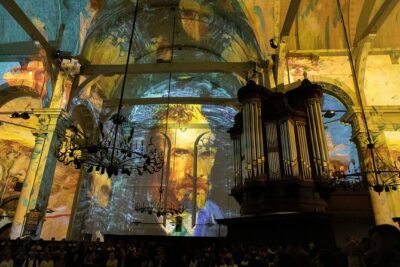
Van Gogh and Rembrandt Immersive Experience Entry Amsterdam
Read our review →Browse the lists this tour appears in