Reviewed · TICKETS
Amsterdam: Fabrique des Lumières Dutch Masters Ticket
Amsterdam’s Fabrique des Lumières turns paintings into a moving wall-to-wall show. Vermeer, Van Gogh, Rembrandt, and Mondriaan appear across a vast former industrial space, with music, shifting light, and details that travel across walls up to 17 metres high. I like the huge scale and the way familiar paintings become something you feel as well as see. I also like that the ticket includes a short Mondriaan programme, giving the experience a second artistic chapter.
The main drawback is the strict timing. The Dutch Masters presentation is shown only once at your booked time, and the building closes afterward. Arrive early, bring a warm layer, and do not count on slipping back in for anything you miss.
Key points at a glance
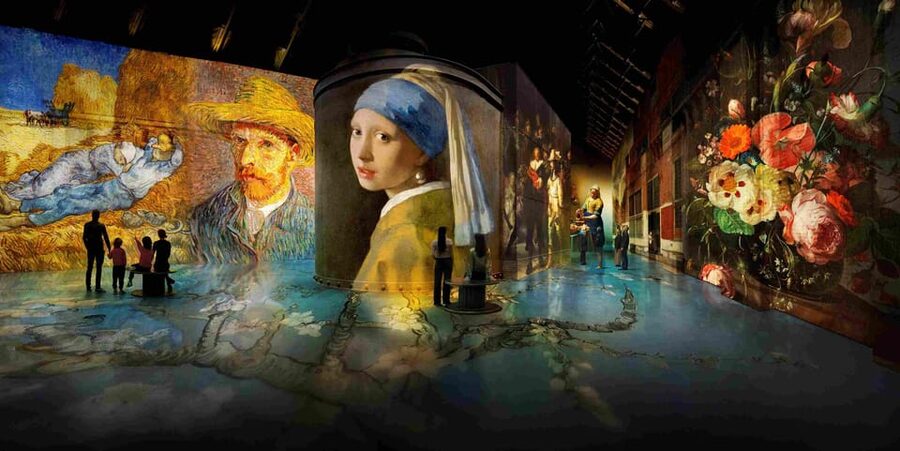
- 3,800 square metres of projected art: Paintings spread across walls, floors, and the full height of this industrial hall.
- Dutch Masters in motion: See works associated with Vermeer, Van Gogh, and Rembrandt presented with music and changing light.
- A separate Mondriaan programme: Follow Mondriaan’s move from traditional painting toward neoplasticism.
- About one hour inside: The timed presentation is long enough to feel substantial without taking over your Amsterdam day.
- Westergas setting: Pair the show with time in the surrounding park and a coffee nearby.
- Important practical limits: Large bags, luggage, pets, and baby strollers are not allowed, and the experience is not suitable for people with epilepsy.
Entering the former industrial hall at Westergas
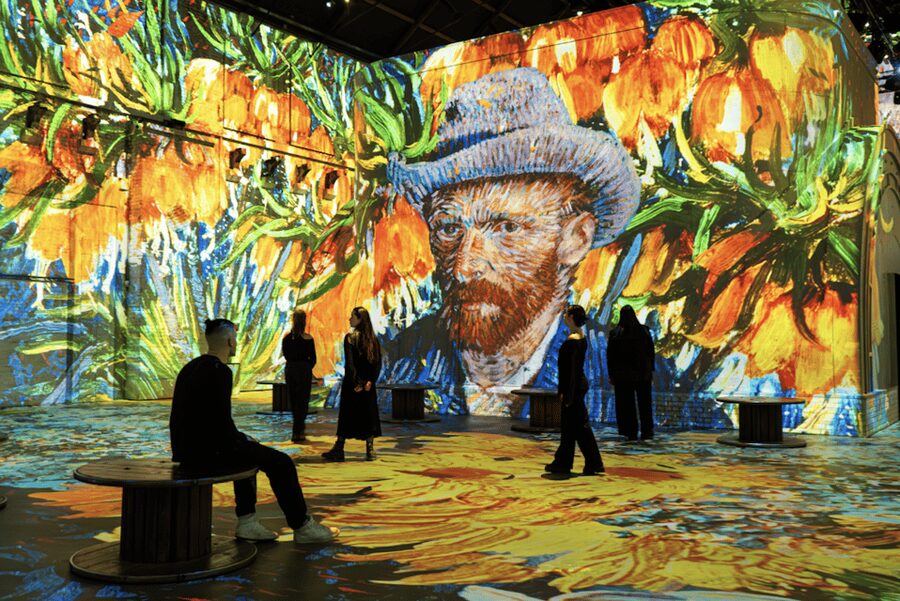
Fabrique des Lumières sits in Amsterdam’s Westergas park, in a large industrial building converted into a digital art centre. The first impression is not a quiet museum gallery. It is a huge room, with plenty of open floor space and soaring walls designed to carry projections from one end of the building to the other.
That scale changes how you look at art. In a museum, you stand in front of a painting and study its frame. Here, a face can become several metres tall, a patch of colour can spread across a wall, and separate works can appear as part of one continuous sequence. The effect is less about inspecting a single original object and more about seeing an artist’s ideas move through space.
Your timed ticket gets you past the ticket line and into the show at the booked time. Doors open 15 minutes before the presentation, so use that window to arrive, store your belongings, and find a comfortable place to watch. The show starts exactly on time, and it is presented only once during that slot.
That last point matters. This is not a gallery where you can wander in and out at your own pace. If traffic, a delayed tram, or a wrong turn across the park makes you late, you may miss the opening sequence. One useful lesson is simple: allow more time than you think you need to reach the building, especially if you do not know the Westergas complex.
A few more days out around Amsterdam worth weighing up
- Amsterdam: Van Gogh Museum Ticket
★ 4.7 · 52,054 reviews - Amsterdam Classic Saloon Boat Cruise with Drinks and Cheese
★ 5.0 · 31,825 reviews - Amsterdam Luxury Canal Cruise + Unlimited Drinks & Bites option
★ 5.0 · 30,518 reviews
How the Dutch Masters show unfolds
The main programme brings together famous Dutch artists through projected reproductions, music, and animation. You may recognise a painting immediately, then see it enlarged, broken into details, and placed beside related images. The presentation creates a broad story about Dutch art and daily life, showing how ordinary scenes became memorable through the eyes of the great painters.
Vermeer’s quiet interiors gain a different force when details are isolated and enlarged. A face, a hand, a window, or a shaft of light can become the focus for a few moments before the entire image returns. This can help you notice things you might pass over in a conventional museum display.
Rembrandt’s work benefits from the changing light. His strong contrasts and expressive faces are naturally suited to projection, and the scale gives his portraits a theatrical presence. Van Gogh’s paintings bring a different mood, with swirling lines and intense colour moving around the hall to the soundtrack.
This is not a substitute for seeing the original paintings. Projection can show you the composition and colour, but it cannot give you the physical surface, brushwork, or scale of an actual Van Gogh or Vermeer. Think of Fabrique des Lumières as a fresh way to encounter the artists, not as a replacement for Amsterdam’s museums.
The programme also has value if you are not usually drawn to art museums. You do not need to know the names of every painting to follow the broad emotional flow. The music helps carry the sequence, and the room itself becomes part of the presentation. For an art newcomer, this can be an easy and inviting first step.
One point to keep in mind is the amount of information provided. The show offers some context, but it is primarily a visual and musical experience. If you want detailed explanations of each painting, artist, or historical period, you may need a museum visit or a guidebook afterward.
The short Mondriaan programme
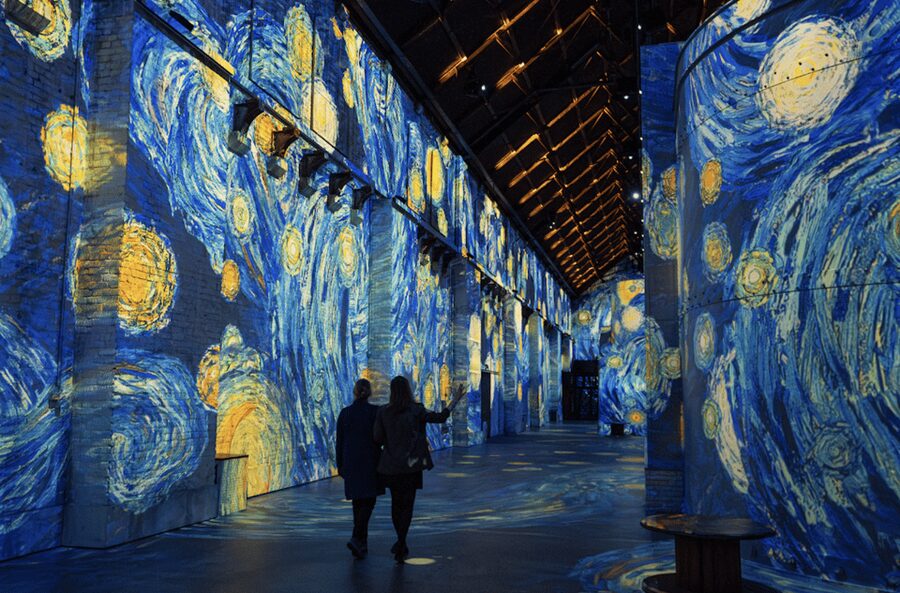
After the Dutch Masters presentation, a shorter programme focuses on Piet Mondriaan. It follows his artistic development from more traditional painting toward the spare, geometric language associated with neoplasticism.
This section works as a useful contrast to the earlier material. The Dutch Masters programme draws on recognisable scenes, people, rooms, and landscapes. Mondriaan’s later work moves toward lines, blocks, and carefully balanced areas of colour. On the large walls, those changes become easy to follow because the images can shift gradually from one stage to the next.
I find this section especially helpful for understanding that Mondriaan did not simply begin with grids and primary colours. The presentation frames his later style as the result of a long process of reducing and reorganising what he saw. The digital format suits that story, since shapes can separate, move, and rebuild themselves in front of you.
The Mondriaan programme is shorter than the main show, so do not expect another full-length presentation. It works best as a final coda rather than a second major attraction. If the first part is emotional and image-led, this section is more about artistic change and visual structure.
Music, seating, and the viewing experience
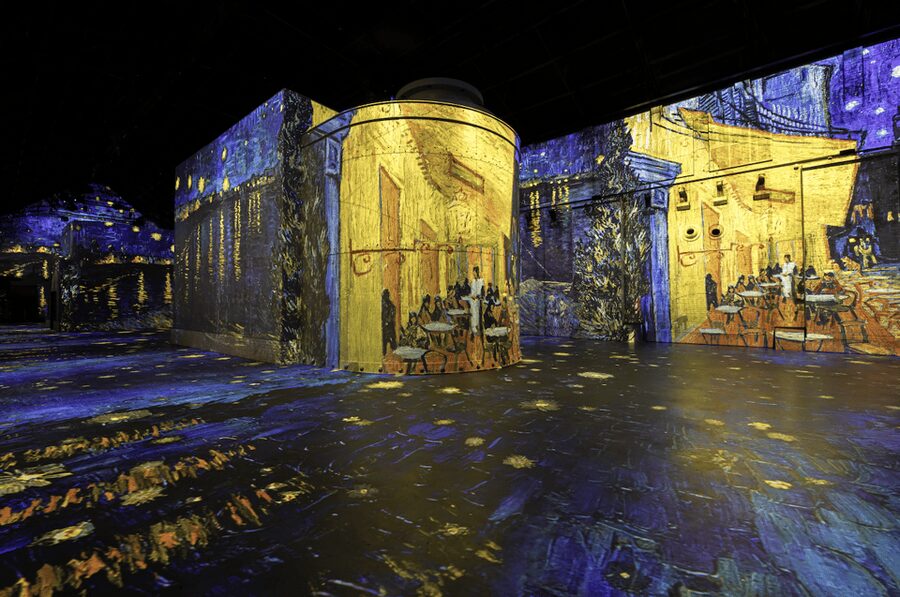
Music is a major part of the presentation. It is matched to the projected images and helps control the pace, shifting the mood from calm to dramatic. The combination can feel surprisingly emotional, particularly when familiar paintings fill the entire room.
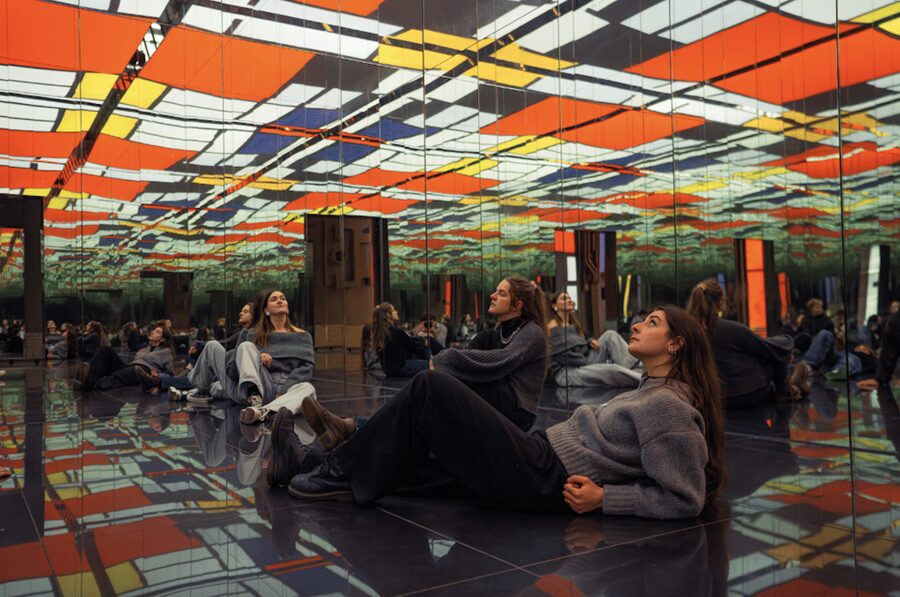
You are free to look around rather than face one fixed screen. That freedom is one of the pleasures of the format. You can sit on the floor, stand near a wall, or move to another part of the hall to change your view. Some areas have places to sit and relax, including a mirror room, but seating is not uniformly cushioned.
The floor can be cold, especially during cooler weather. A warm sweater or jacket is a sensible idea. If sitting on the floor is uncomfortable, arrive early and look for a position with a better view and a nearby place to rest. Do not expect a traditional theatre with assigned seats.
The open layout also means the mood can depend on the crowd. Many people respect the quiet atmosphere, but children may run around or talk during the show. That can break the spell, particularly during slower sections. The presentation is best suited to people who can accept a shared public setting rather than complete silence.
Photography may seem tempting, but the scale is hard to capture with a phone. The experience depends on being surrounded by the projections, so photographs usually show only a small part of what is happening. Put the phone away for at least part of the programme and give your eyes time to adjust to the room.
Same canals, a completely different sort of afternoon:
- Amsterdam: Heineken Experience Ticket
★ 4.6 · 30,055 reviews - Amsterdam: Rijksmuseum Entry Ticket
★ 4.7 · 25,535 reviews - Amsterdam: Classic Boat Cruise with Optional Cheese & Wine
★ 4.6 · 22,925 reviews - Amsterdam: Evening Cruise with Optional Wine and Snacks
★ 4.4 · 19,696 reviews
How long to allow, and why the time slot matters
The complete presentation takes about an hour, according to the experience details provided by the venue and booking information. That makes it easy to fit into a day at Westergas or combine with other plans in Amsterdam.
Still, your total time will be longer than the show itself. You need to arrive before the doors open, store your belongings, and get settled. Afterward, you may want time for the park or a coffee nearby. I would allow at least 90 minutes for the visit itself, and more if you are pairing it with other Westergas activities.
The first and last time slots of the day are particularly important. The Dutch Masters presentation is available only in those slots, not throughout the day. Check the available start times carefully before booking, then build your Amsterdam schedule around the appointment rather than trying to squeeze it between two fixed attractions.
The show starts exactly at the booked time. Fabrique des Lumières closes afterward, so arriving late is not like arriving late at a normal exhibition. You cannot simply enter midway and return later to see the opening.
Is $21 a fair price?
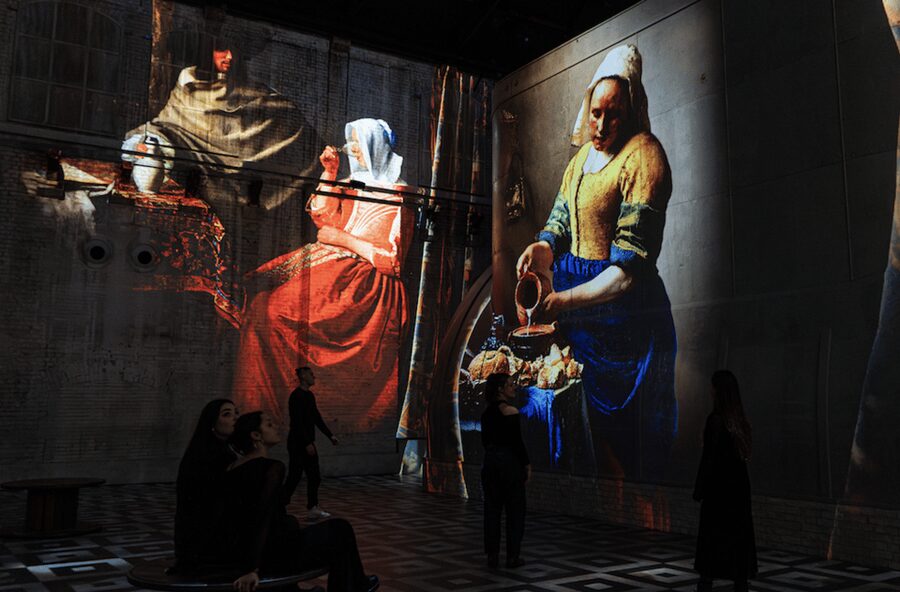
At about $21 per person, this is not a bargain attraction in the sense of spending all day inside. The ticket is valid for one day, but the actual presentation lasts about an hour. The value comes from the production scale, the technology, the music, and the unusual setting.
For comparison, a standard museum visit gives you more time with individual works and usually more written information. Fabrique des Lumières gives you something different: a carefully timed visual event that places you inside a changing sequence of images. If that sounds like your kind of art experience, the price is reasonable.
I would be more cautious if you want a quiet, scholarly visit or if you are mainly seeking original paintings. The ticket does not include a guide, and there is no personal explanation of each work as you move through the hall. You are paying for the presentation rather than a long day of independent study.
The value improves if you combine it with Westergas park and the nearby coffee stop. The show alone is a compact outing. As part of a relaxed afternoon, it becomes easier to justify.
Who will enjoy Fabrique des Lumières most?
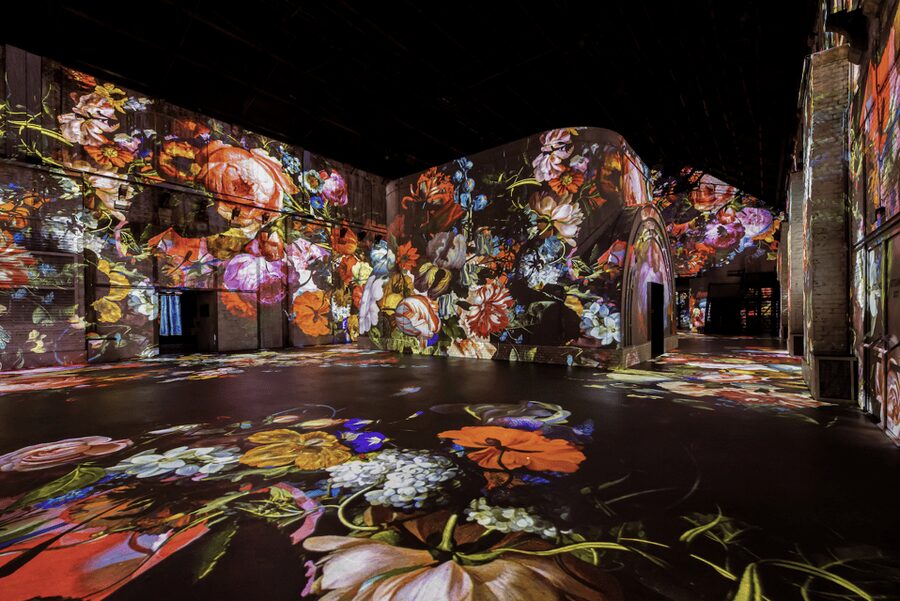
I would recommend it to art lovers who have already seen Dutch paintings and want to view them from another angle. The projections can reveal relationships between works and make details more noticeable.
It also suits people who are not normally comfortable in art museums. You can respond to the colour, sound, movement, and scale without knowing the full background of each artist. The experience is accessible in a very direct way.
Families may enjoy the visual spectacle, but parents should remember that baby strollers are not allowed and that running or loud behaviour can disturb the presentation. The show has a relaxed atmosphere, yet it is still a timed performance in a shared hall.
It is also a good choice if tickets for a major museum are unavailable. Just keep your expectations clear. This is not a replacement for the Van Gogh Museum or the Rijksmuseum, but it can offer a memorable way to spend an hour with the artists.
People with epilepsy should not attend, as the projections and changing light may create a health risk. The venue is wheelchair accessible, which makes the large open space easier to enjoy for people with mobility needs.
What to bring and what to leave behind
You can use a locker, which is helpful because luggage and large bags are not permitted inside. Baby strollers and pets are also not allowed. Pack lightly and avoid arriving with items you will need to find storage for.
Bring a warm layer, since the hall can feel cold. Comfortable clothing also helps if you plan to sit on the floor. Because there is no opportunity to return to the lockers once you are inside, make sure you have everything you need before the show begins.
Plan your route to Westergas with care. The building can be hard to spot, and a late arrival may cost you part of the presentation. Getting there 15 minutes before the start is the minimum sensible plan, not an unnecessary luxury.
My verdict: book it for the scale, not the scholarship
I would book the Fabrique des Lumières Dutch Masters ticket if you want a visually powerful break from conventional museum visits. The best parts are the massive projections, the carefully matched music, and the chance to see Dutch art as a moving sequence rather than a set of framed objects.
I would skip it if you need original works, detailed labels, or a flexible schedule. The show runs at a fixed time, offers limited art-historical explanation, and may feel expensive for an hour if you are unsure about digital exhibitions.
For most people spending several days in Amsterdam, it works well as a change of pace. Visit a traditional museum for the originals, then come here to see the same artistic world transformed by light, sound, and scale.
FAQ
Where is Fabrique des Lumières located?
Fabrique des Lumières is located in Westergas park in Amsterdam, in North Holland, Netherlands. You should arrive directly at the venue.
How long does the Dutch Masters experience last?
The presentation lasts about one hour. You should allow extra time before and after the show for arrival, lockers, and leaving the venue.
Does the ticket include the Mondriaan programme?
Yes. After the main Dutch Masters presentation, you can see a short programme about Mondriaan’s artistic development and his move toward neoplasticism.
When should I arrive?
Doors open 15 minutes before the exhibition. Arrive before your booked start time because the show begins exactly on schedule and is shown only once.
Can I enter the exhibition late?
The information provided does not promise late entry. Since the exhibition starts exactly at the booked time and the venue closes afterward, you should arrive on time and not plan to watch only part of the show.
Can I bring luggage, a stroller, or a pet?
No. Luggage, large bags, baby strollers, and pets are not allowed. Locker use is included with the ticket, but you should check what items can be stored before arriving.
Is the experience wheelchair accessible?
Yes, Fabrique des Lumières is wheelchair accessible. The experience is not suitable for people with epilepsy because of the projected light effects.
Just added around Amsterdam
- From Amsterdam: The Hague Private Trip and Mauritshuis Entry★ 4.3 · 4 reviews
- VIP Private Full Day Tour of the Netherlands★ 4.8 · 6 reviews
- Amsterdam Old-West Vegan Food Tour with Local Guide★ 4.7 · 3 reviews
- Amsterdam: Van Gogh Museum Guided Tour★ 4.8 · 262 reviews
- Van Gogh Museum Private Guided Tour★ 4.2 · 10 reviews
- Vecht River: Full-day Cruise with Lunch★ 4.8 · 9 reviews
- Van Gogh and Rijksmusuem Tour: Small Group Tour with Entry★ 4.7 · 3 reviews
- Amsterdam: Van Gogh Museum Ticket & Guided Tour★ 4.4 · 187 reviews
Tickets, compared.



Keukenhof Ticket and Roundtrip Shuttle Transfer
Read our review →
Moco Museum Amsterdam Entrance Tickets with Banksy & More
Read our review →