Reviewed · AMSTERDAM TOURS
Operation 45: An Adventure in Diamonds
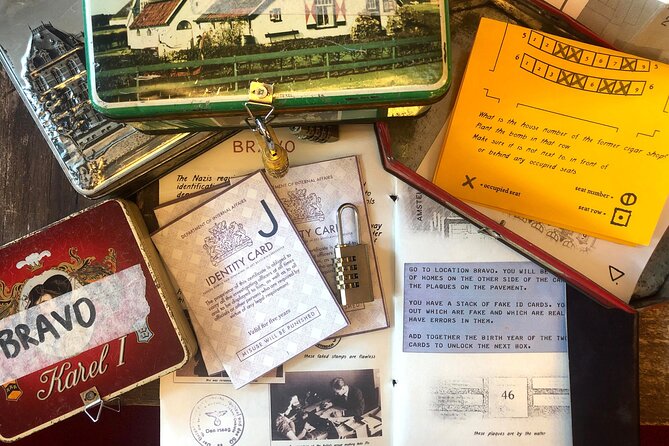
Amsterdam’s canals and monuments become part of a wartime mystery in Operation 45: An Adventure in Diamonds. You follow a trail connected to the Nazi invasion of the Netherlands, the Dutch resistance, and a secret effort to protect the city’s industrial diamonds. It is part walking tour, part puzzle game, and part history lesson.
I like the private format, since you play with your own group rather than being folded into a large public tour. I also like the freedom to choose your start time, plus the way the game makes you look closely at Amsterdam’s buildings and monuments. The main catch is that you need to read maps and solve puzzles while walking, so this may feel frustrating if your group wants a relaxed, guide-led outing.
Key points to know before you book
- A real wartime mystery: The story begins with the Nazi invasion on May 10, 1940, and follows the fate of Amsterdam’s industrial diamonds.
- A private group activity: You play with your own party, not with strangers.
- A flexible two-hour plan: Choose a time that fits your Amsterdam schedule.
- A walking puzzle through the city: Historic buildings, monuments, and small details become clues.
- A team contest for larger groups: Six or more people can split into competing teams.
- Phone help is available: If your map skills fail you, staff can help you work out where to go.
How Operation 45 turns Amsterdam into a mystery
The premise gives this activity more weight than a standard city scavenger hunt. On May 10, 1940, Nazi Germany invaded the Netherlands. Within hours, a secret mission began to keep a valuable supply of industrial diamonds out of Nazi hands.
The game then moves forward to May 5, 1945, when Amsterdam celebrates liberation. Your final task is to work out what happened to the diamonds by following clues left by the resistance. You are not simply walking from one attraction to another. You are using the city itself as the setting for a historical investigation.
That story structure matters. It gives your walk a clear purpose, and it ties the puzzles to a real period in Amsterdam’s past. You will learn historical details as part of the game instead of stopping for a long lecture at each site.
The supplied details do not identify the exact buildings or monuments along the route, so you should not expect a published list of stops in advance. What you can expect is a route through Amsterdam where buildings, monuments, and other visible details help you make progress.
A few more days out around Amsterdam worth weighing up
- Amsterdam: Van Gogh Museum Ticket
★ 4.7 · 52,054 reviews - Amsterdam Classic Saloon Boat Cruise with Drinks and Cheese
★ 5.0 · 31,825 reviews - Amsterdam Luxury Canal Cruise + Unlimited Drinks & Bites option
★ 5.0 · 30,518 reviews
Starting at Zwanenburgwal 178
You begin at Mystery City Games, at Zwanenburgwal 178, 1011 JH Amsterdam. The activity also ends back at this meeting point, which makes the timing easier to manage than a tour that leaves you across town.
That return point is useful if you have dinner, a museum booking, or another fixed plan afterward. The stated duration is about two hours, but I would still avoid placing a tight appointment immediately after it. Puzzle solving can move at different speeds, especially when several people disagree about a clue.
You receive confirmation at booking, and the experience uses a mobile ticket. The meeting point is near public transportation, so you can reach it without needing a private car. Since the activity depends on walking around the city, arrive ready to stay outdoors for the duration.
Following the diamond trail through Amsterdam
The route appears to unfold in stages rather than as a traditional stop-by-stop sightseeing tour. First, you learn the mission and the wartime setting. Then you head into the city to find the details that move the story forward.
As you walk, you will discover interesting buildings, monuments, and historical clues. The value here is not just seeing another canal or façade. You are being asked to inspect your surroundings and connect what you see with the story.
That changes the pace of sightseeing. On a normal walking tour, you may listen while a guide points out a detail. Here, you and your group must notice the detail, interpret it, and decide what it means. If you enjoy solving problems together, that extra responsibility makes the city feel more personal.
The route is also a good choice for people who have already seen Amsterdam’s main sights and want a different reason to walk. You are not told to admire a building and move on. You are encouraged to study it as part of a larger question.
The tradeoff is that you may pay less attention to the city if your group becomes too focused on winning. The best approach is to keep the competition light. Take time to notice the buildings and historical details, even when another team is trying to get ahead.
Solving puzzles with your own group
This is a private experience, so your group controls the mood and pace. That works well for families, friends, and coworkers who enjoy shared challenges but do not want to perform in front of strangers.
You can stay together for the full game. If your party has six or more people, you can also split into competing teams and see who solves the mystery first. The team option adds energy, but it is not required. If your group would rather work as one unit, you can do that.
For families, the format offers a useful mix of movement and problem solving. It gives children a reason to pay attention to old buildings and monuments, while adults can help connect the clues to the wartime story. The activity data says most people can participate, though it does not provide a specific age recommendation.
The game can also work well for a group with mixed interests. Someone who likes history can focus on the story. Someone who enjoys puzzles can take the lead on clues. Someone who simply wants to walk through Amsterdam gets a structured route and a reason to keep moving.
Do not choose this if everyone in your party wants a quiet, passive tour. You need to read information, discuss answers, find your way, and make decisions together. The experience rewards participation.
Same canals, a completely different sort of afternoon:
- Amsterdam: Heineken Experience Ticket
★ 4.6 · 30,055 reviews - Amsterdam: Rijksmuseum Entry Ticket
★ 4.7 · 25,535 reviews - Amsterdam: Classic Boat Cruise with Optional Cheese & Wine
★ 4.6 · 22,925 reviews - Amsterdam: Evening Cruise with Optional Wine and Snacks
★ 4.4 · 19,696 reviews
Map skills matter more than you might expect
One useful practical detail is that map reading can become part of the challenge. A participant described trouble reading the maps, but staff were available by phone to help the group work out where it was and how to proceed.
That means you do not need perfect navigation skills to book the experience. Still, I would nominate one person to handle the map and another to track the clues. A third person can focus on the historical details. Dividing those jobs may save time and prevent everyone from staring at the same directions.
Phone support is reassuring, but it is not the same as having a guide beside you. If your group gets stuck, you need to call for help rather than simply waiting for someone to appear. Keep a charged phone with you, and make sure the person carrying it can receive calls during the game.
The navigation issue is not necessarily a flaw. Finding your own way is part of what makes this different from a standard guided walk. But it is an important consideration for anyone who dislikes maps or wants every turn explained.
What the historical setting adds
The wartime story gives the puzzles a clear emotional purpose. The diamonds were industrial, not just valuable ornaments, and the mission involved protecting them from Nazi control. That setting helps explain why the resistance trail matters.
The dates also give the game a strong beginning and ending. The invasion on May 10, 1940, sets the danger in motion. Liberation on May 5, 1945, frames the final question: what became of the diamonds?
You will learn true stories from Amsterdam’s history as you solve the clues. The format may help the facts stick because you use them immediately. A date or name is not just something to remember for a quiz. It may help you interpret the next part of the trail.
At the same time, you should see this as an interactive historical experience, not a full account of the occupation or resistance. The available details promise true stories and historical information, but they do not describe a complete museum-style presentation. If you want extensive historical background, pair this with a more traditional museum visit or guided history tour.
Is $29.96 a fair price?
At $29.96 per person, this sits in a reasonable range for a two-hour Amsterdam activity, especially if you value a private format. You are paying for a planned story, a puzzle system, and a walking route that gives your group something to do together.
The value improves for groups that would otherwise book separate entertainment or a conventional walking tour. One ticket covers the game for your party, and groups of six or more gain the option of a friendly team competition.
The price is less compelling if your main goal is a detailed explanation of Amsterdam’s landmarks. This is not presented as a standard guided tour with a named guide leading every stop. You are paying for the game and the shared challenge, with phone assistance when needed.
I would think of the cost as an admission fee for a two-hour activity, not as a simple sightseeing walk. If your group enjoys puzzles, the price can feel well spent. If only one person wants to solve clues while everyone else follows along, the value drops.
The experience is often booked about five days ahead. That does not mean you must reserve exactly five days in advance, but it is a useful sign that you should not leave it until the last morning if your schedule is fixed.
Weather, timing, and practical planning
The experience requires good weather. If poor conditions cause a cancellation, you will be offered another date or a full refund. Since the activity takes place outdoors, check the forecast before you commit to a time.
Comfortable walking shoes are a sensible choice, though no special equipment is listed. You will be moving around Amsterdam while looking at buildings and monuments, so shoes that handle city streets matter more than anything fancy.
The flexible scheduling is one of the activity’s best practical features. You create your own schedule and play when it suits your day. That makes it easier to fit between museums, meals, and canal time.
Still, allow room around the two-hour estimate. A group that solves clues quickly may finish more efficiently, while a group that needs map help or debates every answer may take longer. The activity ends back at Zwanenburgwal 178, which gives you a clear place to continue your day.
Who will enjoy this most?
I would recommend Operation 45 to friends, families, and small private groups that like to solve problems together. It is especially suitable if you want to see Amsterdam in a new way rather than simply collect photos of famous sights.
It also suits larger parties. With six or more people, you can form competing teams, creating a simple contest without forcing anyone to split up. If the group prefers cooperation, staying together remains an option.
The game may appeal to history-minded visitors who want a wartime story connected to the streets around them. It can also suit repeat visitors who have already covered the standard Amsterdam highlights and want a fresh reason to explore.
I would be more cautious about booking it for anyone with limited interest in puzzles, map reading, or outdoor walking. The available information says most people can participate, and service animals are allowed, but it does not give detailed accessibility information for the route. Contact the provider before booking if your group has specific mobility needs.
Cancellation and booking details that matter
You can cancel for a full refund up to 24 hours before the experience starts. Cancellations made within 24 hours are not refunded, and changes during that period are not accepted.
The cut-off is based on Amsterdam local time. Keep that in mind if you are booking from another time zone or changing plans late in your trip.
Confirmation arrives at the time of booking, and you can use a mobile ticket. The activity has a maximum capacity of 50 people, although the private format means your own group plays together.
Should you book Operation 45?
Book it if you want a two-hour private game that mixes Amsterdam sightseeing with a true wartime mystery. The resistance story, flexible start time, return to the same meeting point, and team option for groups of six or more make it easy to fit into a city visit.
Go in ready to participate. Read the map, discuss the clues, and keep your eyes on the buildings around you. Staff can help by phone if you lose your way, but the experience works best when your group enjoys figuring things out for itself.
Skip it if you want a quiet, guide-led history tour with a fixed lecture at every stop. For everyone else, especially families and friends who like a little competition, Operation 45 offers a practical and engaging way to explore Amsterdam beyond the usual checklist.
FAQ
Where does Operation 45 start?
It starts at Mystery City Games, Zwanenburgwal 178, 1011 JH Amsterdam, Netherlands.
Where does the activity end?
The experience ends back at the meeting point on Zwanenburgwal.
How long does Operation 45 last?
The activity lasts approximately two hours.
How much does it cost?
The listed price is $29.96 per person.
Can I play with only my own group?
Yes. The experience is private and is designed for your own group.
Can groups of six or more compete against each other?
Yes. Groups of six or more can split into competing teams. You can also stay together as one group.
What happens if the weather is poor?
The activity requires good weather. If it is canceled because of poor weather, you will be offered a different date or a full refund.
Just added around Amsterdam
- From Amsterdam: The Hague Private Trip and Mauritshuis Entry★ 4.3 · 4 reviews
- VIP Private Full Day Tour of the Netherlands★ 4.8 · 6 reviews
- Amsterdam Old-West Vegan Food Tour with Local Guide★ 4.7 · 3 reviews
- Amsterdam: Van Gogh Museum Guided Tour★ 4.8 · 262 reviews
- Van Gogh Museum Private Guided Tour★ 4.2 · 10 reviews
- Vecht River: Full-day Cruise with Lunch★ 4.8 · 9 reviews
- Van Gogh and Rijksmusuem Tour: Small Group Tour with Entry★ 4.7 · 3 reviews
- Amsterdam: Van Gogh Museum Ticket & Guided Tour★ 4.4 · 187 reviews
Amsterdam Tours, compared.


Amsterdam Classic Saloon Boat Cruise with Drinks and Cheese
Read our review →
Amsterdam Luxury Canal Cruise + Unlimited Drinks & Bites option
Read our review →

Classic Boat Cruise with Optional Cheese & Wine
Read our review →
Evening Cruise with Optional Wine and Snacks
Read our review →