Reviewed · AMSTERDAM TOURS
Explore hidden streets with friends
Amsterdam’s best moments often appear just beyond the main squares: a quiet courtyard, a crooked old house, or a narrow lane where daily life carries on away from the crowds. This 2.5-hour walk takes you from Beursplein through the Canal Ring and Jordaan, with guides Michael or Christian adding stories about trade, religion, architecture, and ordinary Amsterdam life.
I like the small maximum of 10 people, which makes it easier to ask questions and hear the guide. I also like the mix of big landmarks and lesser-seen places, especially Karthuizerhof, a 1650 courtyard built for widows. The main consideration is simple: you will walk about 2.5 miles over two and a half hours, and the tour stays outdoors.
Key points at a glance
- Starts with Amsterdam’s commercial roots: Learn how trade shaped the city and hear about the world’s first stock market.
- Moves from central sights to quieter lanes: The route leaves the busiest parts of town for the Nine Streets and Jordaan.
- Includes courtyards rarely found by chance: Karthuizerhof offers a close look at early social housing.
- Small groups keep the walk personal: No more than 10 people are accepted.
- Guides bring a local point of view: Michael and Christian add practical tips and stories about living in Amsterdam.
- Good first-day orientation: The walk links the historic center, canals, shopping lanes, churches, and residential streets.
A smart way to get your Amsterdam bearings
This is not a checklist walk built around racing from one famous sight to the next. It is a connected stroll through Amsterdam’s development, beginning with commerce and power, then moving into canals, churches, neighborhoods, and social history.
That order matters. You first see why Amsterdam became wealthy and influential. Later, you see where that money went, in grand churches, orderly canal houses, and planned neighborhoods. By the time you reach the Jordaan, the city feels less like a museum and more like a place where people still live.
The walk is offered in English and lasts about 2 hours 30 minutes. The group limit of 10 is a real advantage in Amsterdam, where narrow lanes and busy sidewalks can make a large group awkward. A small party also suits the style of Michael and Christian, who are described as conversational, calm, open to questions, and happy to adjust the discussion when the group wants to follow a different thread.
You should be able to walk roughly 4 kilometers. There are no admission charges for the listed stops, so the price of $52.81 mainly pays for the guide’s time, route planning, and local interpretation rather than entry to a monument.
A few more days out around Amsterdam worth weighing up
- Amsterdam: Van Gogh Museum Ticket
★ 4.7 · 52,054 reviews - Amsterdam Classic Saloon Boat Cruise with Drinks and Cheese
★ 5.0 · 31,825 reviews - Amsterdam Luxury Canal Cruise + Unlimited Drinks & Bites option
★ 5.0 · 30,518 reviews
Beginning at Beursplein and Amsterdam’s trading past
The meeting point is Beursplein 1-3, near the center of Amsterdam. The opening discussion focuses on the city’s origins and its commercial rise, including the world’s first stock market.
That is a useful starting point because Amsterdam’s wealth did not appear by accident. Trade, finance, shipping, and urban growth shaped the streets you will walk later. Instead of treating the old center as a collection of attractive buildings, the guide connects commerce to the city’s physical form.
This early stop should help you read Amsterdam with more understanding. Look at the dense center, the water routes, and the grand public spaces as parts of an economic story. The guide’s approach is conversational rather than formal, so you can ask about subjects that interest you, including local life, architecture, or how Amsterdam works today.
Dam Square and the city’s civic heart
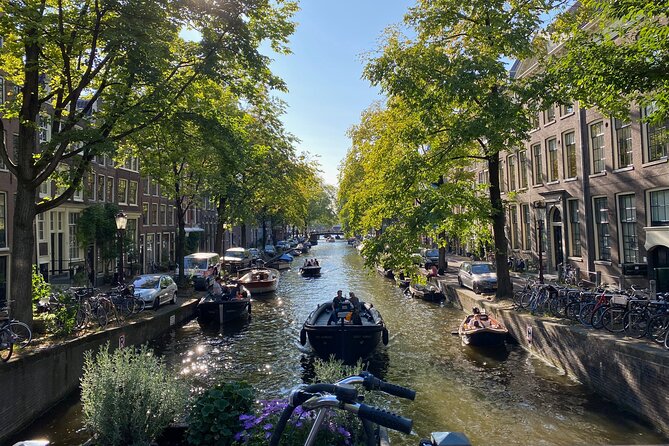
The route continues to a central square whose history and importance are explained along the way. This gives you context for Amsterdam’s public life and the role of the square in the city.
You will also learn about a major building that originally served as Amsterdam’s town hall. Its former civic purpose adds weight to the surrounding architecture. It was not simply a handsome building placed in a grand setting. It represented the city’s government, wealth, and confidence during a period when Amsterdam was growing in influence.
This portion may feel more familiar and more crowded than the Jordaan later in the walk. That contrast is part of the plan. The tour does not skip the central sights, but it does not remain there either. You get the basic landmarks, then move toward places where the pace is quieter.
Crossing the Canal Ring for a lesson in city growth
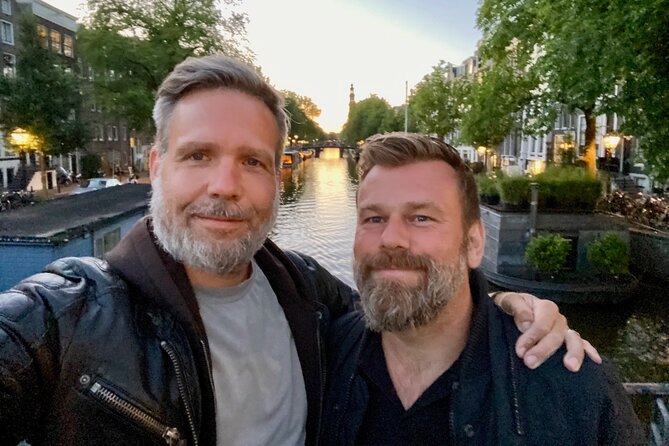
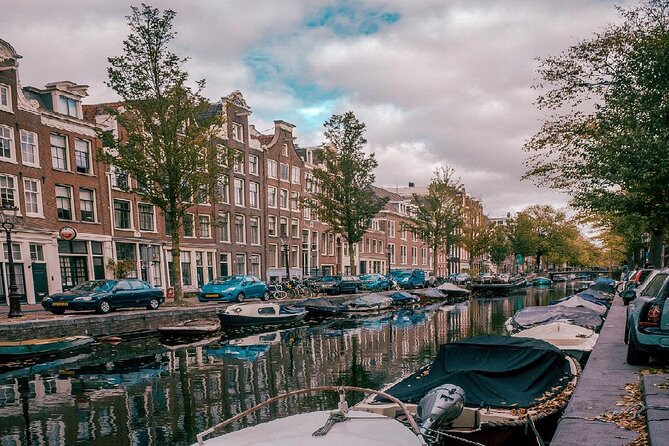
The Canal Ring section takes about an hour and explains the city’s medieval expansion. Amsterdam’s canals are beautiful, but the value of this stop is learning why they were built and how they helped the city grow.
A guide can point out details you might otherwise pass without notice: the relationship between waterways and streets, the way houses face the canals, and the difference between a planned extension and the older core. The walk lets you take in the canal scenery without turning the experience into a photo stop every few minutes.
This is also where the route begins to shift from broad history to close observation. You are not only hearing about Amsterdam’s past. You are looking at the built evidence around you.
Same canals, a completely different sort of afternoon:
- Amsterdam: Heineken Experience Ticket
★ 4.6 · 30,055 reviews - Amsterdam: Rijksmuseum Entry Ticket
★ 4.7 · 25,535 reviews - Amsterdam: Classic Boat Cruise with Optional Cheese & Wine
★ 4.6 · 22,925 reviews - Amsterdam: Evening Cruise with Optional Wine and Snacks
★ 4.4 · 19,696 reviews
The Nine Streets, shopping with a calmer feel
The Nine Streets are a compact area of side streets, small shops, and cafes away from the heaviest tourist flow. It is still a popular part of Amsterdam, so do not expect total solitude. The point is that the streets feel more intimate and local than the largest central routes.
I like this section for its balance. You have enough time to notice storefronts, old buildings, and the shape of the lanes, yet the tour keeps moving toward the Jordaan. If you want to return later for shopping, coffee, or a slower look at the area, the guide’s route gives you a useful first introduction.
The Nine Streets also show how Amsterdam’s older streets remain part of modern city life. Historic buildings are not sealed off behind ropes. They hold shops, homes, and businesses, which makes the area more interesting than a row of preserved facades.
Entering the Jordaan through quiet lanes and squares
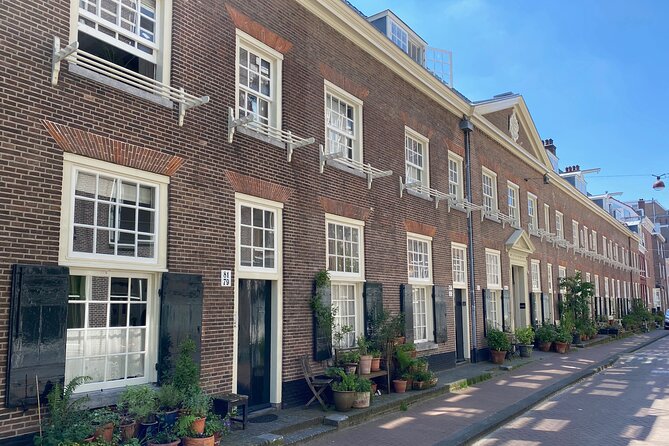
The Jordaan receives about 1 hour 20 minutes, making it the longest part of the walk. That extra time is well used. The route focuses on side streets, small squares, courtyards, and the history of a neighborhood often described as one of Amsterdam’s more authentic remaining areas.
This is the heart of the experience. The guide takes you into places you might not locate on your own, including two small side streets noted for their charm. You may also hear community stories that do not fit neatly into a standard guidebook account.
I especially like the way this section leaves room for questions. Michael is described as calm and generous with local information, while Christian is noted for his warm manner and willingness to follow a group’s interests. That makes the walk suitable for solo visitors and couples, as well as friends who want conversation rather than a lecture.
The Jordaan can also be a good place to understand Amsterdam beyond its postcard image. The route brings together architecture, neighborhood life, religious history, and social change. You may leave with practical ideas for places to visit later, since the guides provide suggestions beyond the walk itself.
Karthuizerhof and Amsterdam’s early social housing
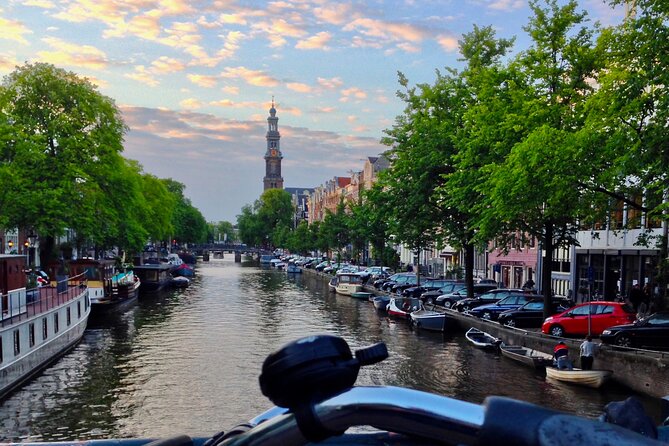
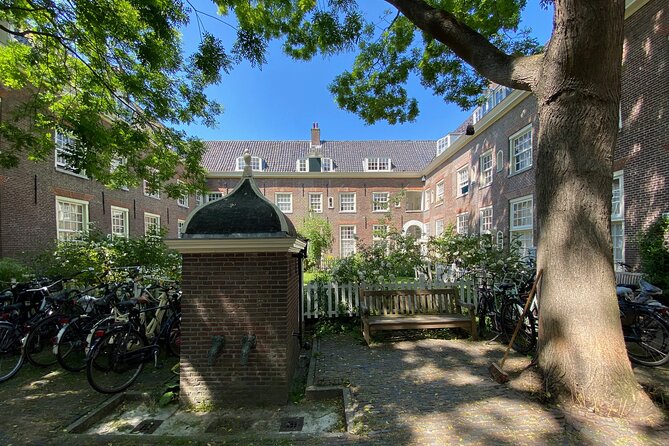
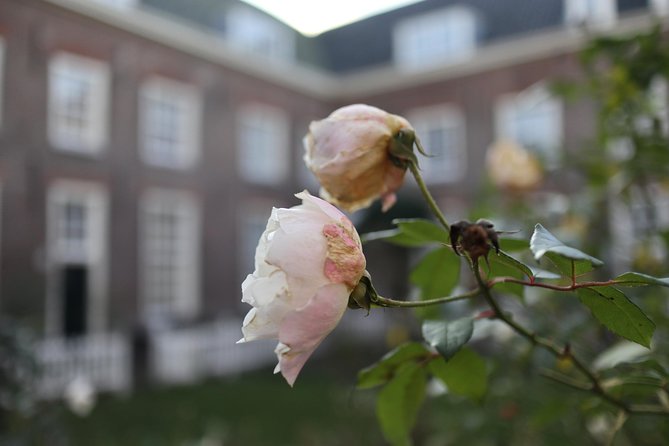
Karthuizerhof is a brief stop of about 10 minutes, but it is one of the most distinctive. This courtyard was built in 1650 for widows and is described as one of the world’s first social housing projects.
The courtyard helps correct the idea that old Amsterdam was shaped only by merchants and wealthy families. It points to the city’s efforts to house people who needed support. The church for the poor, also included along the route, adds another layer to this story and explains why it was built in that particular location.
These stops are valuable because they reveal the social side of the city. Grand canals and merchant houses tell only part of Amsterdam’s past. Courtyards, charity buildings, and religious institutions show how different groups lived and how the city responded to poverty and widowhood.
Because Karthuizerhof is a functioning courtyard area rather than a major museum, you should be respectful and follow the guide’s lead. The visit is short, but the setting rewards close attention.
The Anne Frank House area and Westerkerk
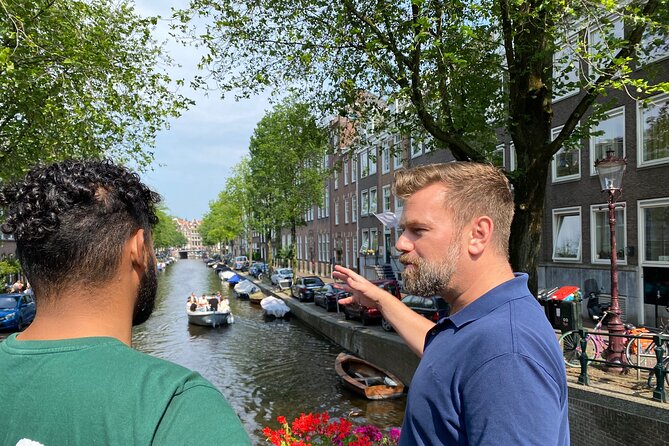
The walk passes by the Anne Frank House while moving through the Jordaan. This is an exterior pass-by, not an entrance visit, so you should not expect time inside the museum or a ticket to be included.
That distinction matters. If you want to visit the Anne Frank House, arrange that separately. The tour’s purpose here is to place the site within the surrounding neighborhood and the wider story of Amsterdam.
The route also includes Westerkerk, a major church built by Amsterdam’s wealthy merchants. You will hear about its design and purpose, as well as its connection to Rembrandt, who was buried there.
Westerkerk offers another useful contrast with Karthuizerhof. One stop reflects organized charity and care for widows. The other reflects the power and prosperity of the merchant class. Together, they make the city’s past feel more human and less one-dimensional.
What the guides add to the walk
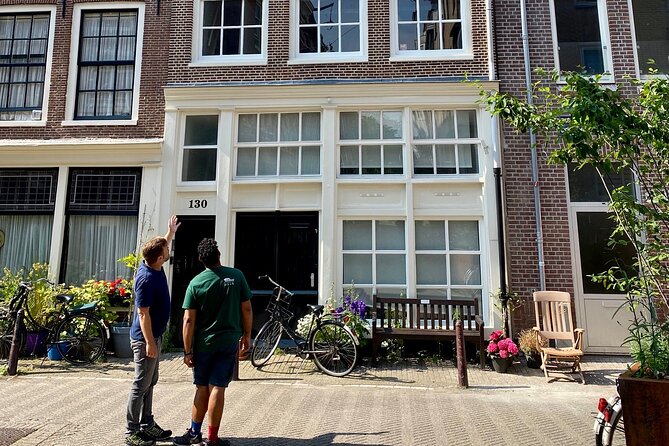
Michael and Christian are central to the experience. Their style, based on the available descriptions, is informal and story-led. You should expect explanations in plain language, plenty of room for questions, and a focus on details that are easy to miss while walking alone.
Michael is especially associated with personal stories about Amsterdam, hidden courtyards, quiet lanes, and practical suggestions for later sightseeing. Christian brings the same interest in lesser-known streets, architecture, and local community stories. Both guides appear comfortable discussing broad Dutch history and small details from everyday life.
The small group helps here. With 10 people or fewer, you can usually hear the guide more easily and stop without blocking a large section of pavement. It also creates a better setting for questions about food, neighborhoods, transport, or what it is like to live and work in Amsterdam.
The exact guide may depend on the date and group arrangement. The tour is offered in English, and the supplied information names Michael and Christian as the guides.
Price, pace, and practical value
At $52.81 per person, this is not the cheapest way to walk around Amsterdam. You can follow a map through the Canal Ring and Jordaan without paying for an organized tour.
The value comes from access to a planned route and a guide who gives meaning to what you see. Two and a half hours is long enough to cover several districts without turning the day into an exhausting full-day commitment. The small group also makes the price more reasonable than a large, impersonal city walk.
I would book it early if the date matters to you. The experience is booked an average of 65 days ahead, which suggests that popular dates can fill well in advance. Group discounts are available, so check the final rate if you are booking with friends.
You receive confirmation when booking, and a mobile ticket is offered. The route begins at Beursplein and ends at Elandsgracht, so plan for the fact that you will not finish where you started. Both points are near public transportation, making it practical to continue sightseeing afterward.
You can cancel for a full refund up to 24 hours before the start time. Changes or cancellations inside that window are not accepted for a refund. The activity also requires a minimum number of participants, so a cancellation by the operator may result in another date, another experience, or a full refund.
Who should book this Amsterdam walk?
I would recommend it to first-time visitors who want a clear introduction without spending the whole day inside major museums. It also suits people who have already seen Dam Square and the canals but want a closer look at the Jordaan and its courtyards.
Solo visitors and couples should find the small format comfortable. Friends can use the walk as a shared orientation before exploring on their own. It is also a good fit if you prefer questions and conversation to a tightly scripted presentation.
You should be ready for continuous walking over about 4 kilometers. Most people can participate, service animals are allowed, and the experience is near public transportation. Still, anyone who has trouble walking for two and a half hours should think carefully before booking.
My verdict on this small-group route
Book this walk if you want Amsterdam explained through quiet streets, social history, and local detail, not just famous facades. Its best moments are likely to be the Jordaan lanes, Karthuizerhof, and the easy back-and-forth with Michael or Christian.
Skip it if you want interior visits, a boat ride, or a short highlights tour with little walking. The Anne Frank House is viewed from outside, and the listed churches and courtyards do not turn the walk into an admission-based sightseeing package.
For most visitors, the route earns its price by connecting Amsterdam’s trade, civic power, religion, housing, and neighborhood life in one manageable outing. I would book it near the start of your stay, then use the guide’s local suggestions to shape the rest of your time in the city.
FAQ
Where does the walking tour start?
The tour starts at Beursplein 1-3, 1012 JW Amsterdam, Netherlands.
Where does the tour end?
The walk ends at Elandsgracht in Amsterdam.
How long does the experience last?
The tour lasts approximately 2 hours and 30 minutes.
How far will I walk?
You should be able to walk about 2.5 miles, or 4 kilometers.
How large is the group?
The experience has a maximum of 10 participants.
Is the tour offered in English?
Yes. The tour is offered in English.
What is the price?
The listed price is $52.81 per person. Group discounts are available.
Is a mobile ticket provided?
Yes. The experience offers a mobile ticket.
Does the tour enter the Anne Frank House?
No entrance is listed. The route passes by the Anne Frank House during the walk through the Jordaan.
Can I cancel for a refund?
Yes. You can cancel at least 24 hours before the start time for a full refund. Cancellations or changes made less than 24 hours before the start time are not accepted for a refund.
Just added around Amsterdam
- From Amsterdam: The Hague Private Trip and Mauritshuis Entry★ 4.3 · 4 reviews
- VIP Private Full Day Tour of the Netherlands★ 4.8 · 6 reviews
- Amsterdam Old-West Vegan Food Tour with Local Guide★ 4.7 · 3 reviews
- Amsterdam: Van Gogh Museum Guided Tour★ 4.8 · 262 reviews
- Van Gogh Museum Private Guided Tour★ 4.2 · 10 reviews
- Vecht River: Full-day Cruise with Lunch★ 4.8 · 9 reviews
- Van Gogh and Rijksmusuem Tour: Small Group Tour with Entry★ 4.7 · 3 reviews
- Amsterdam: Van Gogh Museum Ticket & Guided Tour★ 4.4 · 187 reviews
Amsterdam Tours, compared.

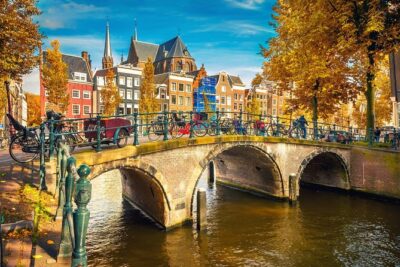
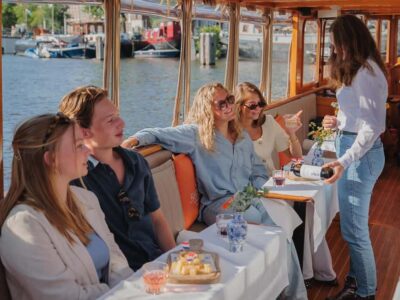
Amsterdam Classic Saloon Boat Cruise with Drinks and Cheese
Read our review →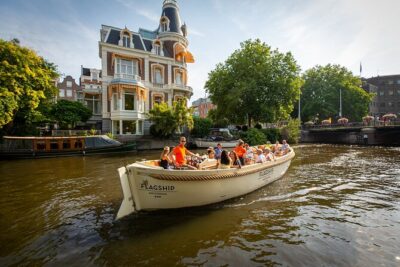
Amsterdam Luxury Canal Cruise + Unlimited Drinks & Bites option
Read our review →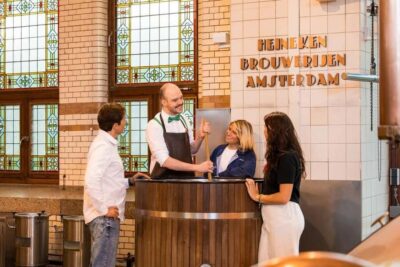

Classic Boat Cruise with Optional Cheese & Wine
Read our review →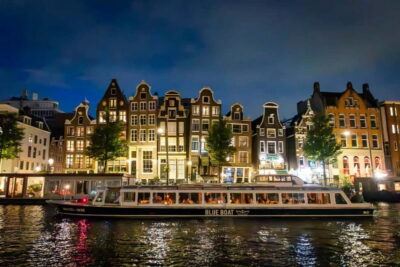
Evening Cruise with Optional Wine and Snacks
Read our review →