Reviewed · TOURS
Amsterdam Architecture Tour
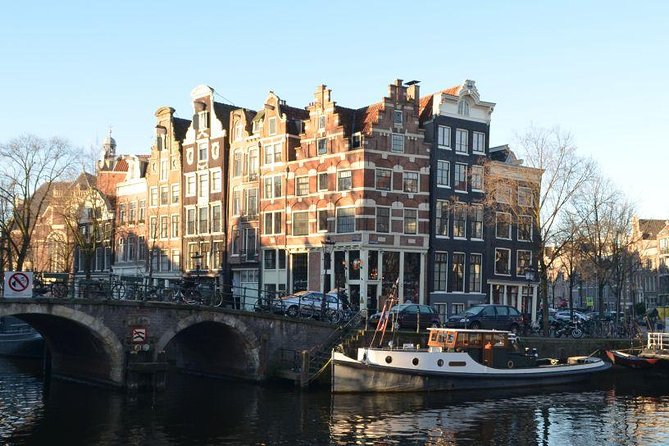
Amsterdam’s canal houses look tidy from the water, but the best stories sit behind their façades. This private walking tour connects the canal ring’s odd house widths, elaborate gables, religious history, and secret gardens, with a 15-minute visit inside Huis Bartolotti.
I like the private format, since your group of up to eight can ask questions without waiting for a large crowd. I also like the chance to go inside Huis Bartolotti, an unusual look at the gardens and interiors that most canal walks pass by.
The main drawback is the price: $384.63 per group is a serious outlay for two and a half hours, though it becomes more reasonable when divided among six to eight people. The tour also calls for moderate physical fitness, so expect a proper city walk rather than a short sightseeing stop.
Key points about this Amsterdam architecture walk
- Private group of up to eight: You get a guide focused on your party, with room for questions and a route that can respond to your interests.
- Huis Bartolotti inside and out: A 15-minute visit reveals one of Amsterdam’s finest canal houses and the gardens tucked behind the canal façades.
- Canal-ring design explained: You learn why the city has its familiar curve of waterways and why houses differ in width, height, and gable style.
- Architecture shaped by religion: A late 17th-century building shows how religious minorities adapted to strict physical and social limits.
- Westerkerk and Dutch Renaissance details: The walk places the church and nearby houses in the setting of Amsterdam’s early 17th-century growth.
- Strong personal guiding: Guides such as Tijs and Edgar are praised for clear stories, humor, and an easy way of answering questions.
Start at Brouwersgracht 64 and read the city’s plan
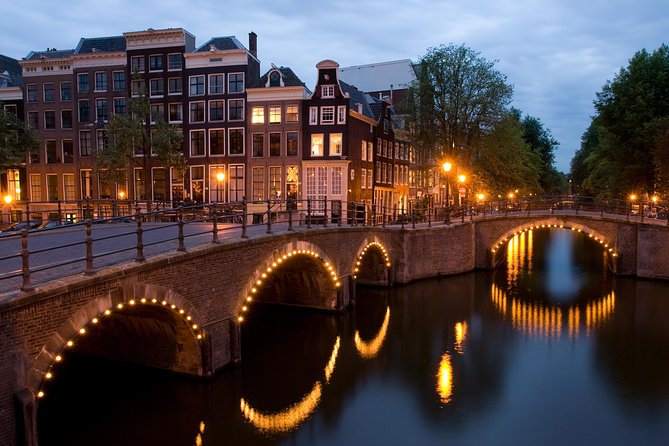
The meeting point is Design Amsterdam at Brouwersgracht 64, in the 1013 GX area. The tour ends back at this same meeting point, which makes the outing simple to fit into a day of sightseeing.
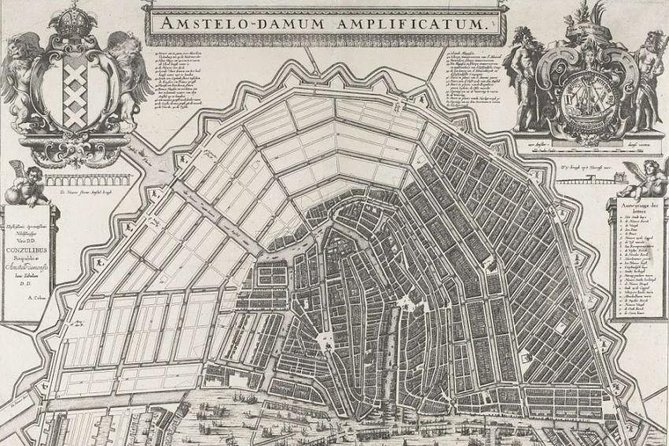
From here, the guide begins with the basic shape of Amsterdam’s canal ring. That may sound like a dry map lesson, but it is the key to understanding the city. Amsterdam did not grow as a collection of grand avenues laid out for show. Its waterways, defensive works, trade routes, and expanding neighborhoods all shaped the pattern you see today.
I like this opening because it gives you a way to read the city for the rest of your stay. Instead of seeing a row of handsome façades as one pretty picture, you start asking why one house is narrow, why another leans forward, and why the canal turns where it does.
The tour also explains the types of architecture along the water. Amsterdam canal houses had to work hard. Their owners used them as homes, offices, storage spaces, and places tied to trade. The front façade often carried more visual weight than the narrow interior behind it, so the street presents a neat face while the building solves practical problems inside.
Your guide can point out how the city’s architecture reflects money and status without reducing everything to a parade of fancy façades. The canal ring is a record of commerce, government, faith, and urban planning. Once you understand that, even a small difference in a gable becomes useful evidence.
A few more days out around Amsterdam worth weighing up
- Amsterdam: Van Gogh Museum Ticket
★ 4.7 · 52,054 reviews - Amsterdam Classic Saloon Boat Cruise with Drinks and Cheese
★ 5.0 · 31,825 reviews - Amsterdam Luxury Canal Cruise + Unlimited Drinks & Bites option
★ 5.0 · 30,518 reviews
The canal ring as a record of fast growth
Amsterdam expanded rapidly as trade developed from the medieval period onward. This growth helps explain why the city can feel both carefully ordered and wonderfully irregular.
The guide discusses old defenses and the remnants of the city walls. You also hear why the canal fortifications needed to be maintained. These details connect the elegant waterways to a less decorative purpose: canals were part of the city’s protection and infrastructure, not simply scenic strips for house fronts.
Look for the way old and newer sections meet. The tour helps you understand where the medieval city ended and where later expansion began. That context is especially useful if you are seeing Amsterdam on foot for the first time, since the canal ring can otherwise seem like one continuous historic zone.
The private setting matters here. If a particular story catches your attention, you can stop and ask about it. A large group often has to keep moving. With your own guide, you can spend more time on architecture, trade, religion, or the city’s defenses, depending on what interests you most.
A late 17th-century answer to religious restrictions
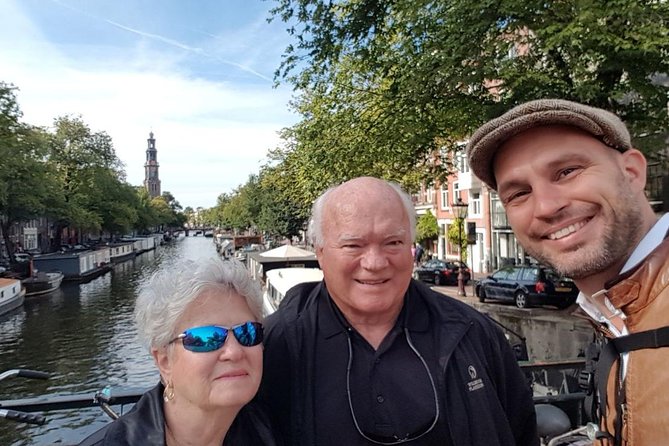
One stop focuses on a unique late 17th-century building created as an inventive answer to the restrictions placed on religious minorities. The tour uses this structure to show that Amsterdam’s religious story was not simply a matter of grand public churches.
Architecture often reveals what people could not say openly. When a group lacked permission to worship in a conventional public building, its members had to adapt space, entrances, and appearance. The result could be a building that looks ordinary from one angle but tells a different story once its purpose and design are explained.
This is one of the most useful parts of the walk for anyone who wants more than pretty photographs. The guide connects a physical building with the rules and compromises that shaped it. You see how religious life influenced Amsterdam’s streets without needing a long lecture on dates and names.
The information provided does not identify this stop by name, so you should think of it as a contextual architecture stop rather than a guaranteed major interior visit. The clear highlight for inside access is Huis Bartolotti.
Huis Bartolotti, Amsterdam’s grand canal house
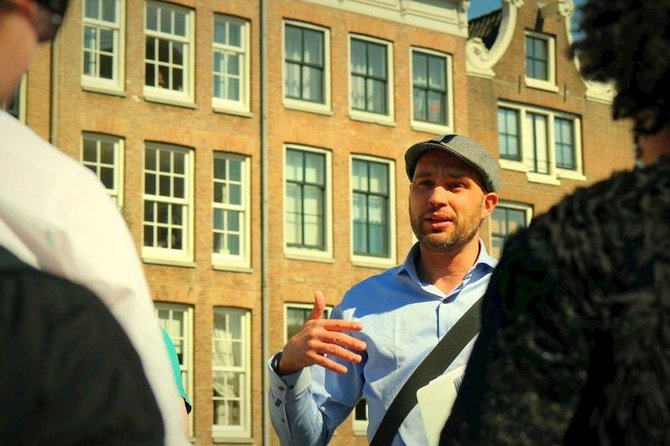
Huis Bartolotti is the tour’s most distinctive stop. You spend about 15 minutes visiting the house and taking in its elaborate interior design.
The building is presented as one of Amsterdam’s most beautiful canal houses, but the real value is not only the decoration. This visit shows you how the grand front rooms relate to the private world behind the canal façade. Most people walking along the water see windows, brick, stone trim, and a decorative gable. Inside, you get a better sense of how these houses were planned and used.
The gardens are the surprise. Amsterdam’s canal ring is famous for its water views and narrow houses, yet many of these properties conceal garden spaces behind the main buildings. Huis Bartolotti helps reveal that second layer of the city. The canal house is not just a façade pressed against the street. It has depth, sequence, and a quieter rear side.
I would pay close attention to the contrast between the formal interior and the practical constraints of the building. The tour’s larger point is that Amsterdam architecture often hides its cleverest solutions. Narrow plots, limited street frontage, and a crowded city forced owners and builders to make every section work.
The 15-minute admission is fairly brief, so do not expect an extended museum visit. Its strength is focus. You get a concentrated look at a notable house, then return to the streets where the guide can compare it with other canal buildings.
Same canals, a completely different sort of afternoon:
- Amsterdam: Heineken Experience Ticket
★ 4.6 · 30,055 reviews - Amsterdam: Rijksmuseum Entry Ticket
★ 4.7 · 25,535 reviews - Amsterdam: Classic Boat Cruise with Optional Cheese & Wine
★ 4.6 · 22,925 reviews - Amsterdam: Evening Cruise with Optional Wine and Snacks
★ 4.4 · 19,696 reviews
Westerkerk and early 17th-century Amsterdam
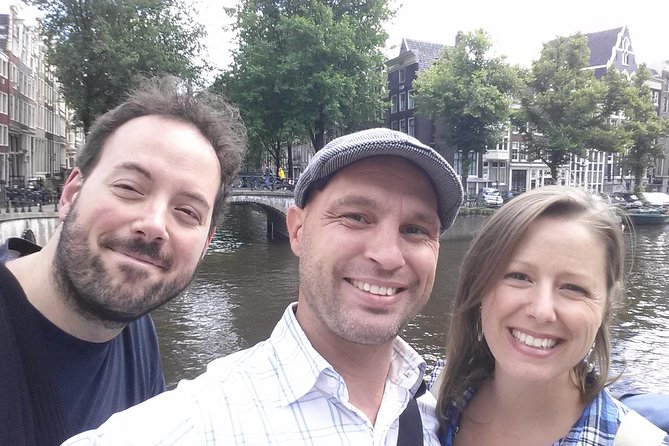
Another part of the walk deals with early 17th-century architecture in general and Westerkerk in particular. The church gives the guide a chance to explain how Amsterdam’s building style developed during a period of major change.
Westerkerk is more than a landmark for orientation. Its form helps you understand the ambitions of early 17th-century Amsterdam and the way Protestant worship shaped church design. The supplied tour information also points to a curious detail: a swan appears on top of a Protestant domed church.
That kind of small fact is exactly what makes a walking tour useful. You may pass a symbol several times without noticing it. Once the guide explains it, the skyline begins to carry meaning.
The church section also adds balance to the canal-house story. You are not just studying wealthy domestic architecture. You are looking at public religious design, civic identity, and the way buildings announced a community’s values.
The tour does not promise entry into Westerkerk, so you should expect the emphasis to be on explanation and exterior architecture. That is not a weakness if you want a street-based tour. It does mean you should choose a separate church visit if going inside is your main goal.
The House with the Heads and Dutch Renaissance style
The House with the Heads provides another strong architectural example. This extravagant early 17th-century canal house is built in Dutch Renaissance style and once belonged to influential residents.
Its name alone gives the guide an opening to talk about ornament, status, and the competitive nature of canal-house design. Amsterdam’s wealthy owners did not simply want shelter. Their façades communicated rank, taste, and success to everyone passing by on foot or by boat.
The building now houses a special library listed by UNESCO. That gives the stop a second life beyond its original domestic purpose. You see how an old canal house can continue serving the city while retaining its architectural identity.
This is a good place to compare the House with the Heads to Huis Bartolotti. One is noted for its extravagant exterior and Dutch Renaissance character. The other offers the memorable interior and garden visit. Together, they show that Amsterdam architecture cannot be judged from the street alone.
The tour also explains why canal houses vary in width and why their gable ends differ. These differences were not random decoration. Plot sizes, building costs, ownership, storage needs, and fashion all played a part. Once you hear that, the canal ring becomes a collection of individual decisions rather than a repeated postcard view.
Stories that make the walk personal
The guides connected with this experience are praised for bringing history to life without losing a sense of humor. Tijs is singled out for clear explanations, courtesy, and engaging stories. Edgar is also praised for his command of Amsterdam’s culture, architecture, and past.
The strongest guiding style here seems to be conversational. You can ask about the Multatuli statue on the oldest bridge, a prison below that bridge, or the origins of fair-trade coffee. These subjects may not be the advertised architectural headline, but they help connect buildings with people, politics, and daily life.
That range is useful because architecture can become tiring if every stop is only about dates and styles. A story about a statue, a bridge, or coffee gives the walk a human scale. You begin to understand the city through the choices and conflicts that shaped it.
There is also room to discuss the route. One Dutch-language description notes that the path can be chosen in consultation with the guide. Since the main tour is offered in English, confirm your preferred focus at the start. A private format gives you a better chance of shaping the conversation than a fixed large-group outing.
What $384.63 means for value
The stated price is $384.63 per group of up to eight, not per person. For one or two people, that is expensive for a 2-hour-30-minute walking tour. For a full group, the arithmetic changes significantly.
At eight people, the cost works out to about $48 per person. At four people, it is about $96 each. For a couple, the full group price is a major consideration, especially since the walk is not a full-day experience.
You are paying for private attention, flexible conversation, and a guide who can explain details at your pace. You are not paying for a long list of included attractions. The 15-minute visit to Huis Bartolotti is the clearly stated included admission, while several other stops center on exterior explanation.
I see the best value for families, friends, or small groups already planning to spend time in Amsterdam’s canal district. If eight people split the cost, the private format can compare well with several individual tickets for separate guided activities, while giving you one connected story.
For a pair on a tight budget, I would book only if architecture is a main reason for your Amsterdam visit or if you place a high value on one-to-one questions. Otherwise, a less costly group walk may make more financial sense.
Timing, walking demands, and planning advice
The experience lasts approximately two and a half hours. That is long enough to build a clear narrative but short enough to fit before lunch, after a museum visit, or around other plans. A selection of start times is offered, which helps if your schedule includes timed admissions elsewhere.
You should be ready to walk for the full outing. The activity calls for moderate physical fitness, and the route includes city streets rather than a seated presentation. Wear comfortable shoes and leave enough room in your day to move between stops without rushing.
The tour is offered in English and includes a mobile ticket. Booking confirmation is sent at the time of booking. The meeting point is near public transportation, and the activity returns to Brouwersgracht 64.
Free cancellation is available if you cancel at least 24 hours before the local start time. Cancellations or changes made inside that 24-hour window are not refunded or accepted.
Who should book this private architecture tour?
I would recommend it to you if you like cities best when someone explains the reasons behind what you see. It suits first-time visitors who want a better framework for the canal ring, as well as returning visitors who have already seen the major sights and want a fresh way to read familiar streets.
Families may appreciate the private setting, since children can ask direct questions and the guide can adjust the conversation. It also works well for architecture students, photographers, history fans, and anyone curious about how religion, trade, and urban planning shaped Amsterdam.
You should think twice if you want a fast list of famous landmarks, a boat ride, or extended indoor access. This is a walking and storytelling experience, with one short interior visit and several exterior stops.
Should you book the Amsterdam Architecture Tour?
Book it if you have a small group and want Amsterdam’s canal ring explained with care. The strongest reasons are the private guide, the 15-minute visit inside Huis Bartolotti, and the clear connections between canal planning, religious restrictions, Dutch Renaissance design, and daily city life.
The price is easiest to justify for six to eight people. Couples should compare the total cost with other private tours before committing. If architecture interests you but your budget is limited, choose this only if personal guiding and questions matter more to you than the number of sights covered.
For the right group, this is a thoughtful way to see Amsterdam beyond the standard canal view. You leave with a better sense of why the city looks the way it does, and you will likely notice details you would have walked past before.
FAQ
Where does the Amsterdam Architecture Tour begin?
The tour begins at Design Amsterdam, Brouwersgracht 64, 1013 GX Amsterdam, Netherlands.
Where does the tour end?
The activity ends back at the meeting point on Brouwersgracht.
How long does the tour last?
The tour lasts approximately 2 hours and 30 minutes.
How many people can join the private tour?
The private tour is available for one group of up to eight people. Only your group participates.
What language is the tour offered in?
The tour is offered in English.
Is admission to Huis Bartolotti included?
Yes. The 15-minute visit to Huis Bartolotti includes admission.
Is the tour suitable for someone with limited fitness?
The activity states that participants should have a moderate level of physical fitness. It is a walking tour through Amsterdam.
Is the tour close to public transportation?
Yes. The meeting point is near public transportation.
Can I cancel for a full refund?
Yes, if you cancel at least 24 hours before the experience start time. Cancellations made less than 24 hours before the start, as well as changes inside that period, are not refunded or accepted.
Just added around Amsterdam
- From Amsterdam: The Hague Private Trip and Mauritshuis Entry★ 4.3 · 4 reviews
- VIP Private Full Day Tour of the Netherlands★ 4.8 · 6 reviews
- Amsterdam Old-West Vegan Food Tour with Local Guide★ 4.7 · 3 reviews
- Amsterdam: Van Gogh Museum Guided Tour★ 4.8 · 262 reviews
- Van Gogh Museum Private Guided Tour★ 4.2 · 10 reviews
- Vecht River: Full-day Cruise with Lunch★ 4.8 · 9 reviews
- Van Gogh and Rijksmusuem Tour: Small Group Tour with Entry★ 4.7 · 3 reviews
- Amsterdam: Van Gogh Museum Ticket & Guided Tour★ 4.4 · 187 reviews
Tours, compared.
Zaanse Schans, Edam, Volendam & Marken Bus Tour
Read our review →
Anne Frank’s Story – Guided Walking Tour through Amsterdam
Read our review →
Life of Anne Frank and World War II Walking Tour
Read our review →
Red Light District Tour in German/English/Italian
Read our review →
Guided Zaanse Schans, Windmills & Cheese Tour
Read our review →
Windmill Tour from Amsterdam, Including Volendam & Marken
Read our review →