
Reviewed · CYCLING TOURS
Amsterdam: Guided Bike Tour City Centre in EN/DE/FR/ES
Amsterdam reveals itself best from a bicycle seat. This three-hour ride covers far more ground than a walking tour, moving from Central Station and the Western Islands through the Jordaan, Museum Quarter, De Pijp, and the Maritime Quarter. You get canals and grand sights, but also ordinary streets where Amsterdam feels lived-in.
I especially like the wide mix of neighborhoods and the pause in Vondelpark, which breaks up the riding with a snack, drink, and restroom stop. I also like the small-group limit of 15, plus guides such as Rad, Chris, Carlos, and Miriam, who are praised for clear history, patience, humor, and careful attention to the group.
The catch is simple: you need to be comfortable riding in city traffic. Amsterdam’s bike lanes can feel chaotic at first, especially on a busy Saturday, and this is an active tour covering roughly 10 miles, or 15 kilometers. A short practice ride on quieter streets helps.
Key points at a glance
- Covers a lot of Amsterdam: The route links the Western Islands, Jordaan, Museum Quarter, De Pijp, Amstel, and Maritime Quarter in one outing.
- Small groups matter: A maximum of 15 people makes it easier to hear the guide and keep the group together.
- Vondelpark provides a useful pause: About two hours into the ride, you can rest, use a restroom, refill your bottle, and enjoy a stroopwafel.
- The route mixes famous and local Amsterdam: You pass Anne Frank House and Westerkerk, then pedal through boutiques, cafes, studios, and residential streets.
- Several guides receive strong praise: Rad, Chris, Carlos, and Miriam are noted for history, safety, patience, flexibility, and a friendly manner.
- Language options vary: Live guiding is listed in English, German, and Dutch. French and Spanish are available through an optional audio guide.
Why a bicycle is the right way to see Amsterdam
Amsterdam is compact on a map, but its sights are spread across several districts. On foot, you can enjoy the canals, but reaching the Western Islands, Vondelpark, De Pijp, and the Maritime Quarter in one morning would be a serious march. By bicycle, the city connects naturally.
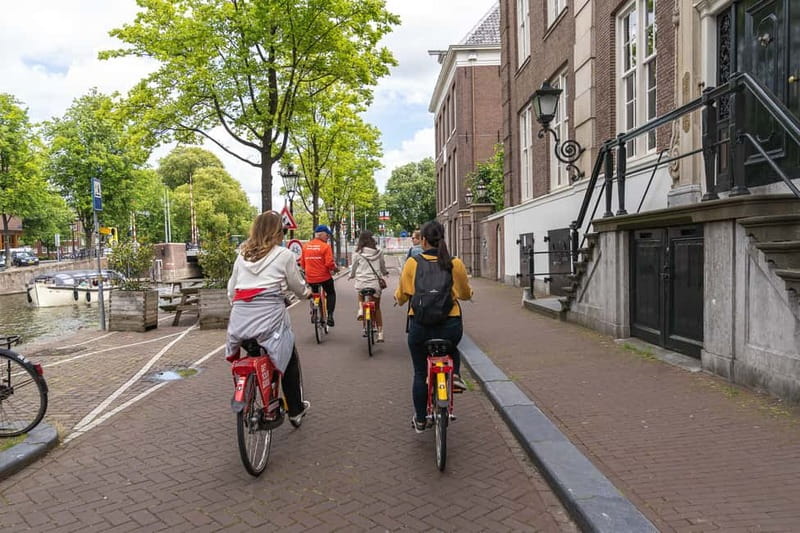
You also learn the local traffic rhythm. Amsterdam cyclists move with purpose, and the bike lane is not a casual sidewalk. Your guide leads the way, sets the pace, and helps you understand how to ride among local cyclists, pedestrians, cars, and trams.
The bicycles are standard three-speed models, described as comfortable and easy to handle. Amsterdam has no major hills, though each bridge brings a small climb. That makes this route physically manageable for an active person who can already ride a bike.
The first part is useful for building confidence. You start near Central Station and get a quieter warm-up before joining busier cycling routes. I would still avoid treating the ride as a gentle sightseeing cruise. You need to steer, brake, watch traffic, and keep up with the group.
More Bike Tours in Amsterdam
- Countryside Bike Tour from Amsterdam: Cheese, Clogs & a Windmill
★ 5.0 · 1,485 reviews - Amsterdam: Hidden Gems & Highlights Guided Bike Tour
★ 4.8 · 1,404 reviews - Amsterdam: Off the Beaten Path Bike Tour in French
★ 4.9 · 1,193 reviews
Starting near Central Station and crossing to the Western Islands
The meeting point is inside the AmsterBike shop, a short walk from Amsterdam Central Station. That location is convenient if you are arriving by train or staying near the center. You receive your bicycle there, meet the guide, and begin with the city’s northern waterfront nearby.
One early landmark is the A’DAM Tower, a modern high-rise across the water from the historic center. From there, the route heads toward the Western Islands, a quieter part of Amsterdam with an appealing change of mood.
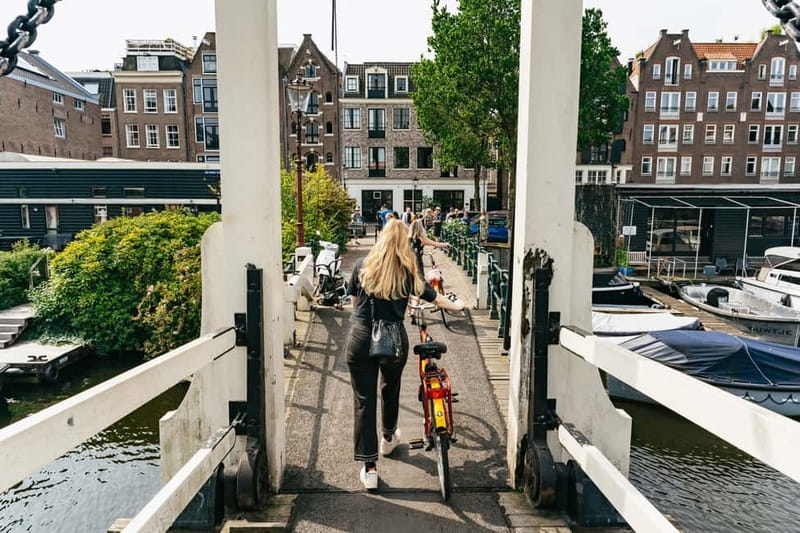
The Western Islands are known for small drawbridges, old warehouses, and former industrial buildings now used by artists’ studios and creative businesses. This section helps you see Amsterdam as more than canals and postcard houses. The city’s working waterfront remains part of its character.
The bridges are attractive photo stops, but they also remind you to slow down. Keep your attention on the road rather than trying to photograph while moving. Your guide will usually point out the best places to stop.
The Jordaan, Brouwersgracht, and the Nine Streets
From the Western Islands, the route follows Brouwersgracht toward the Jordaan. This is one of the prettiest portions of the ride, with canal houses, bridges, and narrow streets that reward a slower pace.
The Jordaan has a more residential feel than the busiest streets around Dam Square. You pass independent boutiques, cafes, and small eateries, with the canals providing a calm backdrop. Your guide adds context about Amsterdam’s development and daily life, rather than limiting the stop to a quick photo.
The Nine Streets, or De Negen Straatjes, adds another layer. These compact lanes are lined with shops, cafes, and independent businesses. You will not have time for a proper shopping session during the tour, but the bicycle gives you a quick introduction to an area worth returning to later.
This is also a good place to notice the limits of a bike tour. You see more streets than you could on foot, but you do not linger inside shops or museums. Think of the ride as a city orientation with short stops, not a series of long visits.
Westerkerk and the Anne Frank House area
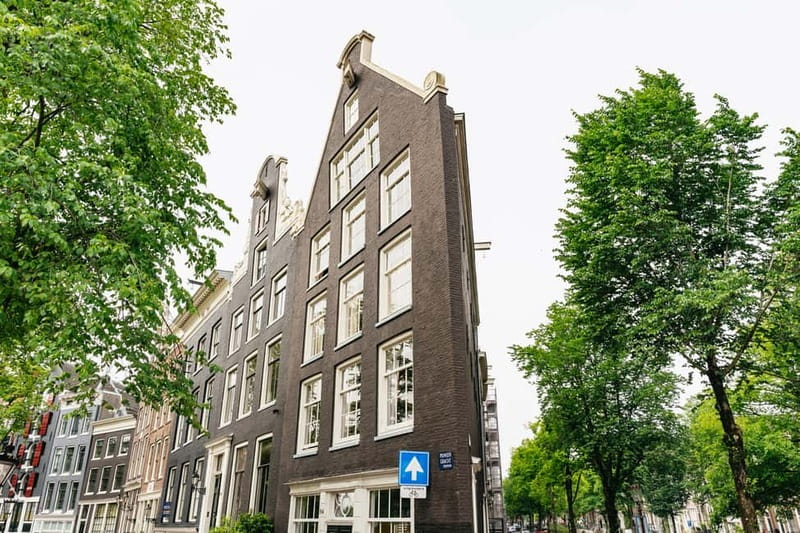
As you continue through the canal belt, you pass Westerkerk, or the Western Church, beside the historic Anne Frank House. The church’s tower is one of the most familiar sights along the Prinsengracht, while the Anne Frank House draws long lines and requires a separate ticket.
The tour does not include entry to the house. That is useful to know before booking, since the bicycle route gives you the setting and outside view, not the museum visit itself.
This stop can carry emotional weight, and a good guide handles it with care. The guides are praised for explaining Amsterdam’s past clearly and for answering questions. Chris, in particular, is noted for his strong command of the city’s history, while Rad is praised for combining safety instructions with a light touch.
You will likely hear much more about Amsterdam than the names of the landmarks alone. The route is designed to explain how the city grew, how its neighborhoods changed, and how its canals shaped trade and daily life.
More City Tours in Amsterdam
- Amsterdam: 75 Minute City Canal Cruise with Audio Guide
★ 4.4 · 17,501 reviews - Amsterdam: City Centre Canal Cruise
★ 4.2 · 12,827 reviews - Amsterdam: Smoke and Lounge City Boat Cruise
★ 4.7 · 8,572 reviews - Amsterdam: Van Gogh Museum Ticket and City Canal Cruise
★ 4.6 · 3,899 reviews
Leidseplein and the ride into Vondelpark
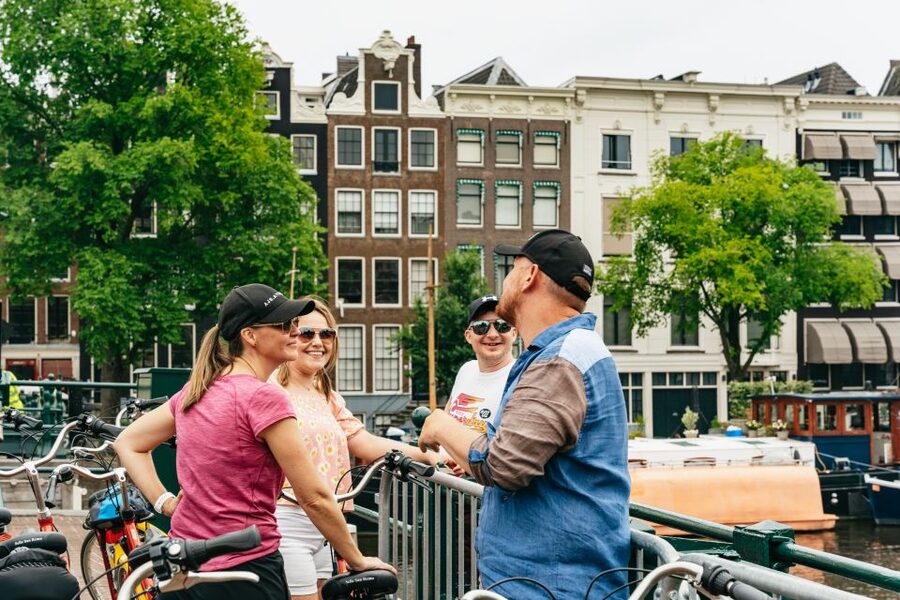
Leidseplein is a busy entertainment square filled with theaters, music, nightlife, and street performers. During the day, it gives you a sense of Amsterdam’s public energy. It is not the quietest section of the ride, so stay alert as you approach crossings and crowded streets.
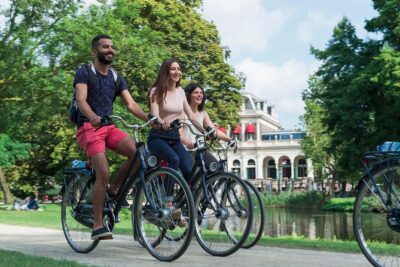
Soon after, the tour reaches Vondelpark, Amsterdam’s best-known park and the largest in the city. This is the main break, generally arriving about two hours into the ride. You can rest, take a drink, refill your water bottle, use a restroom, and enjoy the included stroopwafel.
That pause makes a real difference. Three hours on a bicycle is not extreme, but stopping in a park keeps the tour from feeling like a continuous traffic exercise. It also gives you a chance to ask the guide questions while you are off the bike.
Bring water even though bottle filling is included. You should also bring a charged smartphone and headphones if you choose the audio guide option. The tour information says helmets are available on request, so ask for one when you receive your bicycle if you prefer to wear one.
Museumplein and the quieter side of De Pijp
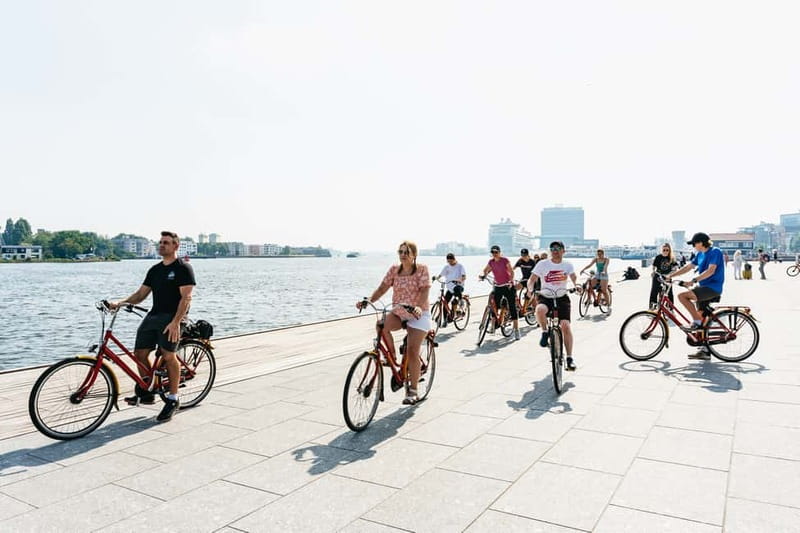
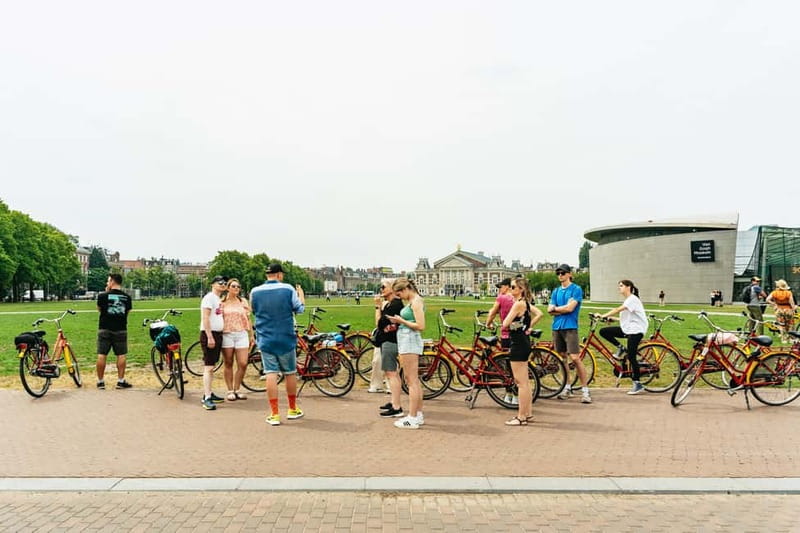
After Vondelpark, the route circles Museumplein, the city’s Museum Quarter. This is the area associated with Amsterdam’s major museums, including the broad public square that gives the district its name. The ride lets you get oriented before a separate museum visit.
That can be especially useful if you have only one day in Amsterdam. You see where the museums are, understand their position relative to the center, and can decide where to return later. The tour does not include museum admission or a museum interior visit, so plan separate time if art is a priority.
The next section enters De Pijp, a bohemian-influenced neighborhood with narrow streets and a different feel from the old canal belt. Here you get a look at boutiques, cafes, and local streets rather than a parade of major monuments.
The neighborhood is also a reminder that Amsterdam is not one uniform historic district. De Pijp feels younger and more informal, and the cycling route gives you a practical sense of its layout. If you enjoy seeing how people live between the famous sights, this is one of the strongest parts of the tour.
Magere Brug and the Maritime Quarter
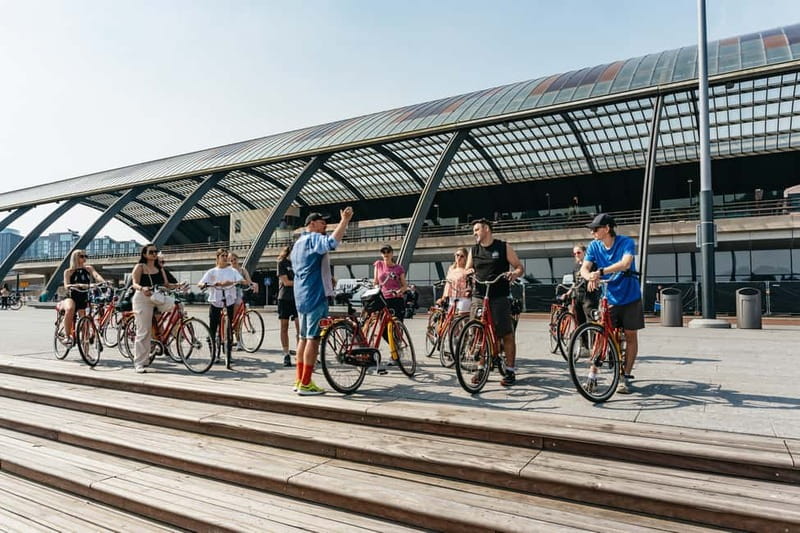
The route then crosses the Magere Brug, or Skinny Bridge, a well-known wooden drawbridge over the Amstel. It is one of the tour’s most recognizable photo stops, especially because the bridge links the visual world of canals with the open river.
The bridge itself brings a slight incline, but there are no serious hills on the route. As always, cross carefully and follow the guide’s instructions. Bridges can become crowded, and the view can distract you from other cyclists.
From there, the ride continues toward Artis Zoo and the Maritime Quarter. The area broadens the story of Amsterdam from canal houses and city streets to ships, trade, and the water that made the city prosperous.
At the Salt Harbour, you see the replica of a 17th-century Dutch East India Company ship. It offers a striking closing image, with the large wooden vessel showing how closely Amsterdam’s identity was tied to maritime trade. The tour then returns to AmsterBike.
The guides, pace, and group size

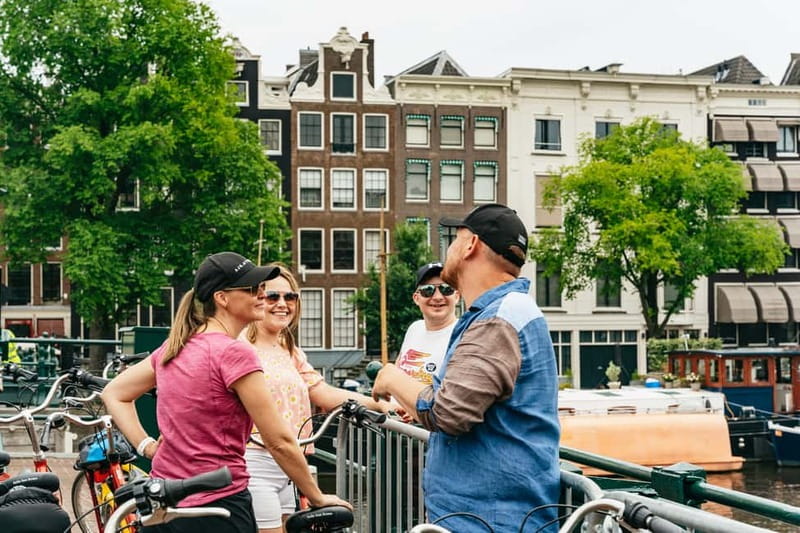
The guide can make or break a city bike tour, and this experience puts real emphasis on the person leading the ride. Rad is repeatedly praised for safety awareness, patience, humor, and his ability to watch the group. Chris is described as an engaging history expert who explains the city with energy. Carlos receives praise for taking riders to places they might not easily find alone, and Miriam is noted for answering questions and looking after children in the group.
That does not mean every departure will feel identical. Guide style, group size, traffic, and the pace of the day can change the experience. The maximum group size is 15, but some departures may be much smaller. Groups of four and six have been reported, which allows for more questions and easier movement through busy streets.
The pace is generally described as suitable for the group, but you should have basic cycling confidence. One useful feature is the warm-up on quieter roads before the busier parts. If you are nervous, tell the guide early rather than silently struggling at the back.
Some rides last close to three and a half hours instead of exactly three. That is not guaranteed, but it is worth leaving a little space afterward rather than scheduling a train, museum entry, or meal immediately after the posted finish.
Is $41 a good value?
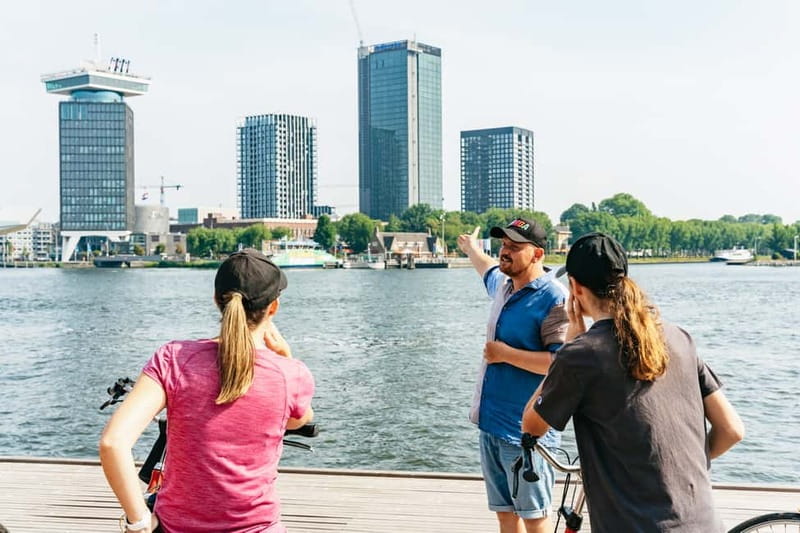
At $41 per person, the tour is not the cheapest way to see Amsterdam. You could rent a bicycle independently for less, but then you would need to plan the route, navigate unfamiliar bike lanes, and supply the historical context yourself.
The value comes from the coverage. In three hours, you connect several districts that are scattered across the city, with a guide explaining what you are seeing and a bicycle making the distances easy. You also receive the bicycle, a stroopwafel, water-bottle filling, and a small-group setting.
For a first morning in Amsterdam, I think the price is fair. The ride helps you get your bearings quickly, and you can return later to the Jordaan, Nine Streets, Museum Quarter, or De Pijp. It is less valuable if you already know the city well, dislike group activities, or want long stops at individual sights.
The tour offers free cancellation up to 24 hours before departure, and you can reserve now and pay later. Those terms help if your schedule is still moving, but the main decision is your comfort on a bicycle.
Who should book this ride?
I would choose this tour for an active first-time visitor, especially someone with only a day or two in Amsterdam. It is also a good fit for families with children who can ride confidently, couples wanting a broad introduction, and solo visitors who prefer a guide while learning the city’s bike habits.
It suits you particularly well if you want history and neighborhoods together. You are not simply cycling from monument to monument. You move through former industrial districts, shopping lanes, canal streets, public parks, museum areas, and riverfront sites.
I would think twice if you cannot ride a bicycle, feel uneasy in traffic, or want a slow photo tour. The tour is also not designed for extended museum visits or indoor sightseeing. You need to accept some moving time between stops.
English, German, and Dutch are listed for live guiding. French and Spanish are available through an optional audio guide, so check the exact language arrangement when booking. If you select that option, bring headphones and a charged smartphone.
My verdict on the Amsterdam city bike tour
Book this tour if you want to understand Amsterdam’s shape quickly and are happy to cover about 10 miles by bicycle. The route is unusually broad, the Vondelpark break is well placed, and the small-group format gives the guide room to help with pace and safety.
Skip it if cycling is not part of your holiday or if you prefer spending an hour at each landmark. For most active visitors, though, this is a practical first-day choice. You see major sights, reach districts that are easy to miss on foot, and learn enough about Amsterdam’s bike traffic to keep exploring after the tour ends.
FAQ
Where does the Amsterdam bike tour start?
You meet your guide inside the AmsterBike shop near Central Station.
Where does the tour finish?
The ride returns to the AmsterBike meeting point.
How long does the tour last?
The advertised duration is three hours. Some rides may run longer, so leave a little extra time afterward.
How far do you ride?
The route covers approximately 10 miles, or about 15 kilometers, according to tour details and ride descriptions.
What languages are available?
Live guides are listed for English, German, and Dutch. French and Spanish are available through an optional audio guide.
Is a bicycle included?
Yes. A bicycle is included in the tour price. Helmets are available upon request.
Is the tour suitable for someone who cannot ride a bike?
No. The activity is not suitable for people who cannot ride a bicycle.
Can I cancel or pay later?
You can cancel up to 24 hours in advance for a full refund. The reserve-now, pay-later option lets you book without paying immediately.
More Bike Days around Amsterdam
- Amsterdam Highlights Bike or E-Bike Tour
★ 5.0 · 1,171 reviews - Amsterdam: Windmill, Cheese, and Countryside E-Bike Tour
★ 4.5 · 1,166 reviews - Amsterdam: Relaxed City Highlights Guided Bike Tour
★ 4.7 · 1,069 reviews - Amsterdam: Guided City Bike Tour in French
★ 4.5 · 806 reviews
Just added around Amsterdam
- From Amsterdam: The Hague Private Trip and Mauritshuis Entry★ 4.3 · 4 reviews
- VIP Private Full Day Tour of the Netherlands★ 4.8 · 6 reviews
- Amsterdam Old-West Vegan Food Tour with Local Guide★ 4.7 · 3 reviews
- Amsterdam: Van Gogh Museum Guided Tour★ 4.8 · 262 reviews
- Van Gogh Museum Private Guided Tour★ 4.2 · 10 reviews
- Vecht River: Full-day Cruise with Lunch★ 4.8 · 9 reviews
- Van Gogh and Rijksmusuem Tour: Small Group Tour with Entry★ 4.7 · 3 reviews
- Amsterdam: Van Gogh Museum Ticket & Guided Tour★ 4.4 · 187 reviews
Cycling Tours, compared.
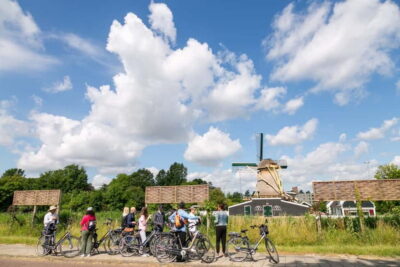
Countryside Bike Tour from Amsterdam: Cheese, Clogs & a Windmill
Read our review →
Windmill, Cheese, and Countryside E-Bike Tour
Read our review →
Browse the lists this tour appears in