

Reviewed · STREET ART
Alternative Tour Amsterdam | Drugs Story, Street Art & More
Amsterdam has a polished tourist face, but this walking tour asks you to look behind it. Over two hours, you connect Dam Square, the Royal Palace, Jordaan, the Gay Monument, street art, graffiti, and houseboats with Amsterdam’s less tidy stories about drugs, prostitution, rebellion, and sexual freedom.
I like the small maximum of 10 people, which gives the guide room to explain sensitive subjects without turning the walk into a loud street lecture. I also like the focus on Amsterdam’s counterculture, especially the effort to explain why the city feels so relaxed today rather than treating its reputation as a simple party slogan.
The main consideration is the subject matter. This is not a gentle introduction to canals and pretty facades. Prostitution, soft drugs policy, persecution of LGBTQ people, and social conflict are central themes, so adults and teenagers with a guardian will get the most from it.
Key points to know before you book
- Start and finish at the National Monument on Dam Square, making this easy to fit into a central Amsterdam day.
- Walk through Jordaan for about an hour, with stories about artists, working people, rebellion, and change.
- Discuss the Red Light District without entering it, since organized tour groups are not allowed inside under current rules.
- Stop at the Gay Monument, an important reminder that Amsterdam’s liberal image developed over time.
- See street art, graffiti, and houseboats while connecting them to the city’s independent spirit.
- Keep the group intimate, with no more than 10 people and an English-speaking licensed guide.
Amsterdam beyond the postcard
Many Amsterdam tours stay with canals, grand merchants’ houses, and the usual photo stops. This one takes a different route through the city’s social questions. You still see major sights, but they serve as reference points for stories about power, tolerance, public space, and the rules people choose to bend.
That approach gives the walk a useful purpose. Instead of hearing only that Amsterdam is liberal, you look at the people and conflicts behind that reputation. The tour aims to explain what makes the city feel so open, while also showing that this attitude was not always in place.
The advertised price of $3.60 per person makes this unusually inexpensive for a two-hour guided walk. At that rate, the value is strongest if you want context rather than admission tickets or transport. You are paying for the guide’s storytelling and route, not for a palace visit or a museum entry.
Keep your expectations in line with that price. Food, drinks, transportation, and attraction admissions are not included. Bring water, wear comfortable shoes, and think of the tour as a focused walking conversation through central Amsterdam.
A few more days out around Amsterdam worth weighing up
- Amsterdam: Van Gogh Museum Ticket
★ 4.7 · 52,054 reviews - Amsterdam Classic Saloon Boat Cruise with Drinks and Cheese
★ 5.0 · 31,825 reviews - Amsterdam Luxury Canal Cruise + Unlimited Drinks & Bites option
★ 5.0 · 30,518 reviews
Starting at Dam Square and the Royal Palace
The meeting point is the National Monument on Dam Square, at 1012 JS Amsterdam. This is a practical place to begin because it is close to where Amsterdam was founded and easy to reach by public transportation.
The square also gives the guide a useful opening scene. You are not starting in an obscure side street. You begin beside one of Amsterdam’s best-known public spaces, where the city’s national identity, royal history, tourism, and daily life meet.
The Royal Palace receives a short stop of about five minutes. The building was originally constructed as Amsterdam’s town hall and later became a palace, making it an especially useful example of how civic power and royal power overlap in the Netherlands.
You will not go inside during this walking tour. If the palace interests you, plan a separate visit through the official Royal Palace website. That is important to know before booking, since the stop is for orientation and explanation rather than an interior tour.
The brief timing works well for anyone who wants a broader city walk. It does mean the guide cannot spend long on architecture or royal collections. You will get the setting and significance, then move on to the social history that forms the main subject of the afternoon.
One hour in Jordaan
Jordaan receives the longest portion of the tour, about one hour, and that tells you where the experience puts its weight. You walk through narrow streets lined with cafes, art studios, and independent boutiques while the guide connects the area to artists, working people, rebellion, and social struggle.
This is a good setting for the tour’s central idea. Jordaan is more than a pretty neighborhood for photographs. Its streets help show how a place can change while still carrying traces of earlier working-class life and dissent.
The route is on foot, so you see the neighborhood at street level rather than through a vehicle window. That matters in Jordaan, where the character comes from small streets, doorways, local businesses, and the shifting relationship between residents and visitors.
The description does not promise entrance to studios, cafes, or shops. Treat those places as part of the walk’s setting, not included activities. You may have time to return afterward if a particular cafe or boutique catches your eye.
I especially like the balance here. The tour does not isolate Amsterdam’s counterculture from ordinary city life. Instead, it places those stories among places where people work, shop, live, and meet. That makes the subject easier to understand and less like a collection of sensational facts.
The Gay Monument and Amsterdam’s changing values
The stop at Amsterdam’s Gay Monument lasts about 10 minutes. It honors LGBTQ people persecuted because of their gender or sexual preference, and it adds a serious historical note to the city’s modern reputation for tolerance.
This is one of the most important stops on the route because it corrects a common misunderstanding. Amsterdam’s liberal image can seem timeless when you encounter it through nightlife, cafes, or advertising. The monument reminds you that acceptance has a history, and that persecution was part of the past.
The stop is short, but the subject carries weight. You should expect a respectful explanation rather than a light sightseeing pause. If you are interested in how public memory shapes a city, this will likely be one of the tour’s strongest moments.
It also fits the wider theme of the walk. The guide is not simply presenting Amsterdam as permissive. You look at the gap between the city’s ideals, its laws, and the lives of people affected by those laws. That is more useful than a simple label such as liberal or alternative.
Same canals, a completely different sort of afternoon:
- Amsterdam: Heineken Experience Ticket
★ 4.6 · 30,055 reviews - Amsterdam: Rijksmuseum Entry Ticket
★ 4.7 · 25,535 reviews - Amsterdam: Classic Boat Cruise with Optional Cheese & Wine
★ 4.6 · 22,925 reviews - Amsterdam: Evening Cruise with Optional Wine and Snacks
★ 4.4 · 19,696 reviews
Street art, graffiti, and houseboats
The final part of the walk covers various places connected with street art, graffiti, and houseboats. This section lasts about 40 minutes and keeps the tour tied to visible parts of modern Amsterdam.
Street art and graffiti provide a way to talk about who gets to use public space. Houseboats raise a different but related question about how people adapt the city to their own needs. The supplied details do not identify individual murals or promise a particular famous artwork, so you should expect a selection of locations rather than a fixed art museum-style display.
That uncertainty is worth noting. If you want a specialist graffiti tour with named artists and a catalog of works, this may not go far enough. If you want to see examples while learning how independent expression fits into Amsterdam’s culture, the section should suit you better.
The route also discusses the Red Light District, but it does not take organized groups inside. Since tour operators are restricted from entering the district, you receive its backstory and place in Amsterdam’s drug and prostitution policies without an escorted walk through the area.
That limitation is practical, not a flaw in the route itself. It prevents you from booking with the expectation of a guided Red Light District visit. You still get the relevant subject matter, but the focus is explanation rather than gawking at windows or nightlife.
Soft drugs and prostitution, handled as city history
The mature themes are not an extra detail. They are a core reason to choose this experience. The guide discusses Amsterdam’s soft drugs policy and prostitution, along with the social attitudes that helped shape the city’s public image.
The value comes from seeing these subjects in context. Amsterdam is often reduced to a few legal and semi-legal attractions, yet the city’s approach involves policy, public behavior, tolerance, and limits. A good guide can help you understand why a relaxed atmosphere does not mean that every activity is unrestricted.
The tour is described as educational, with engaging storytelling from a licensed guide. No individual guide’s name is provided, so you should expect the quality to depend on the person leading your departure. The small group gives that guide a better chance to answer questions and adjust the pace than a large coach group would.
I would not book this as a family sightseeing walk for young children. Adults are the clearest match, while teenagers should attend under a guardian’s supervision. Parents should decide in advance if the subjects are suitable, since the tour does not avoid direct discussion of prostitution or drug policy.
What the two-hour format means
The walk lasts approximately two hours and begins at 1:30 pm. It ends back at the National Monument, which makes planning simple. You can schedule the tour before an evening meal, a palace visit, or another central Amsterdam activity.
The route is compact enough to cover on foot, but you should still wear comfortable shoes. Transportation is not included because the experience is entirely walking-based. The tour description says most people can participate, and service animals are allowed.
A maximum of 10 people is a real advantage here. Sensitive topics are easier to discuss in a group where you can hear the guide and ask a question without competing with a crowd. It also keeps the experience closer to a conversation than a standard mass-market city tour.
There is one strict timing rule. If you arrive late, you cannot catch up with the group and must book a new time slot. Arrive early at the National Monument, especially if you are unfamiliar with Dam Square or are coming by public transportation.
The tour is offered in English and includes a mobile ticket. Confirmation arrives when you book, so keep the ticket available on your phone. No food or drink is provided, and bringing water is specifically advised.
Who gets the best value from this walk
I would recommend this experience to you if you want to understand Amsterdam’s reputation instead of simply sampling its nightlife. It suits first-time visitors who want a social and political layer added to the major sights, as well as repeat visitors looking for a different side of the city.
It is also a good fit for people who prefer a small group. With only up to 10 participants, you are less likely to lose the guide’s voice or feel anonymous. The compact format can be especially helpful when the subject matter invites questions.
You may want another tour if your main interests are art museums, architectural interiors, canal history, or the Royal Palace itself. The palace stop is brief, and entry is not included. You should also choose another experience if you want to enter the Red Light District with a guide, since that is not part of this walk.
The tour has a 4.3 rating from 11 ratings, which suggests a generally positive but not flawless response. One especially favorable description captures the experience’s purpose well: it helps you get past the city’s surface and understand what makes Amsterdam feel relaxed. That is the promise to focus on, not a guaranteed parade of dramatic revelations.
Booking, cancellation, and practical details
The tour is commonly booked about 16 days ahead, so booking early is sensible if your Amsterdam dates are fixed. The small capacity can fill faster than a large group walk, especially during busy periods.
Free cancellation is available if you cancel at least 24 hours before the local start time. Cancellations or changes made within 24 hours are not refunded or accepted. The experience also requires a minimum number of people, and if the operator cancels for that reason, you receive a different option or a full refund.
The activity is near public transportation, but no transport is included. Check the exact meeting point before leaving, and allow time to find the National Monument on Dam Square. Since the same place serves as the finish, you will not need to arrange a return journey.
Should you book Alternative Tour Amsterdam?
Book it if you want a candid, small-group walk that connects Dam Square and Jordaan with Amsterdam’s drug policy, LGBTQ history, graffiti, houseboats, and prostitution. The low price makes it an easy addition to your schedule, and the two-hour length leaves room for other plans.
Skip it if you want a conventional highlights tour, a palace interior, or entry into the Red Light District. The strongest reason to choose this experience is its subject matter and storytelling, not a long list of paid attractions.
For adults and supervised teens who want to understand the city behind its easygoing image, this is a practical way to spend an afternoon. Arrive on time, bring water, and expect an honest discussion rather than a polished postcard version of Amsterdam.
FAQ
Where does the tour start and finish?
The tour starts at the National Monument on Dam Square, Amsterdam, 1012 JS. It also ends back at the same meeting point.
What time does the tour begin?
The scheduled start time is 1:30 pm.
How long does the walking tour last?
The experience lasts approximately two hours.
Is the Red Light District included?
The tour discusses the Red Light District and its background, but organized tour groups are not allowed to enter it. No guided entry is included.
Is the tour suitable for children?
The tour is recommended for adults because it discusses prostitution and soft drugs policy. Teenagers may attend under a guardian’s supervision.
What happens if I arrive late?
You cannot catch up with the group after it has left. If you are late, you need to book a new time slot.
Just added around Amsterdam
- From Amsterdam: The Hague Private Trip and Mauritshuis Entry★ 4.3 · 4 reviews
- VIP Private Full Day Tour of the Netherlands★ 4.8 · 6 reviews
- Amsterdam Old-West Vegan Food Tour with Local Guide★ 4.7 · 3 reviews
- Amsterdam: Van Gogh Museum Guided Tour★ 4.8 · 262 reviews
- Van Gogh Museum Private Guided Tour★ 4.2 · 10 reviews
- Vecht River: Full-day Cruise with Lunch★ 4.8 · 9 reviews
- Amsterdam: Van Gogh Museum Ticket & Guided Tour★ 4.4 · 187 reviews
- Van Gogh and Rijksmusuem Tour: Small Group Tour with Entry★ 4.7 · 3 reviews
Street Art, compared.

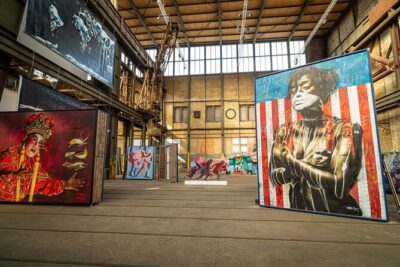
STRAAT Museum – Museum for Street Art Amsterdam Admission Ticket
Read our review →
Amsterdam’s Hidden Gems and Street Art Bike Tour
Read our review →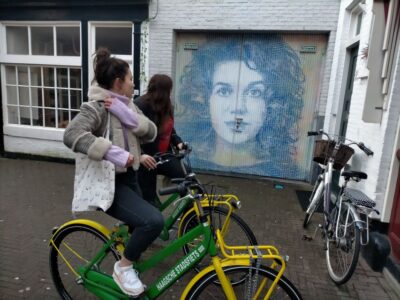
Browse the lists this tour appears in