
Reviewed · THE HAGUE TOURS
Scheveningen Beach: 1,5-Hour Surf Experience for kids
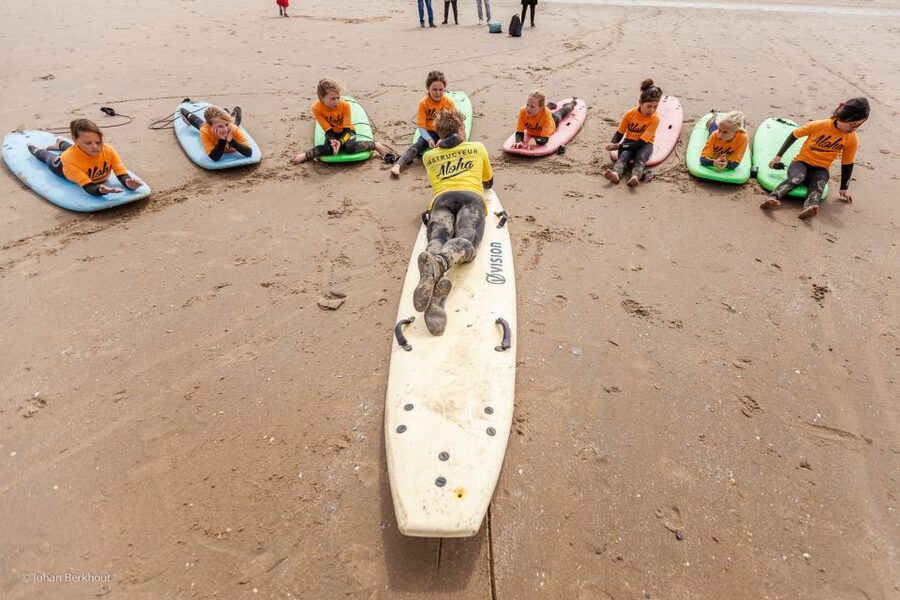
Scheveningen’s broad beach gives children a fine first taste of surfing without sending them far from shore. At Aloha Surf, they learn the basics, paddle out with an instructor, and work toward that thrilling first moment of standing on a board as a Dutch wave carries them forward.
I like the hands-on water time and the fact that all surf gear is included. I also like the friendly, patient approach shown by instructor Luuk, who took extra care with a child sensitive to wetsuit fabric. Falling off is treated as part of the fun, which is exactly the right attitude for beginners.
The main thing to consider is the language and group size. German may not be available at every lesson, and a group of six to eight beginners can mean less individual attention than some children need. A private lesson for up to two participants is the better choice if close coaching matters most.
Key points for choosing this Scheveningen surf lesson
- A 1.5-hour first lesson: Enough time for a safety briefing, surf basics, and repeated attempts in the water without making the experience too long for children.
- Group or private format: Group lessons can include up to eight surfers, while private lessons allow a maximum of two participants.
- A minimum group requirement: A group lesson only goes ahead with at least four surfers, so check the arrangement when booking.
- All surf equipment is supplied: You need to bring only swimwear, a towel, and biodegradable sunscreen.
- Several teaching languages: Dutch, English, and German are offered, but German is not guaranteed at every start time.
- Weather-dependent activity: Storms or a lack of waves can lead to cancellation or a changed lesson.
Getting to Aloha Surf at Scheveningen Beach
Your meeting point is easy to identify: go to the blue building with the Aloha flag on top. The school operates right at Scheveningen, The Hague’s beach district, so you are not heading to a remote surf break or a complicated meeting place.
That simple arrival point matters when you are managing children, towels, swimwear, and perhaps a little pre-lesson nervousness. Look for the blue building and the Aloha flag rather than wandering along the beach hoping to spot the right group.
The activity lasts 90 minutes. Starting times vary, so you need to check availability for the day you want. Since the lesson depends on suitable waves and safe weather, it is wise to keep a little flexibility in your beach plans.
Aloha Surf provides the surf gear. You bring swimwear and a towel, plus biodegradable sunscreen. Alcohol and drugs are not allowed, and children must be able to swim. The activity is not suitable for pregnant women.
A few more days out around The Hague worth weighing up
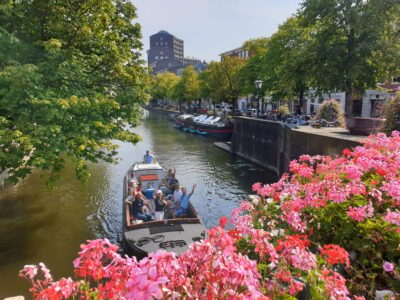
- The Hague: City Canal Cruise
★ 4.6 · 2,024 reviews - The Hague: Madurodam Miniature Park Entry Ticket
★ 4.6 · 1,559 reviews - The Hague: Hop-on Hop-off Old-Fashioned Heritage Tram Tour
★ 4.4 · 1,083 reviews
The first lesson: safety, surfing basics, and board control
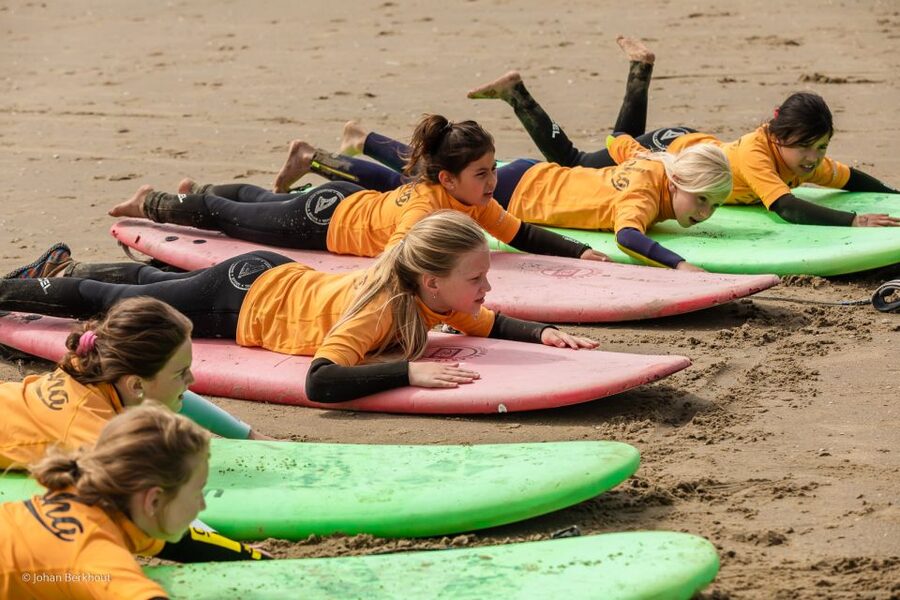
The session begins with an introduction from a certified instructor. Expect some explanation on the beach before the group enters the water, including basic surf history, board handling, and how to stay safe.
This opening can feel long to an excited child who is eager to reach the waves. One family found that the early theory, delivered in English, was difficult for their children to follow. That is a useful warning: if your child is not comfortable in English, confirm the language option before you book rather than assuming a German-speaking instructor will be present.
Still, the safety talk has a clear purpose. Children need to know how to handle the board, listen for instructions, and respond around moving water. A good first lesson is not only about standing up. It is also about learning how to fall, regain control, and share the water with other beginners.
The instructor then explains the basic body position and how to move from lying on the board to standing. The lesson is aimed at first-timers, so children are not expected to arrive with balance, timing, or surf knowledge.
Working toward that first ride
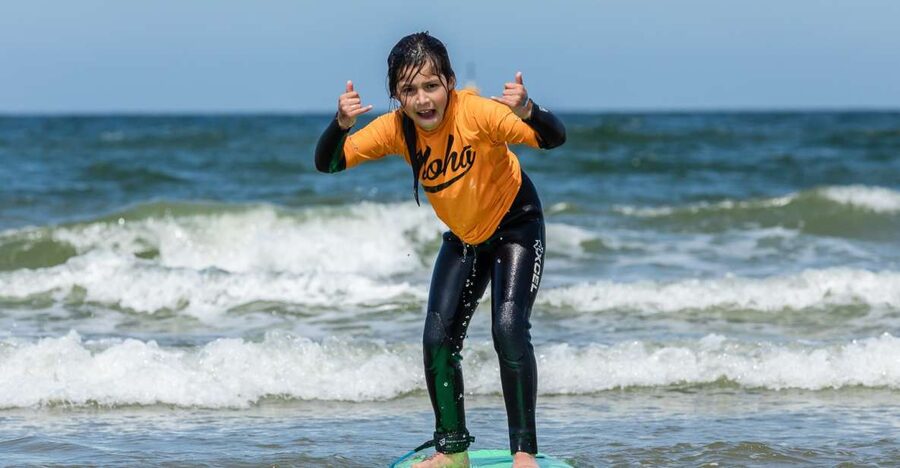
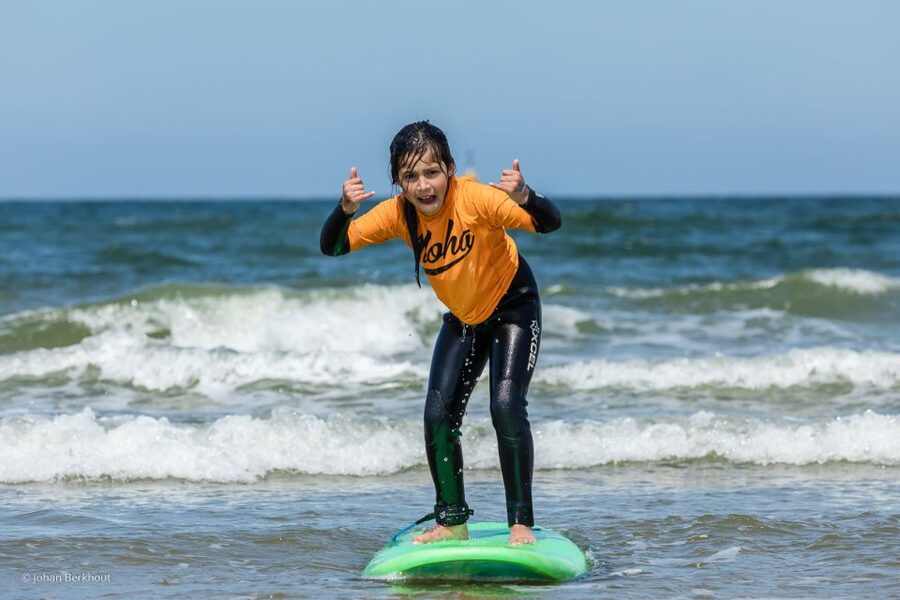
The best part begins when children take their boards into the water and try the skills they have just learned. The aim is straightforward: catch a small wave, stand up, and ride forward for as long as possible.
At first, the board may feel unstable. A child might get to their knees, wobble, and slide straight back into the water. That is normal here. The lesson treats falling as part of learning, not as a failure, and that can help children relax quickly.
Once standing becomes possible, the instructor encourages basic steering. Children can try to go straight or guide the board left or right. These are simple goals, but they give the lesson a useful sense of progress. Your child is not just being pushed along. They are beginning to understand how position and direction affect the ride.
The reward is a short burst of freedom when the board glides with the wave. Even a brief ride can feel like a major achievement to a child who has never surfed before. The laughter after a fall is part of the experience too, especially when the group is learning together.
How group size changes the experience
The group format allows up to eight surfers, while a private lesson has a maximum of two participants. That difference is important for children who need frequent reminders or extra help with balance.
A smaller private lesson should give the instructor more time to focus on each child. It is likely the better fit if your child is cautious, has trouble following spoken instructions, or would benefit from repeated personal feedback. The supplied information identifies the private option as a private group with no more than two participants, so this is a genuinely small setup.
The group lesson can be more social and playful. Children see others trying, falling, and getting back on the board. That shared effort can reduce pressure, especially for a child who worries about being the only beginner.
The tradeoff is attention. One booking involving five children and one instructor found that the ratio was not ideal for complete beginners, since each child needed help. The lesson was still enjoyable, but this is a fair concern. If you choose a group session, ask yourself how independently your child can listen, paddle, and reset after falling.
Group lessons require at least four surfers to continue. The maximum is eight. That means the group size can affect both the energy of the class and the amount of individual coaching available.
Same canals, a completely different sort of afternoon:
- The Hague: Escher in The Palace Museum Ticket
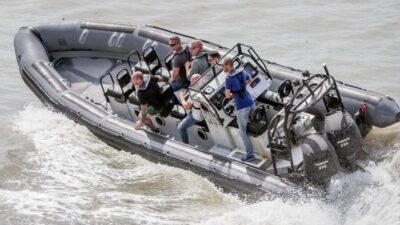
★ 4.6 · 896 reviews - The Hague: Scheveningen Beach RIB Speedboat Tour
★ 4.7 · 330 reviews - Scheveningen: LEGOLAND® Discovery Centre Entry Ticket
★ 4.1 · 257 reviews - Interactive Safe 2,5hr Bike tour with Entertaining Guide
★ 4.6 · 238 reviews
The instructors and language question
The instructors are certified, and the available teaching languages are Dutch, English, and German. Luuk is specifically noted for giving thoughtful support to a child with skin sensitivity to the wetsuit. He adjusted his approach and helped the child take part in the lesson, which shows the value of telling the school about concerns before the session begins.
Language needs a little care. German can be arranged for some sessions, but it is not guaranteed at every available time. French and Spanish-speaking instructors cannot be guaranteed either.
If your child understands only limited English, contact Aloha Surf directly about the options before you select a time. This is especially important during the safety briefing and the first board instructions. Surfing relies on quick responses, so the child should understand the main commands before entering the water.
The instructors are also described as friendly and professional. That combination matters more than a flashy performance from the teacher. Children need clear instructions, calm correction, and enough encouragement to try again after a fall.
What your child should bring to the beach
Packing is simple:
- Swimsuit or other swimwear
- Towel
- Biodegradable sunscreen
The surf gear is included, so you do not need to bring a board or wetsuit. The only stated personal essentials are swimwear and a towel, though sunscreen is specifically requested in biodegradable form.
Skin sensitivity deserves attention. One child had trouble with the wetsuit, and the instructor gave the problem careful attention. If your child has eczema or reacts to certain fabrics, contact the school in advance and explain the issue. Do not assume every child will find the provided wetsuit comfortable.
A towel becomes especially useful after the lesson, when the child has spent repeated stretches in the water. Since the session is at the beach, changing arrangements and personal comfort are worth planning around, even though the supplied details do not specify changing-room facilities.
Weather, waves, and possible changes
Surfing cannot happen safely without suitable conditions. Aloha Surf may cancel the lesson if Scheveningen has no waves or if a storm is moving in. The school will contact you if weather causes a cancellation or change.
This is a normal part of a surf lesson, not a sign that the activity is poorly planned. Waves are the reason you are there, and storms create obvious safety problems. Still, you should avoid making this the only fixed activity in your day.
The flexible booking terms help here. You can cancel up to 24 hours in advance for a full refund, and the reserve-now, pay-later option lets you hold a place without paying immediately. If the school changes or cancels the lesson because of weather, pay attention to the message it sends you and keep your phone available.
Check the forecast, but do not treat it as a guarantee. A sunny beach day may not provide useful waves, while a cooler day can still work if conditions are safe. The final call belongs to the surf school.
Is $62 a fair price for 90 minutes?
At $62 per person, this is not a cheap way to spend an hour and a half at the beach. The value comes from the instruction and equipment rather than from the duration alone.
You receive a certified instructor and the surf gear, so you are paying for a structured lesson instead of simply renting a board and hoping your child figures it out. For a first attempt, that guidance can make the difference between a safe, enjoyable introduction and a frustrating session.
The price looks stronger if your child is genuinely curious about surfing and likely to engage with the lesson. A child who wants to learn will get repeated attempts, coaching, and the confidence that comes from trying a real wave. It is less compelling if your child dislikes cold water, cannot swim, or is likely to lose interest after a few minutes.
The private option should be judged differently from the group option. With only two participants, the higher level of personal attention may justify the cost for a nervous or less confident child. In a larger group, you are paying less for one-to-one coaching and more for a shared introduction to surfing.
Who will enjoy this activity most?
This lesson suits children who can swim, enjoy active beach time, and are happy to try something unfamiliar. It works particularly well for a family looking for more than a day of sitting on the sand.
You should book it for a child who can listen to an instructor and accept that the first few attempts may end in a splash. The activity rewards persistence more than athletic skill. A child does not need to be strong or experienced, but they do need to be comfortable in the water.
The private option is worth considering for children who are shy, easily frustrated, or in need of extra support. A group class is a better match for children who like doing things with others and will not mind waiting for instructions or sharing the teacher’s attention.
Non-swimmers should not take this lesson. It is also not suitable for pregnant women. For children with skin concerns, discuss the wetsuit issue with Aloha Surf before the lesson.
What makes this more than a beach photo opportunity
A surf lesson gives children a physical goal they can understand. They start by listening, then handle a board, enter the water, attempt a wave, and adjust after each fall.
That sequence builds confidence in a direct way. A child may not stand up on the first try, but they can still learn how to position themselves, steer, and recover. The progress is visible, which makes the 90 minutes feel purposeful.
I also like that the instructors introduce surf history and water safety rather than treating the board as a simple amusement ride. The lesson connects the fun with a few practical skills. Children leave with a better sense of what surfing involves, even if their first rides are short.
The experience is also pleasantly honest about falling. No one needs to pretend that every attempt will work. The splash, the laughter, and the decision to try again are central to the day.
Should you book Aloha Surf for your child?
Book this Scheveningen lesson if your child can swim, wants to try surfing, and will enjoy an active 90 minutes at the beach. The supplied equipment, certified instruction, and small private option make it a sensible first step into the sport.
Choose a private lesson if personal attention is your top concern. Choose a group lesson if your child enjoys shared activities and can manage some waiting. Before confirming, check the teaching language, since German is not guaranteed at every time, and remember that group lessons need at least four surfers.
At $62, the experience is best viewed as a coached introduction rather than inexpensive beach entertainment. For a child who wants that first ride on a wave, the chance to stand up, steer, fall, and try again can make the price worthwhile.
FAQ
How long is the children’s surf lesson?
The lesson lasts 1.5 hours, or 90 minutes.
Where do I meet the instructor?
Meet at the blue building with the Aloha flag on top at Scheveningen Beach.
What is included in the price?
Surf gear and instruction from certified instructors are included.
What should my child bring?
Bring swimwear, a towel, and biodegradable sunscreen.
How many children can join a group lesson?
A group lesson can include a maximum of eight surfers and requires a minimum of four surfers to continue.
How many people can join a private lesson?
A private lesson has a maximum of two participants.
Which languages are available?
Instruction is available in Dutch, English, and German. German cannot be guaranteed at every lesson time, and French and Spanish-speaking instructors are not guaranteed.
Can the lesson be canceled because of weather?
Yes. The lesson can be canceled if there are no waves or if there is a storm in Scheveningen. The surf school will contact you if the lesson is canceled or changed.
Just added around The Hague
- Your Own Hague. Behind The Scenes of The Royal City★ 4.5 · 5 reviews
- e-Scavenger hunt The Hague: Explore the city at your own pace★ 3.5 · 10 reviews
- 3 Course Walking Dinner in Delft with Guided Tours in Between★ 5.0 · 3 reviews
- Delft: City Walk with Audio Guide in 7 Languages on your Phone★ 5.0 · 4 reviews
- Surfing at The Shore in The Hague★ 4.5 · 3 reviews
- The Hague Must-See attractions Private Walking Tour With A Guide★ 5.0 · 5 reviews
- The Hague: City Walk Audio Guide in 7 Languages on your Phone★ 3.5 · 5 reviews
- Royal The Hague Private Guided Walking Tour★ 4.5 · 21 reviews
The Hague Tours, compared.


Hop-on Hop-off Old-Fashioned Heritage Tram Tour
Read our review →
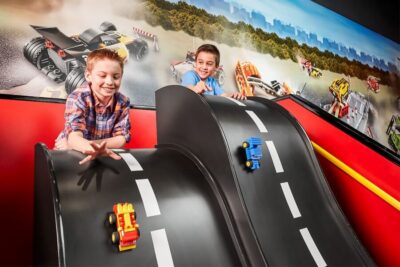
Scheveningen: LEGOLAND® Discovery Centre Entry Ticket
Read our review →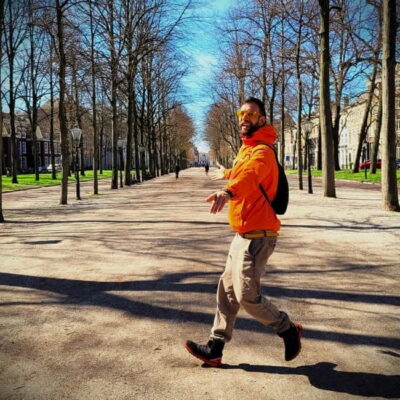
Interactive Safe 2,5hr Bike tour with Entertaining Guide
Read our review →
Food Walking Tour of The Hague – by Bites & Stories
Read our review →Browse the lists this tour appears in