
Reviewed · KINDERDIJK WINDMILL TOURS
Rotterdam: Kinderdijk UNESCO World Heritage Entry Ticket
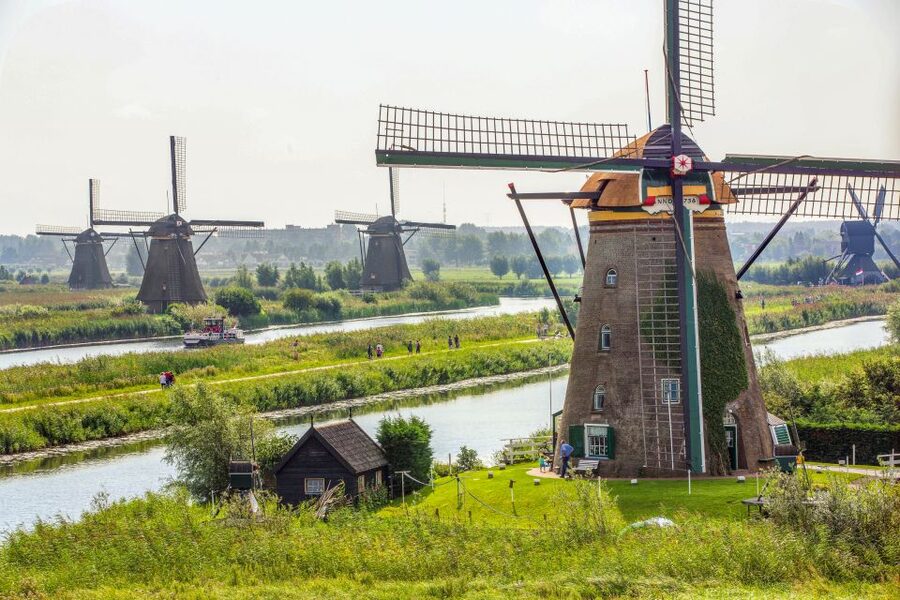
Kinderdijk is where Dutch water management stops being an abstract idea and becomes a working village of 19 historic windmills. The mills, canals, dikes, and low-lying fields make a memorable day trip from Rotterdam, with two museum mills and a pumping station showing how people lived with water for centuries. I like the freedom to walk at my own pace, and I like that the boat ride gives you a different view of the mills. The main drawback is simple: this is a large outdoor site with a lot of walking and little shade.
I also like that the $25 ticket pays for more than a view from the path. You can enter the Blokweer and Nederwaard museum mills, see the pumping station engine room, watch an informative film, and use the audio guide. The boat may stop running in bad weather, and its seating is limited, so plan around the weather and do not leave the boat ride until the last minute.
Key points at Kinderdijk
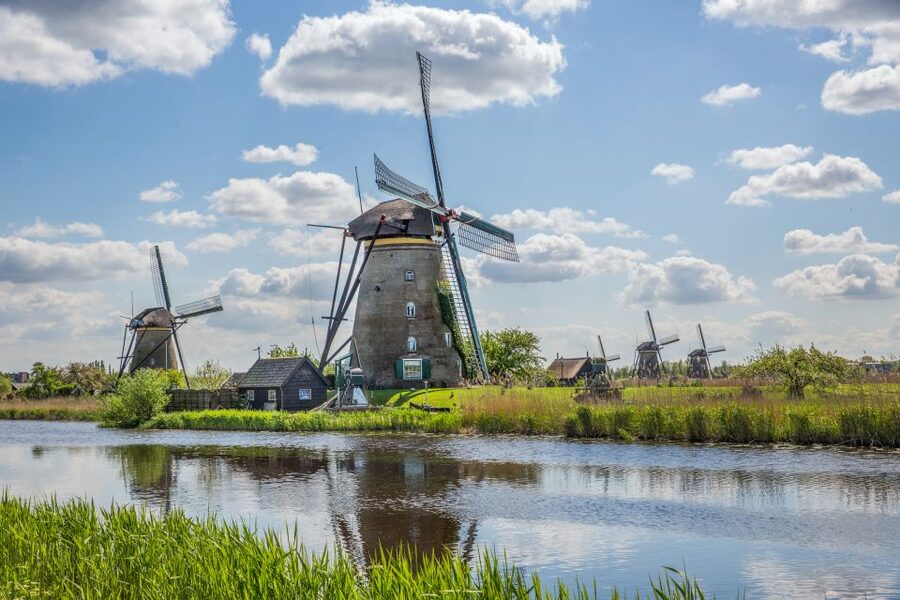
- Nineteen working windmills: See one of the Netherlands’ clearest examples of large-scale water management in action.
- Two museum mills: Enter Blokweer and Nederwaard to see mill machinery and the former living conditions of miller families.
- Boat ride through the polders: Glide along the canals for a broad view of the windmills and dikes.
- Pumping station engine room: Learn how newer mechanical systems joined the older windmill network.
- Self-guided format: Walk, listen, watch, and explore at the pace that suits you.
- Good family extras: Children can follow an interactive scavenger hunt, while the films and exhibits add useful context.
Why Kinderdijk is more than a windmill photo stop
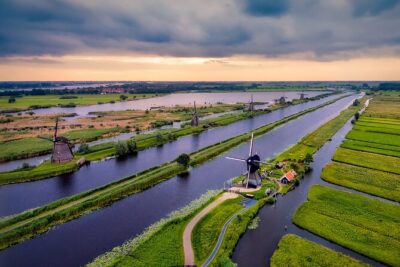
A row of Dutch windmills is a familiar sight, but Kinderdijk explains why they are there. This is not simply a collection of handsome old buildings. The windmills formed part of a system that moved water out of the polders, the reclaimed low-lying land where people lived and farmed.
That practical purpose gives the visit its weight. You see canals beside the paths, dikes guiding the route, and mills positioned across the village. The setting makes clear that Dutch life here depended on constant work. Water had to be controlled, moved, and watched.
The outdoor setting is the main attraction. You can walk beside the canals and see the mills from changing angles, with their sails, wooden structures, and working parts providing plenty of photo opportunities. On a quiet day, the area can feel peaceful rather than crowded, though cyclists may share the paths and pass close by.
Much of the outdoor route can be viewed without paying for the full ticket. The ticket becomes worthwhile when you want to go inside the museums, visit the pumping station, use the film and exhibits, and take the boat. I would not treat the paid ticket as just an admission fee. It gives the scene a human and technical explanation, which helps you understand what you are looking at.
More Kinderdijk windmill trips:
- Rotterdam: Waterbus Ticket to Dordrecht and/or Kinderdijk
★ 4.6 · 542 reviews - All-Inclusive Private Windmill Tour to Kinderdijk from Rotterdam
★ 4.5 · 59 reviews - Kinderdijk, The Hague, Mauritshuis Private Tour from Amsterdam
★ 4.5 · 44 reviews
Starting the visit at the entrance exhibition
Begin with the informative film and exhibition before setting off along the paths. A short film, reported as about nine minutes, gives you a quick grounding in the windmills and Dutch water control. It is time well spent, especially if you are new to the subject.
The online guide adds audio tours in English, Dutch, French, Spanish, Italian, Chinese, and German. Dutch and English are also used by the on-site team. If you want the audio tour, ask at the information desk for the access code. It may not be handed to you automatically.
This self-guided setup suits independent visitors. You are not tied to a group leader or a fixed sequence, and you can pause whenever a view catches your eye. The trade-off is that you need to manage your own time. If you simply start walking without checking the boat schedule, you could reach the end of the day without fitting in every paid feature.
Inside Blokweer Museum Mill
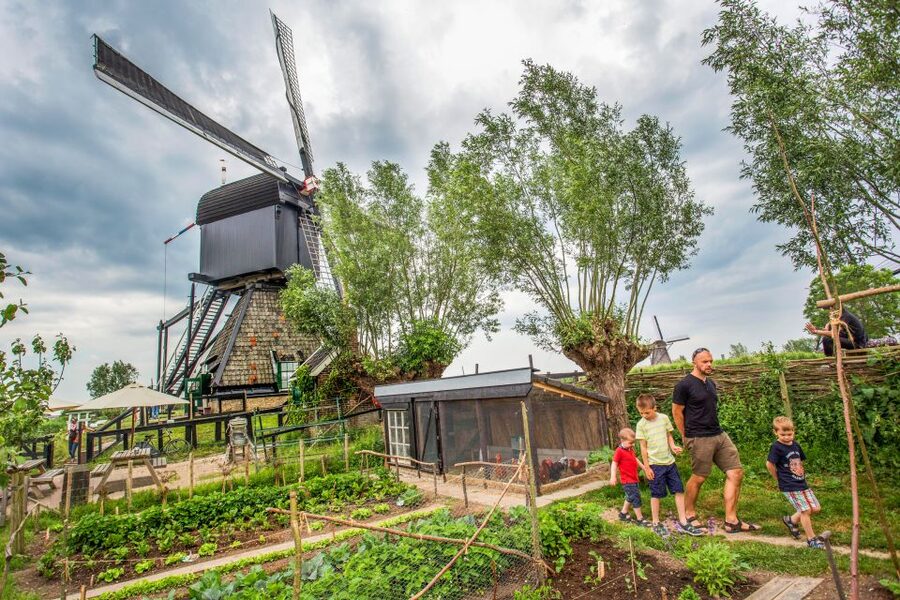
Blokweer Museum Mill lets you step inside a working windmill rather than viewing it only from the outside. The machinery shows how wind power was turned into useful work, while the interior gives you a sense of the cramped, practical life connected to mill operation.
The value here is scale. From the path, a windmill can look like a neat postcard object. Inside, the wooden structure and moving parts make it clear that this was a workplace as much as a home. You may need to use stairs and narrow interior spaces, so take your time.
The mill is especially useful for families and first-time visitors because it turns the technical side into something visible. Children can also use the interactive scavenger hunt, which gives younger visitors a reason to look closely instead of simply walking past the buildings.
Seeing miller life at Nederwaard
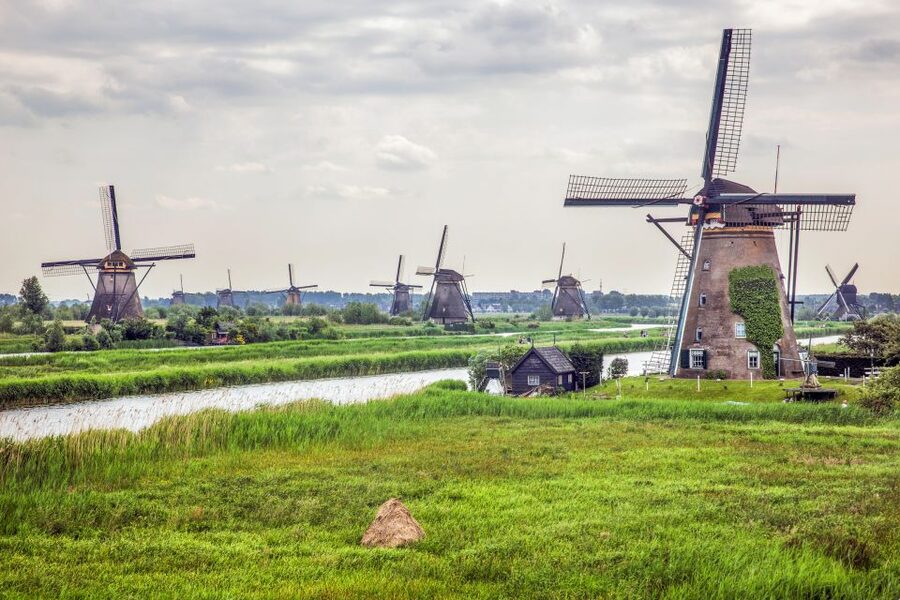
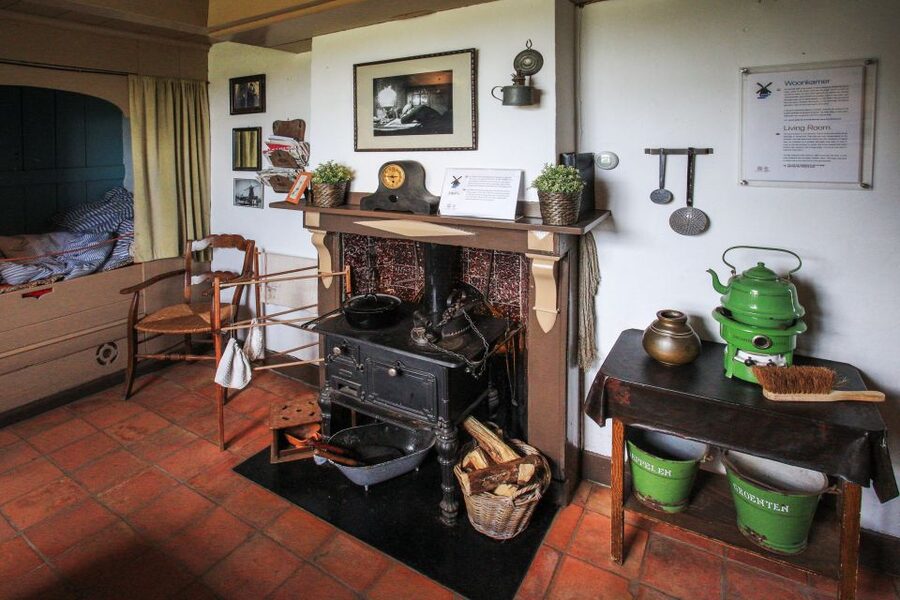
The Nederwaard Museum Mill focuses strongly on the people who lived and worked in these buildings. You can see how miller families adapted their daily lives to the machinery, the water, and the limited space inside a historic mill.
This was one of the most effective parts of the visit for me because it connects engineering with ordinary life. You are not only learning how water was moved. You are seeing where people slept, worked, and raised families while operating a machine that had to keep doing its job.
The two museum mills are different enough to justify visiting both. One helps you understand the working structure, while the other brings the residents’ lives into view. Together, they prevent Kinderdijk from becoming just a scenic walk.
A few more days out around South Holland worth weighing up
- Tulip Fields near Keukenhof – Self-Drive Audio Tour for 2 People
★ 5.0 · 147 reviews - Drive it yourself electric Dune and Beach GPS audio tour
★ 5.0 · 129 reviews - Enjoy the tulip fields by bicycle with a local guide! Tulip bike tour!
★ 4.5 · 51 reviews - Taking Pictures in the Tulip Field at De Tulperij
★ 4.5 · 35 reviews
The pumping station and the change from wind to engines
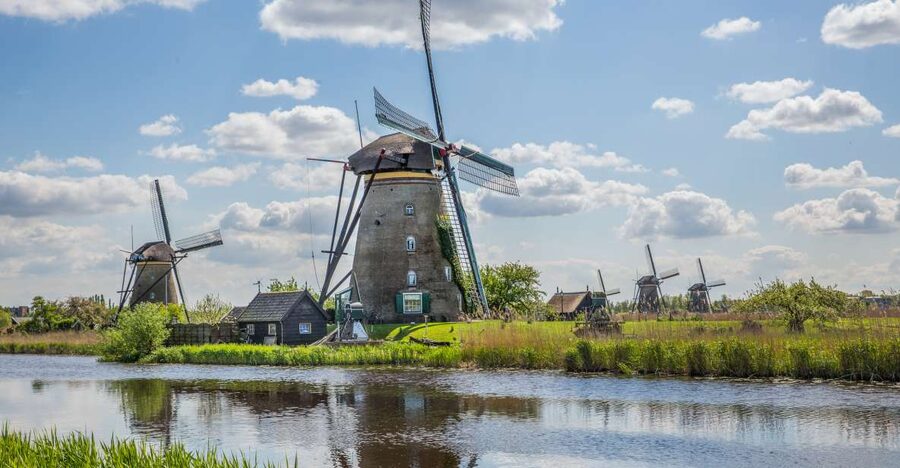
The pumping station engine room shows the next stage in water management. Windmills were ingenious, but they depended on wind and required constant attention. Mechanical pumping added a different kind of power to the system.
The engine room helps place the old mills in a longer story. You can see how Dutch water control developed rather than imagining that windmills alone handled everything forever. For anyone interested in engineering, climate adaptation, or the practical problems of living below water level, this is one of the most useful stops.
The visit also gives the site a modern relevance. Kinderdijk is a preserved heritage area, but the problem it represents has never vanished. The Dutch relationship with water remains part of daily life, and the old machinery shows how much planning and maintenance that relationship demands.
Taking the boat through the polders
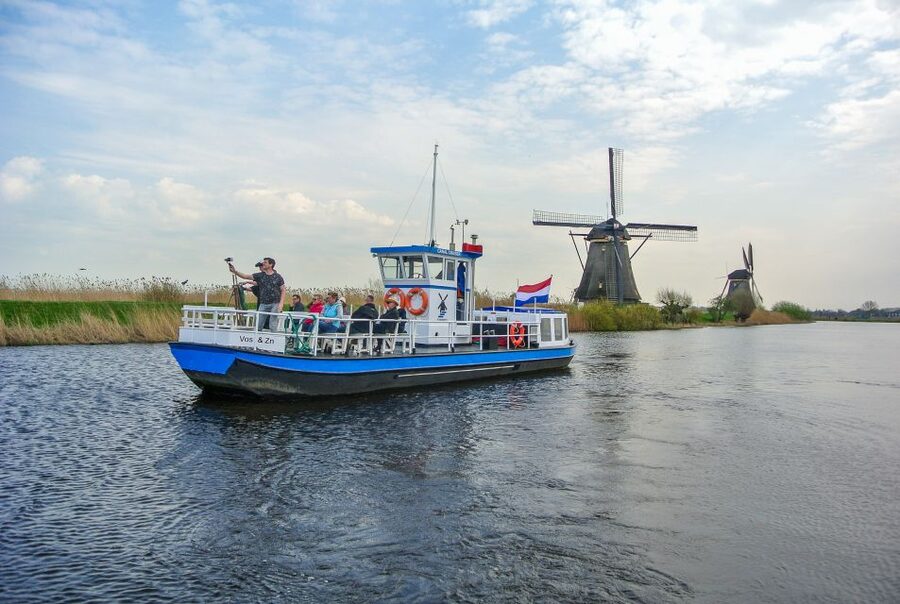
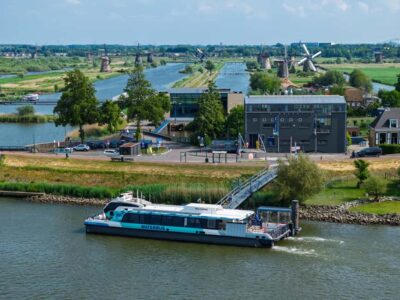
The included boat ride is not just a way to rest your feet. It changes the view. From the water, the canals lead your eye toward the line of windmills, and you see how the buildings relate to one another across the polder.
The ride is especially helpful after visiting one or both museums. You now recognize the mills as parts of a system instead of isolated monuments. The boat also offers a welcome break from the paths, which can involve a surprising amount of walking.
Do not assume the boat will always be available. Bad weather can stop service, and the last departure is half an hour before closing. Boats have limited seating, so I would check the schedule early and take a ride near the beginning of your visit if the weather is uncertain.
Some visitors prefer to take the boat all the way around first, then return on foot or by bike to visit the museums. That is a sensible plan if you want an overview before exploring individual buildings. Others walk directly to the museum mills and use the boat later. Since the ticket is valid for one day, you have room to choose.
Walking, cycling, and the real time needed
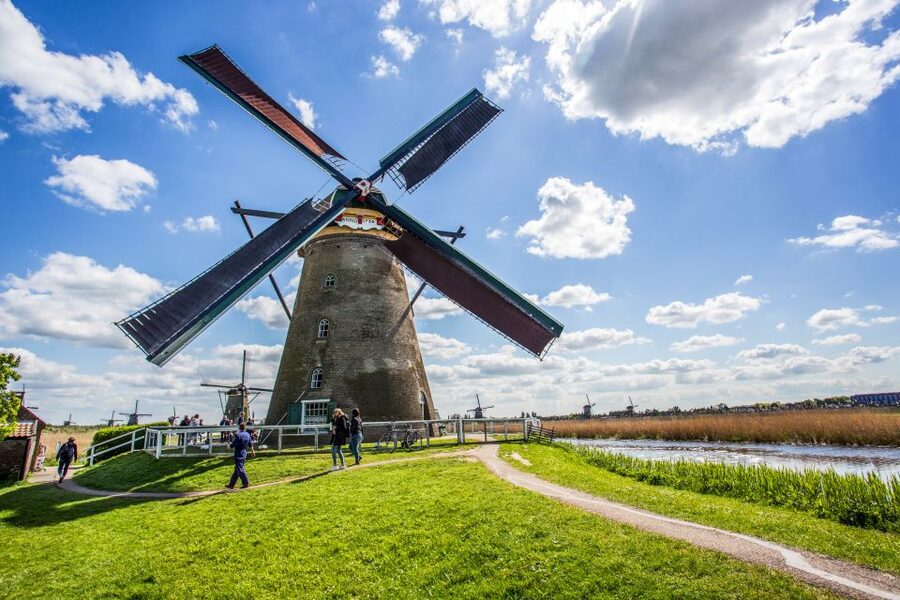
The site is often described as a half-day outing, and that can work if you walk briskly, visit the main exhibits, and take the boat. Allow two to three hours for a focused visit. If you want to explore at an easy pace, enter both mills, watch the film, take the boat, and stop for food, plan on much of a day.
The paths are well kept, but distances between stops can feel longer than expected. You may walk a fair way before reaching a crossing over the dikes, and there is little shade on the open stretches. In warm weather, bring water, sun protection, and a hat.
Cycling can make the area easier to cover, though you need to share the route with pedestrians. Bikes are mentioned as a useful addition by visitors who reached Kinderdijk by Waterbus and rented bicycles nearby. A bike and picnic can turn the ticket into a full, relaxed day rather than a quick photo visit.
The countryside is the reward for slowing down. Canals, grass, dikes, and working mills create a calm setting, but this is not a polished theme park with entertainment at every turn. You are here for space, history, and the sight of a water-control system spread across open ground.
Getting there from Rotterdam
Transport to Kinderdijk is not included, so you need to arrange your own route. The Waterbus is a popular choice from Rotterdam. Waterbus 21 is mentioned as a direct option, with the journey taking about 35 minutes in one account. Check the current timetable before you leave, since departures can affect how long you have on site.
Some visitors use the Waterbus to Alblasserdam, then continue by bicycle. Others arrive by water taxi or drive. Parking can be difficult, particularly at busy times, so arriving early is sensible if you are driving.
If you are coming from a cruise ship, do not assume the cruise port’s excursion is the only option. The Waterbus can provide a more independent route, but allow time to find the departure point and check the return schedule. The attraction itself is self-guided, so you will need to coordinate transport, boat times, and closing time on your own.
The water route is also a fitting way to arrive. You begin the day moving through the same kind of watery setting that shaped Kinderdijk, rather than treating the village as an isolated stop.
Price, value, and what the ticket really covers
At $25 per person, the ticket is a fair buy if you plan to use the boat and enter the paid attractions. It covers the Blokweer Museum Mill, Nederwaard Museum Mill, pumping station engine room, boat ride, film, exhibition, and online audio guide.
You can see much of the outdoor setting without paying for the full package. That makes the ticket less compelling if you only want photographs and a short walk. But if you want to understand the windmills, the machinery, and the people who lived inside them, the indoor access adds real value.
The boat is also important to the price calculation. A long walk beside the canals gives you close views, while the boat provides the broad view and saves some walking. Add the two museum mills and the pumping station, and the ticket offers enough content for several hours.
Food and drinks are not included. A café and gift shop are available at the site, and bringing a picnic is a practical way to stretch the visit. Buying ahead also makes entry quicker, but the chief benefit is having the full day planned around the attractions you want to see.
Accessibility and family planning
Kinderdijk is wheelchair accessible at the attraction, and mobility scooters can be used around the site. The route from a water taxi or certain transport connections may be less suitable for disabled visitors, so the journey to the entrance deserves separate planning.
The outdoor paths are generally easy to follow, but the distances are substantial. Historic windmills can have tight interiors and stairs, so access inside individual buildings may differ from the broader site. Ask the information team for current details when you arrive.
Families have several tools to keep children involved. The interactive scavenger hunt gives them a task, while the boats, moving machinery, and working sails provide things to watch. A picnic break can also help break up the walking.
When to go and how long to stay
Opening times change through the year:
- Until March 5: 10:30 a.m. to 4 p.m. on open days
- March 6 through November 1: 9 a.m. to 5:30 p.m. daily
- November 2 through December 31: 10:30 a.m. to 4 p.m. daily
- Christmas Day: closed
The last boat leaves 30 minutes before closing. That detail matters in the short winter hours, when a late arrival can leave little time for the museums and boat.
Good weather makes the outdoor parts more pleasant, but the site can still be worthwhile in cooler or cloudy conditions. Wind, rain, and poor visibility may affect the boat, so keep your schedule flexible. The ticket allows one day of use, and cancellation is available up to 24 hours before the activity for a full refund.
Should you book Kinderdijk?
Book this ticket if you want more than a windmill photograph. It suits first-time visitors to the Netherlands, families, history and engineering fans, and anyone who enjoys setting their own pace. The combination of working mills, museum interiors, the pumping station, audio material, and the boat gives you a clear picture of Dutch water management.
Skip the paid ticket if you only want a brief walk and outdoor views, since much of the setting can be seen without the full package. Also think twice about a rushed visit from a tight cruise schedule. Kinderdijk rewards time, and the walking distances, transport connections, and boat timetable all need room.
For most people spending a day near Rotterdam, I would book it. Arrive early, check the boat schedule, ask for the audio code, wear comfortable shoes, and consider a bicycle or picnic. The windmills are beautiful, but the real pleasure is understanding why this village exists and how much work keeps the water where it belongs.
FAQ
How long is the Kinderdijk ticket valid?
The ticket is valid for one day. Check the selected date and available starting times when booking.
What does the $25 ticket include?
It includes entry to the Blokweer Museum Mill, Nederwaard Museum Mill, pumping station engine room, the boat trip, the informative film and exhibition, and an online audio guide.
Is transport from Rotterdam included?
No. You must arrange and pay for transport to Kinderdijk separately. Waterbus 21 is one route mentioned for reaching the site from Rotterdam.
Does the boat operate in all weather?
No. The tour boats may not sail in bad weather. The last boat departs 30 minutes before closing, and seating is limited.
Which audio guide languages are available?
The online audio guide is available in English, Dutch, French, Spanish, Italian, Chinese, and German.
Is Kinderdijk wheelchair accessible?
The attraction is wheelchair accessible and suitable for mobility scooters. Access from some water taxi connections may be less convenient for disabled visitors.
Can I cancel the booking?
Yes. You can cancel up to 24 hours in advance for a full refund. A reserve-now-and-pay-later option is also available.
More History Walks around South Holland
- Drive it yourself electric History and Castle GPS audio tour
★ 4.5 · 35 reviews - Amsterdam Food and Cultural Tour with Tastings
★ 5.0 · 2,442 reviews - The Hague: Hop-on Hop-off Old-Fashioned Heritage Tram Tour
★ 4.4 · 1,083 reviews - Rotterdam: Harbor Cruise on a Historic Ship
★ 4.2 · 812 reviews
Just added around South Holland
- Taking Pictures in the Tulip Field at De Tulperij★ 4.5 · 35 reviews
- e-Scavenger hunt Schiedam: Explore the city at your own pace★ 4.5 · 4 reviews
- Drive it yourself electric Dutch Countryside GPS audio tour★ 5.0 · 33 reviews
- Interactive Sailing Day near Amsterdam★ 5.0 · 6 reviews
- Professional Photoshoot at Private Tulip Field★ 5.0 · 7 reviews
- Band of Brothers in Holland Private Tour from Amsterdam★ 5.0 · 4 reviews
- Drive it yourself electric Dune & Summer Flower GPS audio tour★ 5.0 · 24 reviews
- Drive it yourself electric History and Castle GPS audio tour★ 4.5 · 35 reviews
Kinderdijk Windmill Tours, compared.
All-Inclusive Private Windmill Tour to Kinderdijk from Rotterdam
Read our review →
Kinderdijk, The Hague, Mauritshuis Private Tour from Amsterdam
Read our review →
Kinderdijk Windmills and Delft Small-Group Tour from Amsterdam
Read our review →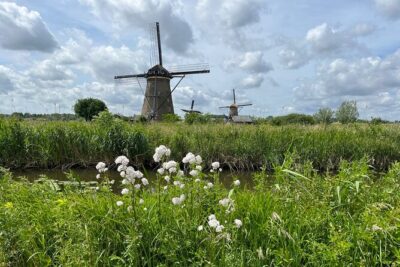
Kinderdijk Windmills, Delft City & Delft Blue Factory Visit
Read our review →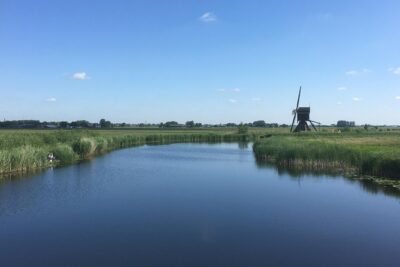

Brussels: Holland Keukenhof & Kinderdijk Guided Day Tour
Read our review →Browse the lists this tour appears in