
Reviewed · VAN GOGH MUSEUM TICKETS
Van Gogh & Rijksmuseum Masterpieces Guided Tour 8 guests 5h
Amsterdam’s two essential art museums make a powerful pair, and this 5.5-hour guided tour gives you a clear path through both. You’ll see Rembrandt’s The Night Watch, Vermeer’s The Milkmaid, and Van Gogh’s Tree Roots and Trunks, while your guide ties paintings to Dutch history and artistic change.
I especially like the small group limit of eight and the way the day links the two museums instead of treating them as separate attractions. The skip-the-line admission is useful, too, since museum queues can eat into a short Amsterdam visit. The drawback is the pace: two and a half hours in each museum, plus lunch, leaves little room for wandering on your own.
Key points at a glance
- Two major museums in one day: Visit the Rijksmuseum first, then the Van Gogh Museum after lunch.
- Art with historical context: Learn how Dutch art changed from the Golden Age through the 18th and 19th centuries.
- Small-group attention: Semi-private tours allow up to eight people, with private tours also available.
- Important masterpieces included: See The Night Watch, The Milkmaid, and Van Gogh’s final painting, Tree Roots and Trunks.
- A strong option for a short stay: You cover Amsterdam’s leading art museums without arranging separate tickets or guides.
- Plan for real walking: Large museums, standing, and a five-and-a-half-hour schedule require comfortable clothing and shoes.
Why this museum pairing works so well
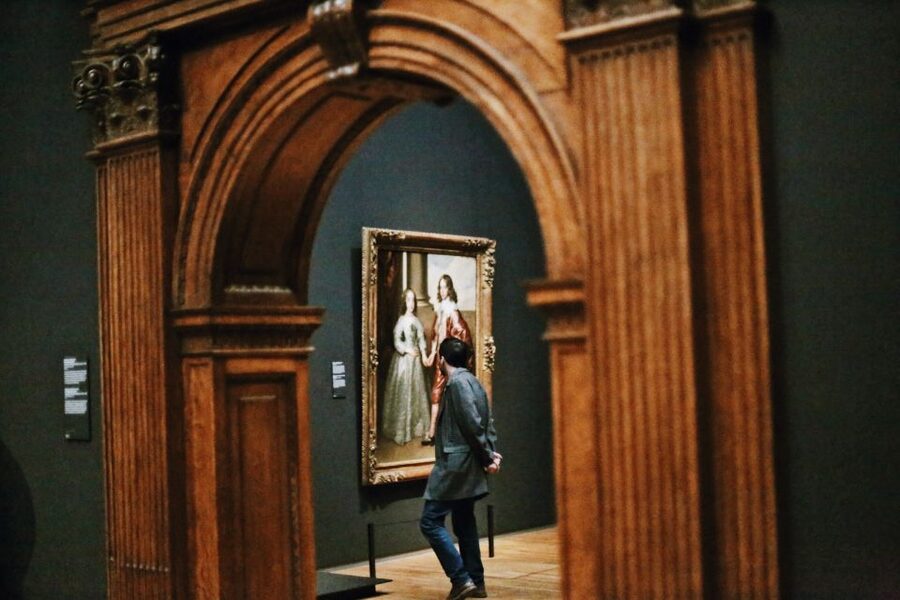
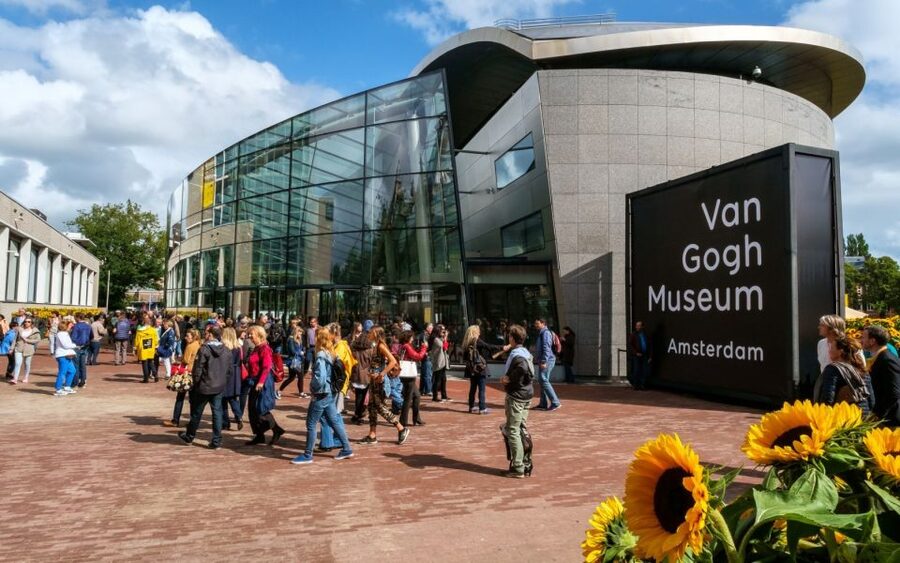
The Rijksmuseum and Van Gogh Museum sit close together in Amsterdam’s Museumplein, but they tell very different stories. The Rijksmuseum carries you through Dutch art and civilization across centuries. The Van Gogh Museum narrows the focus to one restless, intense artist and the people, places, and artistic ideas that shaped him.
That contrast gives the day its shape. You begin with a broad view of Dutch culture, then move toward Van Gogh’s short but dramatic career. I like this order because it lets you see the older Dutch tradition before considering how Van Gogh broke from it.
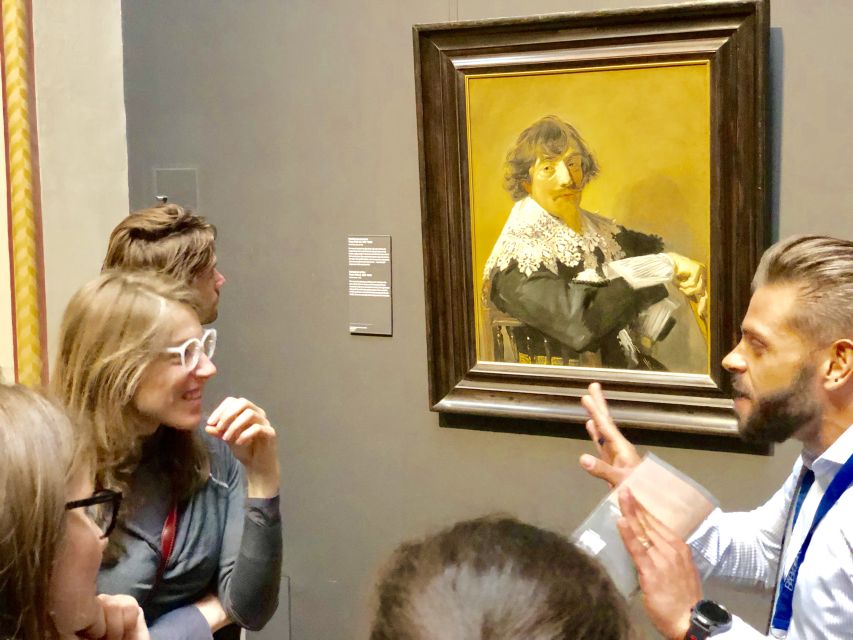
Your English-speaking guide leads the tour through a chronological sequence, explaining both the art and its setting. You won’t just hear a list of names and dates. The goal is to understand why a painting mattered, how it was made, and what it reveals about the period that produced it.
The experience is offered as a private tour or a semi-private group capped at eight people. That number matters inside a busy museum. A guide can usually speak to the group without shouting, and you have a better chance to ask about your own interests than on a large coach tour.
The tour has received especially strong praise for its guides. Anna is singled out for being prompt, professional, helpful, and able to make the museum visit work for different ages. Paola is described as pleasant and well informed about both the paintings and Amsterdam’s past. Marjoke is noted for her clear English and art-history background. These are past guide names, so you should not assume a particular person will lead your departure, but they give you a useful sense of the expected guiding style.
More Van Gogh Museum tickets:
- Amsterdam: Van Gogh Museum Ticket
★ 4.7 · 52,054 reviews - Amsterdam: Van Gogh Museum Ticket and City Canal Cruise
★ 4.6 · 3,899 reviews - Amsterdam: Van Gogh Museum Ticket & Canal Cruise
★ 4.5 · 3,304 reviews
Starting beside the Rijksmuseum
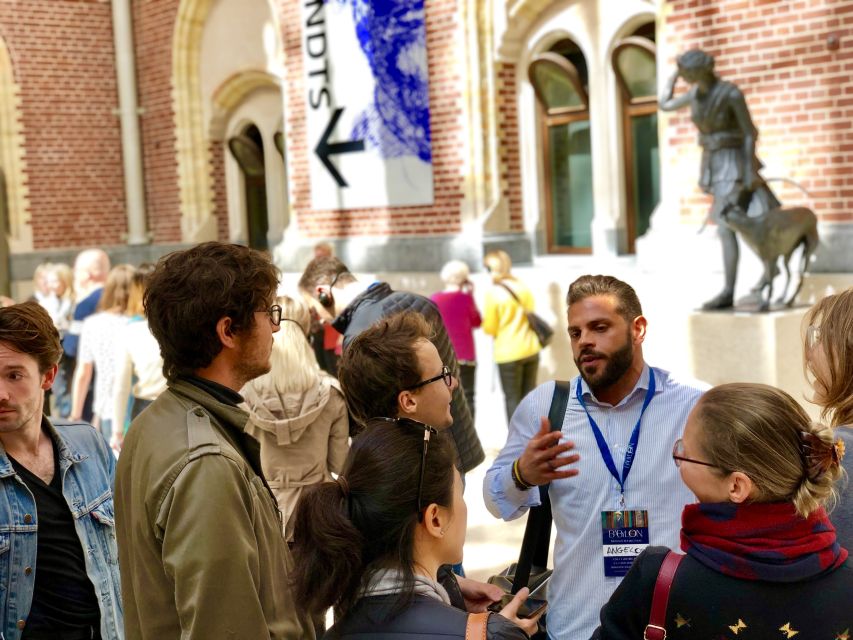
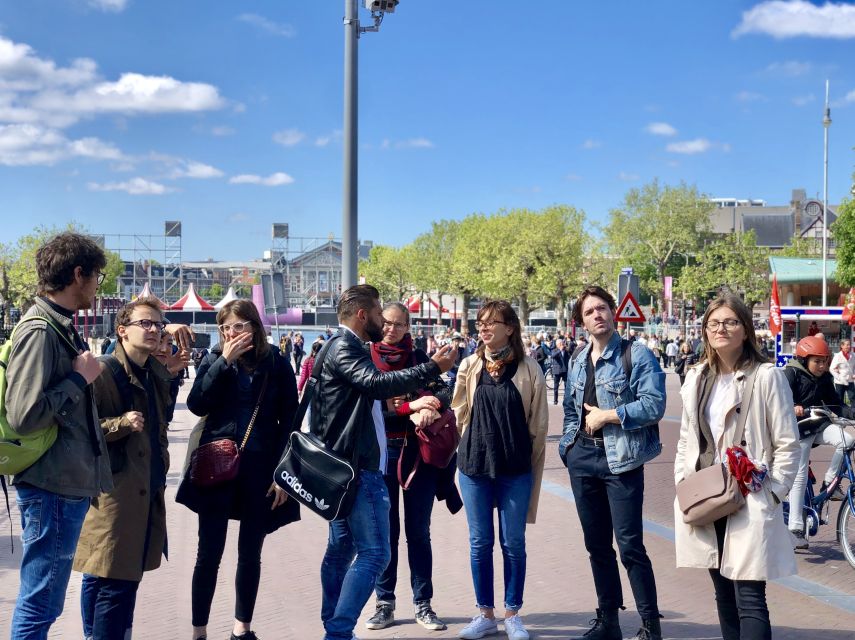
You meet outside the Cobra Café, near the playground beside the Rijksmuseum. The meeting point is on the north side of the café, facing the museum, between the bicycle lane and the café door. This is worth reading carefully before you set out. Amsterdam’s bike traffic is serious, and you do not want to be scanning the wrong side of the square while your group is gathering.
Your guide’s contact details are sent by email by the morning of the tour. Save them to your phone, since the instructions ask you to call or text for urgent matters.
Bring a valid photo ID, such as a passport or ID card. Large bags and luggage are not allowed, so leave your suitcase at your accommodation or in suitable storage before arriving. Comfortable clothing and shoes are sensible. The museums involve a moderate amount of walking, and much of the five-hour program takes place on your feet.
Try to arrive with enough time to find the café without rushing. The tour schedule is shared, and one person arriving late can reduce everyone’s time with the guide. A past booking specifically lost some time waiting for late participants, so punctuality is not a small matter here.
Two and a half hours inside the Rijksmuseum
The first museum visit lasts about two and a half hours. That is long enough to see the major works with explanation, but not long enough to cover every gallery. The Rijksmuseum is huge, and the benefit of a guide is choosing a sensible route rather than trying to take in the entire building at once.
The focus is Dutch art and civilization, with special attention to the Dutch Golden Age. This period brought major changes in trade, civic life, science, religion, and painting. Your guide places the art within that setting, helping you understand why portraits, domestic scenes, civic commissions, and maritime subjects became so important.
Rembrandt’s The Night Watch is one of the day’s major stops. The painting is famous, but fame alone does not explain its appeal. Your guide discusses its technique and meaning, giving you a way to look beyond the crowded room and notice how Rembrandt directs attention through light, movement, and gesture.
Vermeer’s The Milkmaid offers a different experience. Its quiet domestic subject and careful use of light show how much Dutch painting could say through an ordinary moment. The contrast with Rembrandt makes the Rijksmuseum visit more rewarding: one artist creates drama through a large public scene, while the other finds concentration and stillness in a household interior.
The tour also covers important artists from the 18th and 19th centuries. You follow changes in style and technique rather than seeing the museum as a collection of isolated masterpieces. That historical thread is useful if you are new to Dutch art, and it can help an art student or practicing artist place familiar works within a larger sequence.
The main limitation is time. You may leave with a strong understanding of the chosen works but still feel that many rooms remain unexplored. If you want to study every Rembrandt, photograph each gallery, or spend long periods sketching, a private museum visit on another day would suit you better.
A short lunch break at Cobra Café
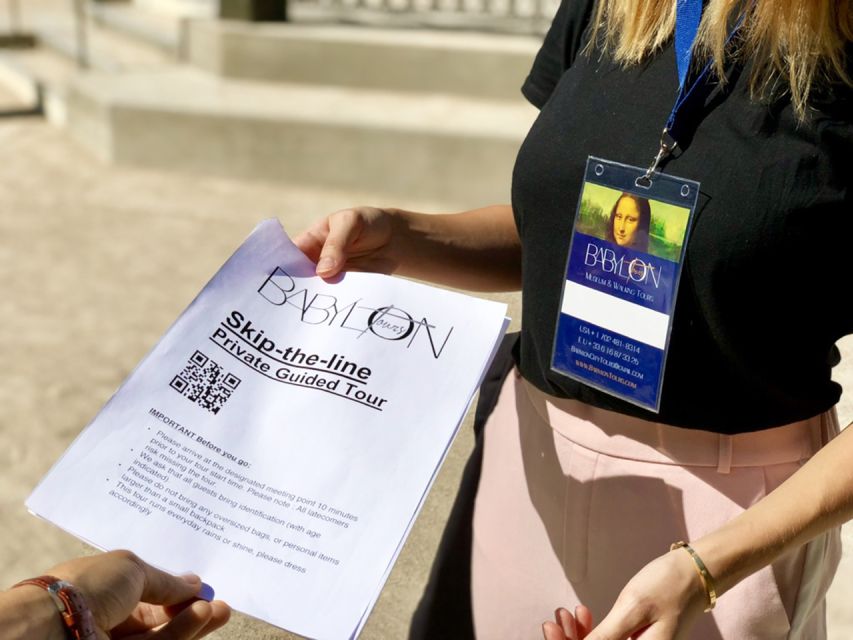
After the Rijksmuseum, you take a 30-minute lunch break at Cobra Café. Lunch is not included, so budget separately for food and drinks. The break gives you a chance to sit down before the second museum, but half an hour is brief.
I would treat this as a practical pause rather than a full meal. Arrive ready to order promptly, especially if the group is keeping to schedule. If you need a longer, slower lunch, this format may feel rushed. On the other hand, the short break helps the day stay focused and keeps both museum visits within the planned five and a half hours.
The café’s location near the museums makes the transfer simple. There is no separate transport section or complicated route between the two major stops. That saves energy, which is useful on a museum day.
More Rijksmuseum tickets:
- Amsterdam: Rijksmuseum Entry Ticket
★ 4.7 · 25,535 reviews - Amsterdam: City Canal Cruise and Rijksmuseum
★ 4.5 · 2,129 reviews - Rijksmuseum Amsterdam Small-Group Tour with Private Upgrade
★ 4.5 · 1,547 reviews - Amsterdam: Rijksmuseum Entry Ticket and Canal Cruise Combo
★ 4.3 · 1,276 reviews
Following Van Gogh’s short, intense career
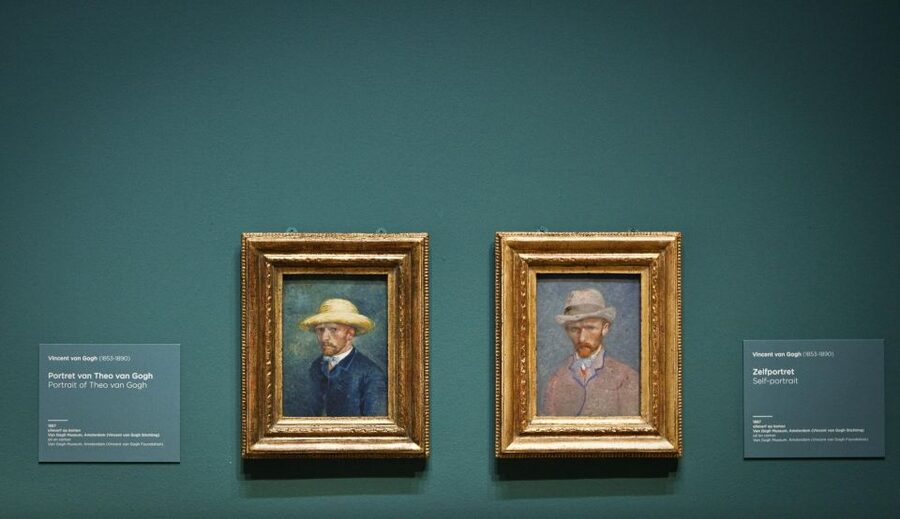
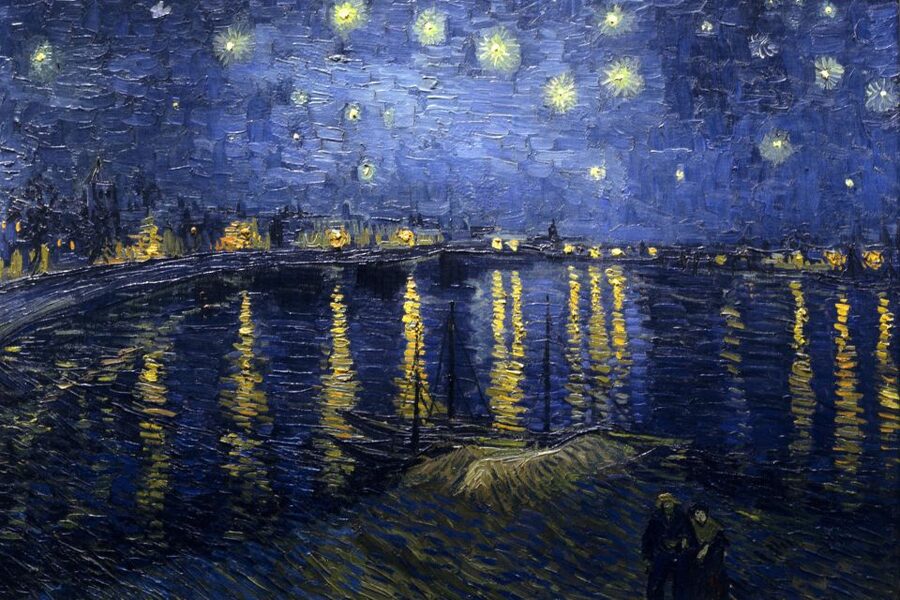
The second guided visit lasts another two and a half hours at the Van Gogh Museum. Here the story becomes more personal. Instead of moving through centuries of Dutch art, you spend sustained time with one artist’s development, methods, and emotional world.
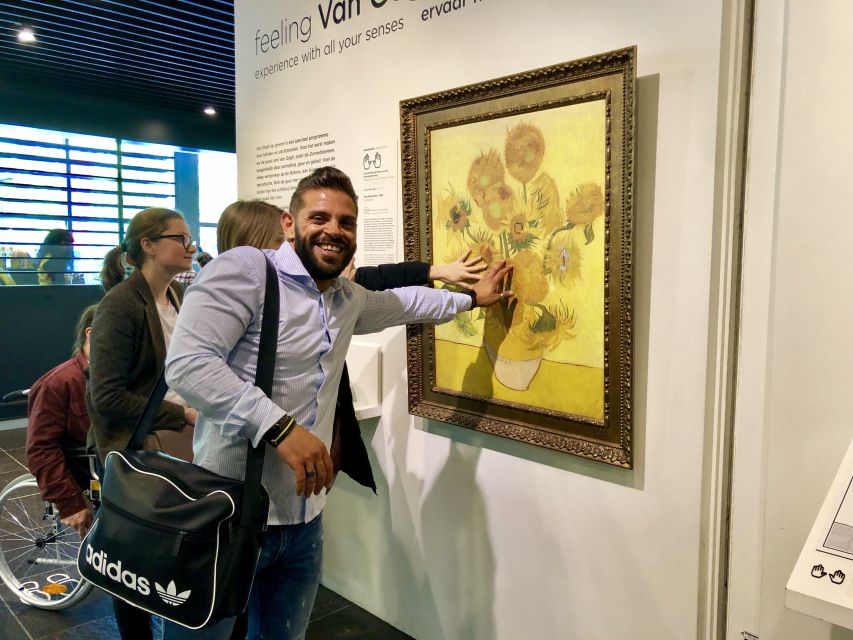
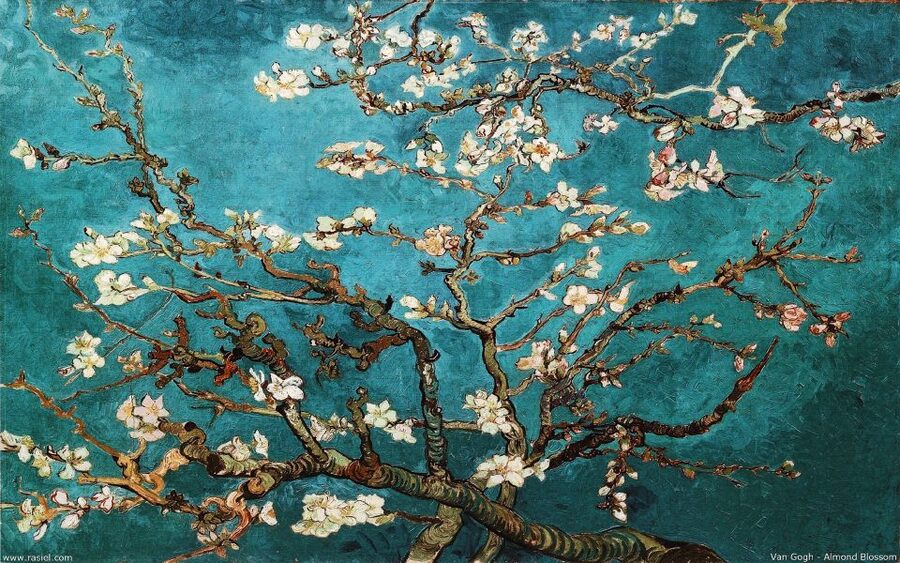
Your guide explains the techniques Van Gogh used and the significance of the works on display. You may find the visit especially useful if you know the famous sunflowers and self-portraits but want a better sense of how his work changed over time.
One unusual highlight is Tree Roots and Trunks, identified here as Van Gogh’s last painting. Its place at the end of his life gives the work added weight, but the guide’s explanation helps keep it from becoming only a biographical curiosity. Look closely at the brushwork, color, and structure, and consider how the painting differs from the image many people carry of Van Gogh.
The chronological approach also helps you compare Van Gogh with the older Dutch tradition seen earlier in the day. You can consider what he inherited, what he changed, and how his handling of paint moved beyond the calm precision associated with earlier masters.
Two and a half hours is enough for a focused route, though not for every painting in the museum. The Van Gogh Museum can be emotionally tiring because the works are so familiar and the story is so concentrated. Having a guide select key pieces can keep the experience from turning into a quick march past crowded walls.
A past guide named Anna was praised for making the museum experience accessible to different interests and ages. Another account describes a guide helping a visitor who could no longer walk by arranging a wheelchair and assisting through the museum. That is encouraging, but you should still request a wheelchair-friendly version in advance. The standard activity is listed as not suitable for wheelchair users, and accessible tours are available only upon request.
What the guide adds to the paintings
A museum guide is most useful when you want more than labels. This tour promises explanations of technique, historical setting, and artistic importance, and the strongest guide accounts point to those three areas.
You might learn how a painter organized a scene, used light, built texture, or controlled the viewer’s attention. You also connect the work to Dutch society, religious change, trade, civic pride, or the shifting concerns of later artists. Those links are what turn a museum visit into a story rather than a string of famous names.
The small size should help the conversation. A past account describes a guide adjusting discussion to the interests of each person in the group. If you care about painting methods, ask about brushwork and composition. If you are more interested in Dutch history, ask how the artwork reflects the period. If you are visiting with teenagers, the guides have been praised for keeping the material engaging for younger people.
The quality of a guided art tour depends heavily on the individual guide. The available guide names, including Anna, Paola, and Marjoke, have drawn particularly warm praise for clear explanations, patience, and personal attention. Still, those guides may not be assigned to your date, so book this for the format and museum access first, with guide quality as an important added benefit rather than a guarantee of one specific person.
Is $281 a fair price?
At $281 per person, this is not a budget museum outing. The price includes admission to both the Van Gogh Museum and Rijksmuseum, skip-the-line access, and a guide for five and a half hours. Lunch, temporary exhibitions, and personal spending are extra.
The value depends on how you use your time. If you have only two nights in Amsterdam and these two museums are at the top of your list, the tour combines two difficult-to-plan admissions into one structured morning and afternoon. It also reduces the risk of missing Van Gogh Museum entry, where advance planning is important.
The price makes more sense for a private group or for people who place a high value on art interpretation. If you are happy to read labels, move at your own pace, and arrange timed tickets yourself, you can spend less. If you want a clear route, historical explanation, and help choosing the most important works, the cost buys convenience as well as instruction.
Temporary exhibitions are not included. Check this before booking if a special Rembrandt display or another temporary show is a priority. A past booking discovered this limitation only after arrival, so read the inclusions carefully and arrange an extra ticket if needed.
Free cancellation is available up to 24 hours before the tour, and you can reserve now and pay later. For the semi-private option, at least two people are required for the tour to operate. If that minimum is not met, an alternative date or full refund is offered.
Who should choose this five-hour museum day?
This tour suits you best if:
- You have limited time in Amsterdam and want both headline museums in one day.
- You prefer an art historian’s explanation to exploring alone.
- You want a small group rather than a large guided crowd.
- You are interested in how art connects to Dutch history.
- You are visiting with family members or teenagers who benefit from a clear narrative.
- You want a private option for a more personal pace.
It is less suitable if you dislike fixed schedules, need long breaks, or want to study individual works for a long time. The route is focused and active. You will not have much free time inside either museum, and the lunch stop is only 30 minutes.
It is also not the right choice for large luggage or anyone needing wheelchair access without advance arrangements. Contact the operator before booking for a wheelchair-friendly tour, since that option is available only by request.
Should you book it?
I would book this tour if the Rijksmuseum and Van Gogh Museum are your two main Amsterdam priorities, especially on a short visit. The best parts are the small group, the historical link between the museums, and the guides’ record of clear, personal explanations.
The $281 price is high, but it can be reasonable when you include two museum tickets, skip-the-line entry, and five and a half hours of guiding. Go in knowing that lunch costs extra, temporary exhibitions are excluded, and the schedule leaves little room for independent browsing.
Choose it for structure, context, and efficient access. Skip it if you would rather wander freely, spend a full day in one museum, or keep your museum costs low.
FAQ
How long does the tour last?
The tour lasts 5.5 hours. The planned schedule includes 2.5 hours at the Rijksmuseum, a 30-minute lunch break, and 2.5 hours at the Van Gogh Museum.
Which museums are included?
The tour includes the Rijksmuseum and the Van Gogh Museum in Amsterdam.
Are museum tickets included?
Yes. Skip-the-line admission tickets for both the Van Gogh Museum and Rijksmuseum are included.
Is lunch included?
No. There is a 30-minute lunch break at Cobra Café, but food and drinks are at your own expense.
What language is the tour offered in?
The live guided tour is offered in English.
How large is the group?
The tour is available as a private tour or a semi-private tour with a maximum of eight people.
What should I bring?
Bring a valid photo ID or passport and wear comfortable clothing. Large bags and luggage are not allowed.
Is the tour wheelchair accessible?
Wheelchair-friendly tours are available upon request only. The standard activity is listed as not suitable for wheelchair users, so contact the operator before booking if accessibility is required.
Just added around Amsterdam
- From Amsterdam: The Hague Private Trip and Mauritshuis Entry★ 4.3 · 4 reviews
- VIP Private Full Day Tour of the Netherlands★ 4.8 · 6 reviews
- Amsterdam Old-West Vegan Food Tour with Local Guide★ 4.7 · 3 reviews
- Amsterdam: Van Gogh Museum Guided Tour★ 4.8 · 262 reviews
- Van Gogh Museum Private Guided Tour★ 4.2 · 10 reviews
- Vecht River: Full-day Cruise with Lunch★ 4.8 · 9 reviews
- Van Gogh and Rijksmusuem Tour: Small Group Tour with Entry★ 4.7 · 3 reviews
- Amsterdam: Van Gogh Museum Ticket & Guided Tour★ 4.4 · 187 reviews
Van Gogh Museum Tickets, compared.



Van Gogh Museum Amsterdam Exclusive Tour w/ Reserved Entry
Read our review →
Van Gogh Museum Tour Reserved Entry Semi Private
Read our review →
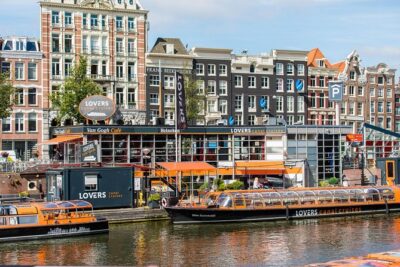
Combo Ticket: Van Gogh Museum Ticket and 1-Hour Canal Cruise
Read our review →
Browse the lists this tour appears in