Reviewed · TICKETS
Apeldoorn: Het Loo Palace Entry Ticket
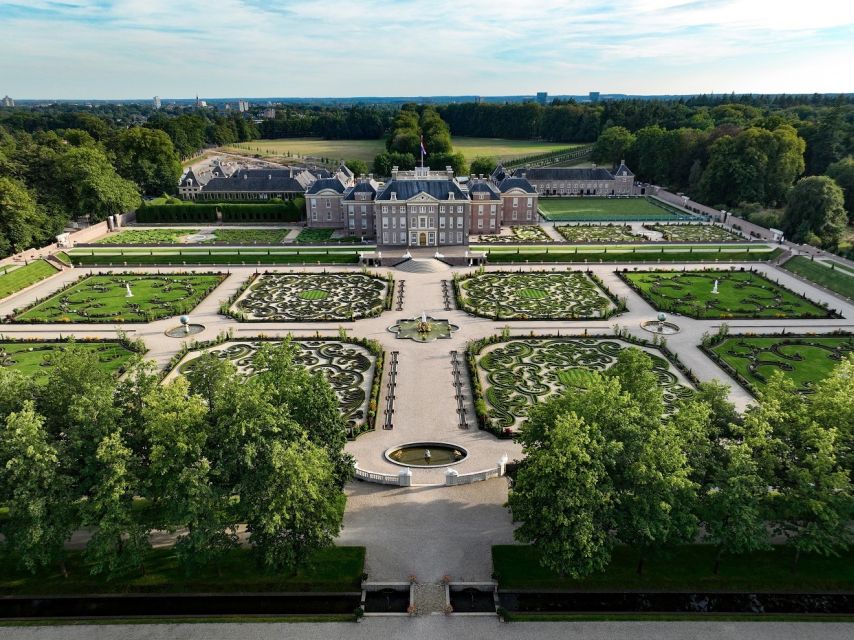
Het Loo Palace gives you a close look at Dutch royal life without the stiffness of a formal ceremony. You can walk through rooms used by the monarchy for more than 350 years, then step outside into the grand baroque gardens built by Willem III and Mary. The palace roof adds a fine bonus: it is the spot where Queen Mary drank tea, with a high view over the garden’s strict patterns.
I like the choice of three palace stories, especially the one about Willem III and Mary, which brings politics, family, and religion into the rooms around you. I also like the mix of royal interiors with carriages and cars, since it shows how the monarchy moved through changing times. The main drawback is simple: parking costs an extra €8, and the palace is large enough that you should allow much of the day rather than treating it as a quick stop.
Key points
- Three audio stories: Follow Willem III and Mary, Wilhelmina, or the idea of home inside a royal palace.
- A rooftop view: See the full symmetry of the baroque gardens from the place where Queen Mary took tea.
- Royal rooms for over 350 years: Walk through spaces connected with generations of Dutch monarchs.
- The House of Orange-Nassau collection: View art, objects, and photographs tied to the royal family.
- Carriages and cars: See the vehicles used for royal occasions and official events.
- Flexible one-day visit: The ticket is valid for one day, with free cancellation up to 24 hours ahead.
Arriving beneath the glass fountain
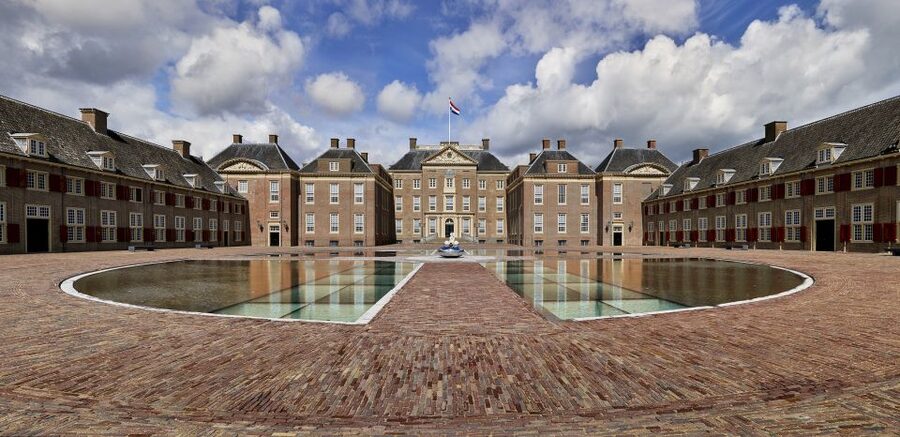
Your visit begins in the newer underground foyer, located beneath a glass-bottom fountain. This unusual entrance gives the palace a modern first note before you move toward the older royal rooms and museum galleries.
I like this contrast. Het Loo is not presented as a frozen old house. The underground entrance helps organize the visit and gives you access to several parts of the complex without making the royal rooms carry the entire experience.
The ticket covers entry to both the palace and gardens. You can use the day at your own pace, which matters here. The palace rooms, exhibitions, vehicles, roof, and gardens each ask for a different kind of attention.
The experience is wheelchair accessible, a useful detail for anyone planning around mobility needs. If you arrive by car, parking is not included. A parking ticket can be purchased on site for €8.
A few more days out around the Netherlands worth weighing up
- Amsterdam: Van Gogh Museum Ticket
★ 4.7 · 52,054 reviews - Amsterdam: Heineken Experience Ticket
★ 4.6 · 30,055 reviews - Amsterdam: Rijksmuseum Entry Ticket
★ 4.7 · 25,535 reviews
Choosing your palace story
The most personal part of Het Loo is the choice between three different stories. Audio is available through an app or a paid audio device costing €2.50. The stories are offered in Dutch, English, and German.
The first story, Willem and Mary, follows the palace’s original occupants. Willem III and Mary were not simply wealthy owners of a country house. When they became king and queen of England, Het Loo became an important centre of European power.
Count Hans Willem Bentinck, Willem III’s close friend, leads this account. His connection to the king gives the story a personal angle, while the focus on power, family, and religion explains why the palace was built with such care and scale.
This is the best choice if you want politics and royal ambition. It should help you see the grand rooms and formal gardens as statements of power, not just pretty decoration.
The second story, Wilhelmina’s Home, brings you closer to Queen Wilhelmina, the great-grandmother of King Willem-Alexander. Het Loo was her favourite palace, and the story follows palace life during the 19th and 20th centuries.
Guides named Ziarah and Mark take you into her world. This option should suit you if you prefer daily life and personality to court politics. The idea is not only to look at a queen as a public figure, but to understand the place she called home.
The third story, At Home with the Royals, asks what home means inside a palace. That is a useful question. Rooms filled with costly furniture and old paintings can feel grand, but grand does not always mean comfortable.
This choice focuses on the ordinary idea of home. It gives you a way to look past royal objects and think about how people lived among them. Families may find this story easier to connect with, while anyone interested in interiors can use it to consider how a palace becomes a private space.
You do not need to treat these stories like a guided group tour. They are a way to shape your visit. If you have enough time, you can explore at your own pace and let the rooms, objects, and audio material work together.
Walking through the royal rooms
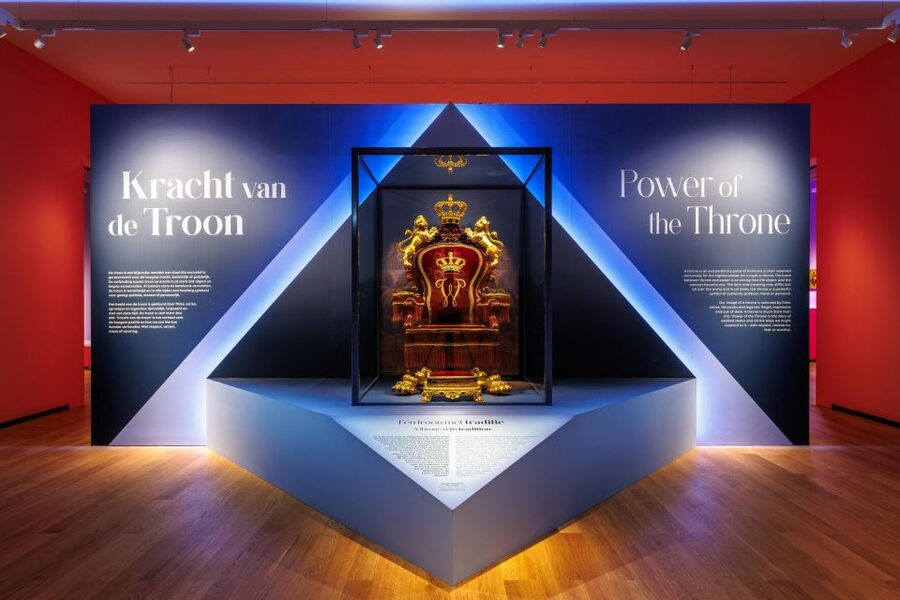
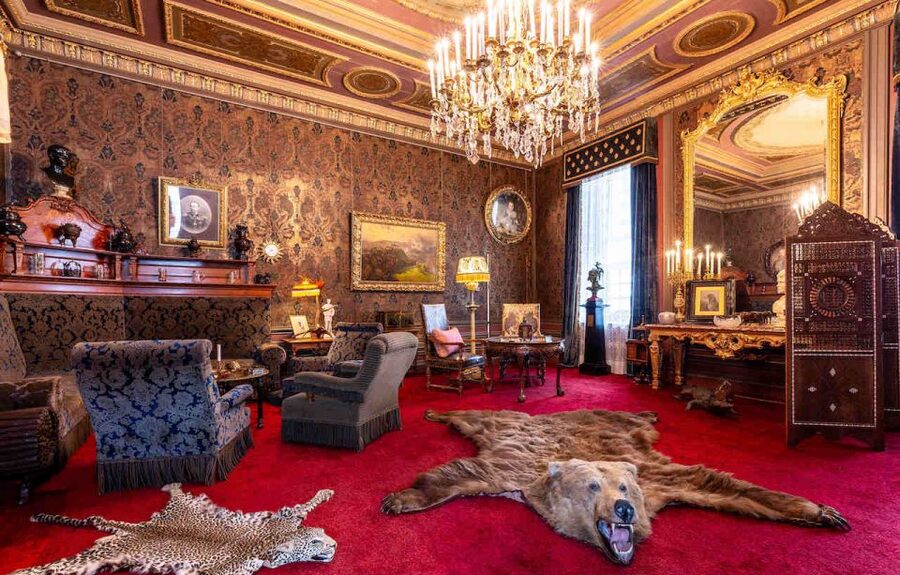
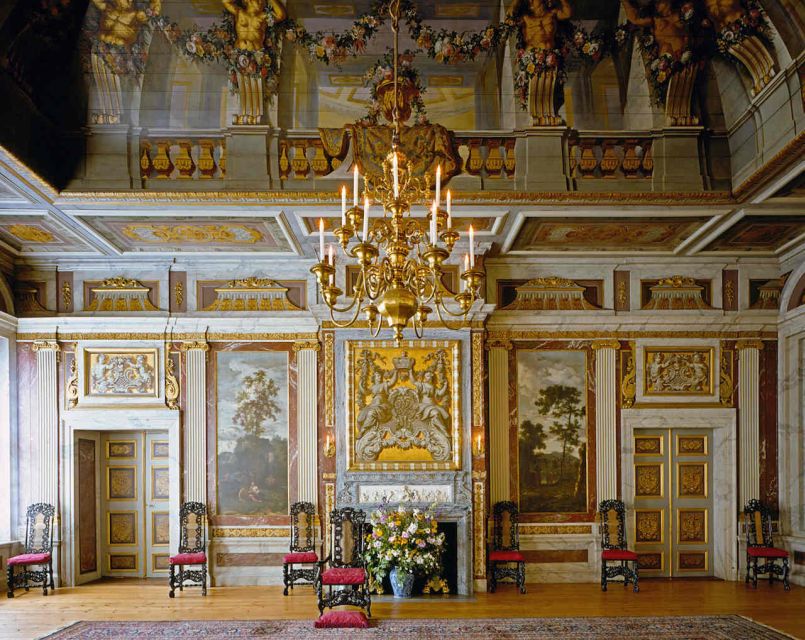
The palace interiors are the heart of the visit. You see the rooms where Dutch royals lived for more than 350 years, with furniture, paintings, and personal objects helping to explain the people connected with the building.
Do not rush from room to room just to collect the main sights. The value is in the change of mood. Some spaces present royal ceremony and public power, while others suggest private routines and family life.
The stories of Willem III and Mary are especially useful here. Their palace was tied to international politics, so the formal setting was not decoration alone. It helped express their position and ambitions.
Wilhelmina’s connection gives the rooms another layer. A palace can be a workplace, a public stage, and a private refuge at the same time. The audio story about her encourages you to think about those different roles while you move through the building.
The At Home with the Royals option is also a good antidote to the idea that palaces are only about luxury. You can look at a chair, painting, or arrangement of furniture and ask how it might have been used, rather than simply noting its price or age.
Because this is an entry ticket rather than a fixed tour, the visit works well for different interests. History fans can stay with the political stories. Art lovers can spend more time with the collection. Families can use the home theme to keep younger visitors involved.
Seeing the House of Orange-Nassau collection
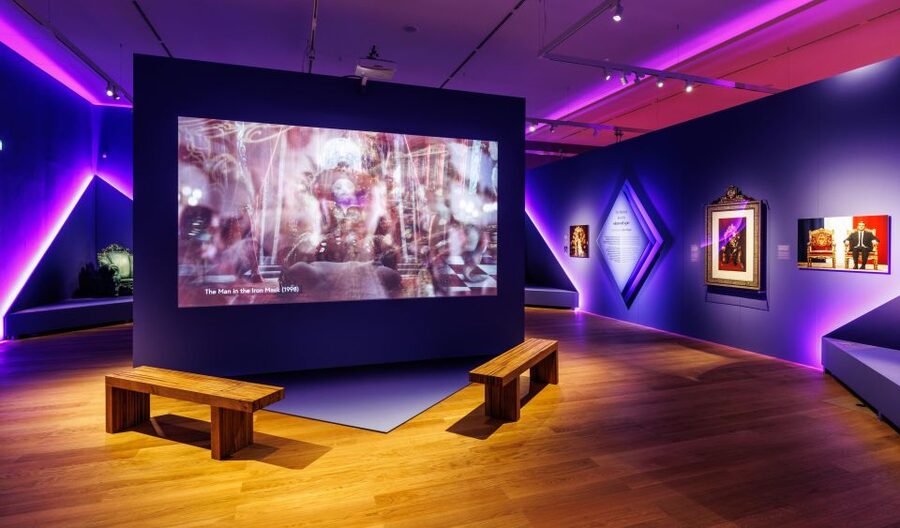
The exhibition The House of Orange-Nassau expands the visit beyond the rooms themselves. It brings together works of art, objects, and photographs connected with the Dutch royal family.
This collection helps fill in the gaps between grand events. Paintings can show how members of the family wanted to be seen. Objects can reveal habits, taste, and ceremony. Photographs bring the monarchy into a more recent period and make the family feel less remote.
I find this part important because a palace interior can sometimes become a parade of attractive rooms. The exhibition gives those rooms a wider setting. You begin to see the House of Orange-Nassau not only as a line of monarchs, but as a family with public duties and private lives.
The collection also adds variety to the day. After walking through furnished rooms, you can change pace and examine individual objects and images. That makes the visit less tiring than relying on interiors alone.
Same canals, a completely different sort of afternoon:
- Amsterdam Classic Saloon Boat Cruise with Drinks and Cheese
★ 5.0 · 31,825 reviews - Amsterdam Luxury Canal Cruise + Unlimited Drinks & Bites option
★ 5.0 · 30,518 reviews - Amsterdam: Classic Boat Cruise with Optional Cheese & Wine
★ 4.6 · 22,925 reviews - Amsterdam: Evening Cruise with Optional Wine and Snacks
★ 4.4 · 19,696 reviews
Climbing to Queen Mary’s tea spot
The palace roof is one of the most memorable stops because it changes the way you read the gardens. From ground level, you see fountains, statues, flowers, and clipped patterns. From above, the design becomes clear as one carefully ordered picture.
This is where Queen Mary drank her tea. The detail gives the rooftop a human touch, even though the main reason to go up is the view.
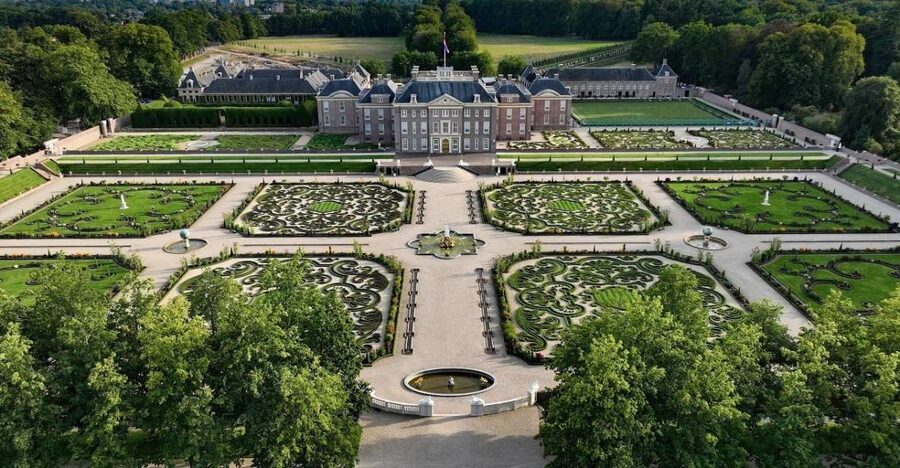
From the roof, you can see the park and the symmetry of the baroque gardens. The geometry is easier to understand from this height. Paths, planting beds, water features, and repeated shapes were arranged to show order and control.
The roof is also a useful pause between the enclosed palace and the open grounds. If the interiors begin to feel formal, step outside and look back across the property. You will see that the gardens were designed to match the palace’s message of wealth and authority.
Take your time here if the weather is good. The view is not a separate attraction added for height. It explains the gardens better than a ground-level walk alone.
Exploring Willem and Mary’s baroque gardens
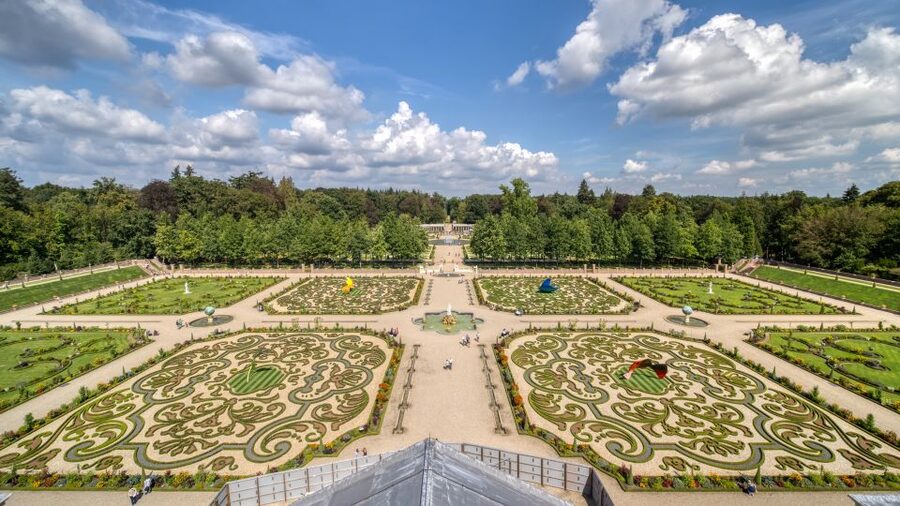
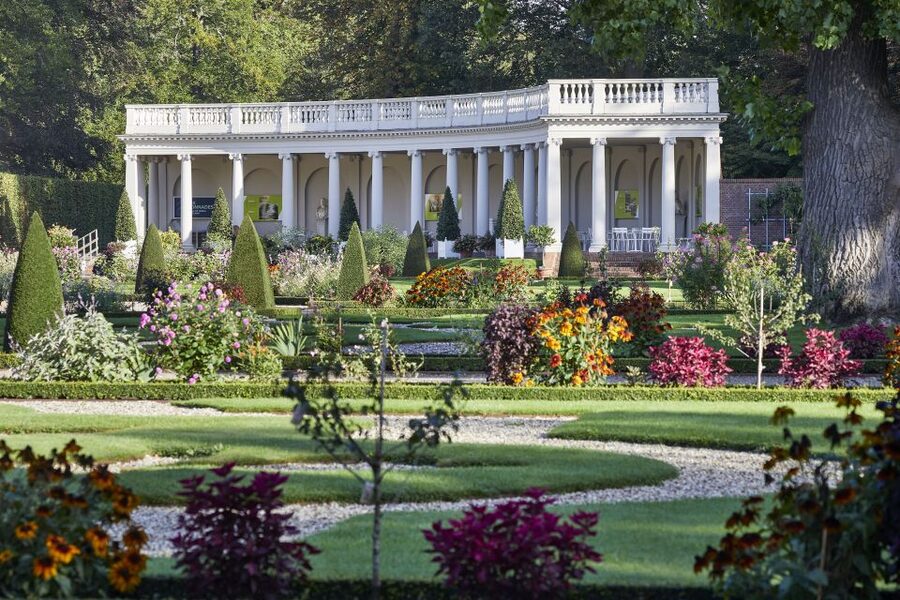
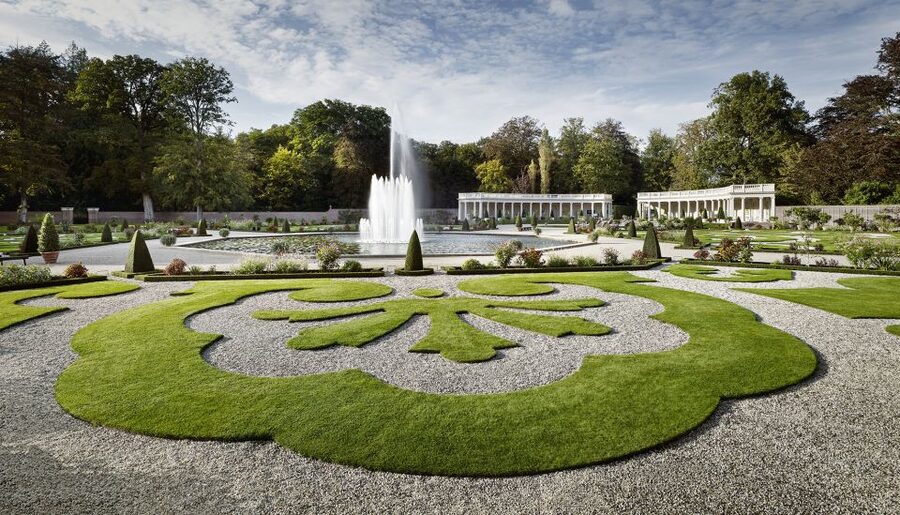
Willem and Mary created the gardens to display their power and wealth. The design includes high fountains, statues, fragrant flowers, and plants arranged in formal patterns.
The gardens are presented as a recreation of the layout made for the palace’s first inhabitants. That gives the walk a strong sense of purpose. You are not just strolling through attractive grounds. You are seeing how the royal couple wanted visitors to experience their residence.
The contrast between the gardens and the later royal stories is worth noticing. The formal garden speaks in the language of the 17th century, with symmetry, height, and control. Wilhelmina’s story belongs to a later world, when royal life had different public and private pressures.
You can walk the grounds after the palace or use them as a break between indoor sections. I would not leave them until the last few minutes. The gardens are a major part of the ticket, not a small extra behind the building.
The high fountains and repeated patterns are the most striking features, but the flowers and scents keep the space from feeling severe. The design is strict, yet it is also meant to please the senses.
Royal carriages, cars, and changing times
The carriages and cars add a welcome change from paintings and furniture. These vehicles were used by the Dutch royals for important events, so they connect the monarchy with travel, ceremony, and public appearance.
Carriages show the older royal world, when movement itself was part of a formal display. Cars point toward a more recent age and show how royal transport changed with technology.
This collection is useful for visitors who do not usually spend much time in palace interiors. You can understand a great deal about royal life through the vehicles. Size, decoration, and function all tell you something about how the monarchy presented itself.
Look at the vehicles as working objects, not only as grand possessions. Ask who used them, on what kind of occasion, and what the public would have seen. That approach makes this section more than a display of expensive transport.
The cars and carriages also help younger visitors stay interested. They provide a clear change of subject after the rooms and royal portraits, while still belonging to the same story.
How much time and money should you allow?
The ticket costs $25 per person and is valid for one day. For a palace, exhibition, vehicle collection, rooftop visit, and large formal gardens, that price can be reasonable if you use the full day.
The value depends on your pace. If you only want a quick look at one historic building, the price may feel high. If you plan to explore the rooms, choose an audio story, visit the exhibition, see the vehicles, climb to the roof, and walk the gardens, the ticket gives you plenty to work with.
The audio device costs an additional €2.50 if you do not use the app. That is a small extra charge, but you should decide in advance if you want the story support. The palace has enough visual detail to occupy you, yet the audio material gives context that the rooms alone cannot provide.
Parking costs €8 and is separate from admission. If you are coming from The Hague, one booking note described the public transport connection as good, so you may want to compare that option with driving before you set out.
You can reserve now and pay later, which helps if your plans are not fixed. Cancellation is free up to 24 hours before the visit for a full refund. Check the available starting times when you book, since the ticket is valid for one day but still depends on availability.
The published rating is 4.4 from 277 reviews. One recent Dutch booking praised the friendly staff and the connection from The Hague, while another simply marked the experience as perfect. A few brief comments offer little detail, so I would put more weight on the practical strengths of the visit: clear access, a full-day format, friendly service noted in one review, and plenty to see beyond the main rooms.
Who will enjoy Het Loo most?
I would recommend this experience to you if you like royal history, historic interiors, formal gardens, or museums that mix objects with storytelling. It is also a good fit if you want a full day outside the busiest Dutch city centres.
The three audio stories make the visit flexible. Choose Willem and Mary for politics and royal power, Wilhelmina’s Home for a more personal account, or At Home with the Royals for a look at comfort and domestic life.
Families may appreciate the variety. The roof, gardens, cars, and carriages break up the indoor visit, while the home theme offers an easy way to discuss what makes a palace different from an ordinary house.
You should think twice if you dislike formal gardens or royal collections. Much of the appeal comes from furniture, art, ceremonial objects, and carefully planned spaces. The visit is less suitable if you want a short, informal attraction that can be finished in an hour.
Should you book this one-day palace ticket?
Book it if you want to see Dutch royal life from several angles rather than only walking through a grand building. Het Loo gives you royal rooms, personal stories, a major garden design, a rooftop view, and transport used for official occasions.
I especially like the mix of Willem and Mary’s political story with Wilhelmina’s more personal connection to the palace. Add the roof and gardens, and you get a visit with enough variety to justify the $25 price.
Skip it if you are passing through Apeldoorn with only a short window, or if the extra €8 parking fee affects your budget. For everyone else, set aside most of the day, use the audio story, and treat the gardens as part of the main experience rather than an afterthought.
FAQ
How long is the Het Loo Palace ticket valid?
The ticket is valid for one day. Check availability for the starting times offered when you book.
What does the entry ticket include?
The ticket includes entry to Paleis Het Loo and the palace gardens.
Is parking included?
No. Parking is separate, and a parking ticket can be purchased on site for €8.
Is the palace wheelchair accessible?
Yes, the experience is wheelchair accessible.
Are audio stories available?
Yes. You can use an app or rent a paid audio device for €2.50.
Which languages are available for the audio stories?
The audio stories are available in Dutch, English, and German.
What are the three palace stories?
You can choose Willem and Mary, Wilhelmina’s Home, or At Home with the Royals. The stories focus on the first occupants, Queen Wilhelmina’s life at the palace, and the meaning of home in a royal residence.
Can I cancel the ticket?
Yes. You can cancel up to 24 hours in advance for a full refund. You can also reserve now and pay later.
Just added around the Netherlands
- Volendam: E-Bike Rental including Highlights-Routes★ 4.9 · 23 reviews
- Volendam: E-Scooter Rental★ 4.5 · 41 reviews
- Volendam: Volendams Museum Entry Ticket★ 4.4 · 14 reviews
- Volendam: 2.5-Hour Cheesemaking Workshop & Clog Making Tour★ 4.5 · 17 reviews
- From Amsterdam: The Hague Private Trip and Mauritshuis Entry★ 4.3 · 4 reviews
- Vlissingen: Maritime Museum Entry Ticket★ 4.6 · 7 reviews
- Volendam: 2-Hour Clogmaking Workshop and Cheese Tour★ 3.9 · 17 reviews
- Zundert: Vincent van Gogh House Entrance Ticket★ 3.9 · 43 reviews
Tickets, compared.




Keukenhof Ticket and Roundtrip Shuttle Transfer
Read our review →
Moco Museum Amsterdam Entrance Tickets with Banksy & More
Read our review →